Targeting Taiwan Under Xi: China’s Military Forest Flourishing Despite Toppling Trees
Andrew S. Erickson, “Targeting Taiwan Under Xi: China’s Military Forest Flourishing Despite Toppling Trees,” Harvard Fairbank Center Blog Post, 12 February 2026.
CLICK HERE TO DOWNLOAD A FULL-TEXT PDF.
Explaining the PLA Paradox under Xi: Key Points
- Personnel purges coexist with, and may even ultimately facilitate, PLA capability development to meet Xi’s Centennial Military Building Goal of 2027. In today’s China, multiple things are true at once. Fixating on “tree” removal risks missing flourishing “forest” growth.
- Multiple realities coexist: Endemic corruption persists within a Party-State-Military system where political loyalty supersedes institutionalized accountability, even as China fields the world’s most readily-supplied, rapidly expanding defense establishment.
- Removals are rampant across China’s entire Party-State-Military system. They may ultimately support Beijing’s military advance by eliminating officers Xi deems dysfunctional, disloyal, or otherwise unreliable, and not up to the task, in favor of younger, hungrier, more compliant and aggressive replacements.
- Meanwhile, China’s armed forces are advancing relentlessly in developing capabilities usable against Taiwan. Nowhere is this more apparent than in periodic large-scale exercises rehearsing potential operations against the capitalist democracy.
- Xi moves fast and breaks people: What matters are the Party’s objectives under his relentless direction, not individual careers. Personnel turbulence does not indicate self-sabotage or strategic stagnation. As China’s military continues its steady advance and intensifying exercises against Taiwan, observers should not miss the forest for the trees.
Targeting Taiwan Under Xi: China’s Military Forest Flourishing Despite Toppling Trees

Please Note: The views expressed here are the author’s alone and do not represent those of any organization with which he is affiliated. He thanks anonymous reviewers for thoughtful inputs.
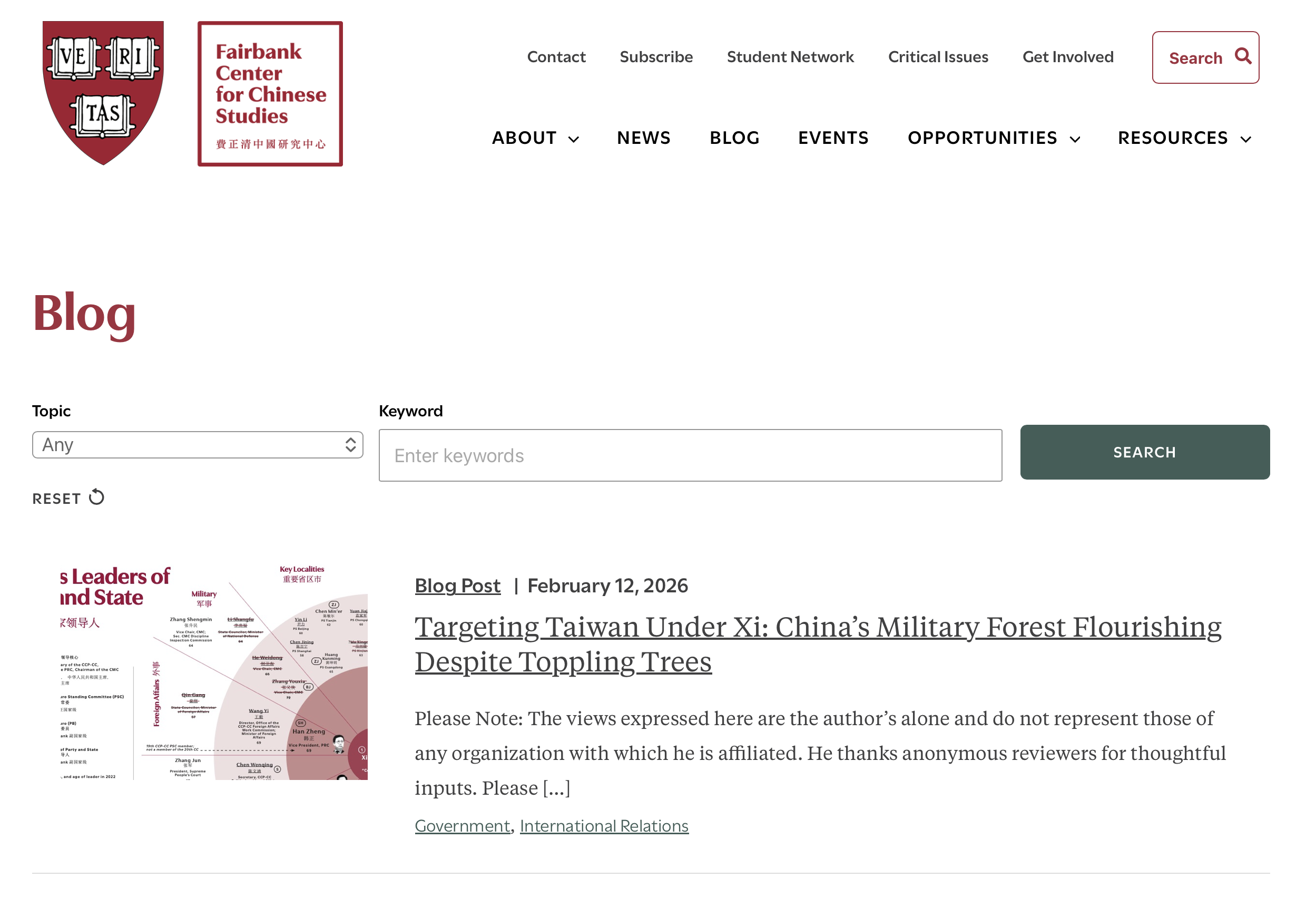
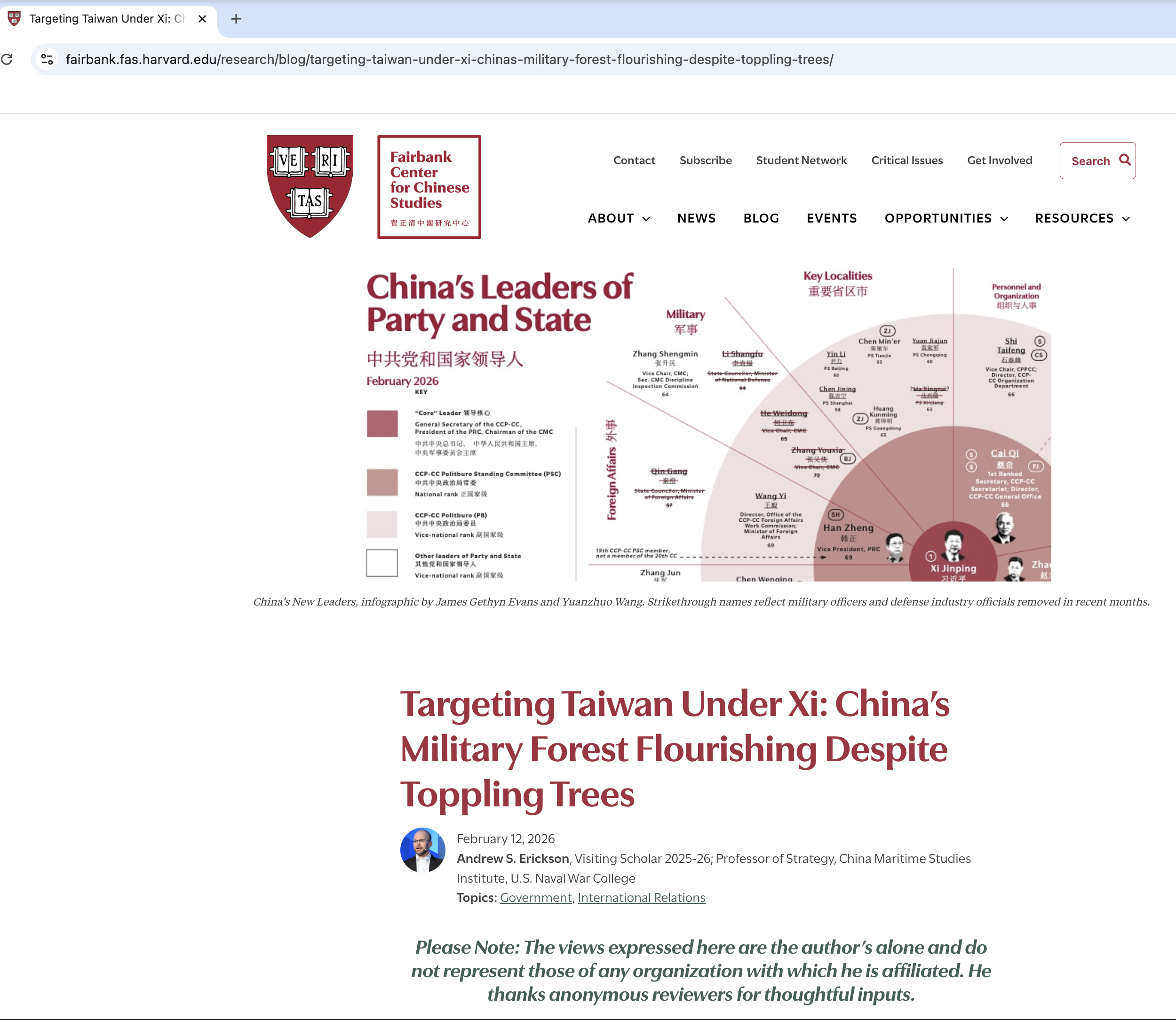
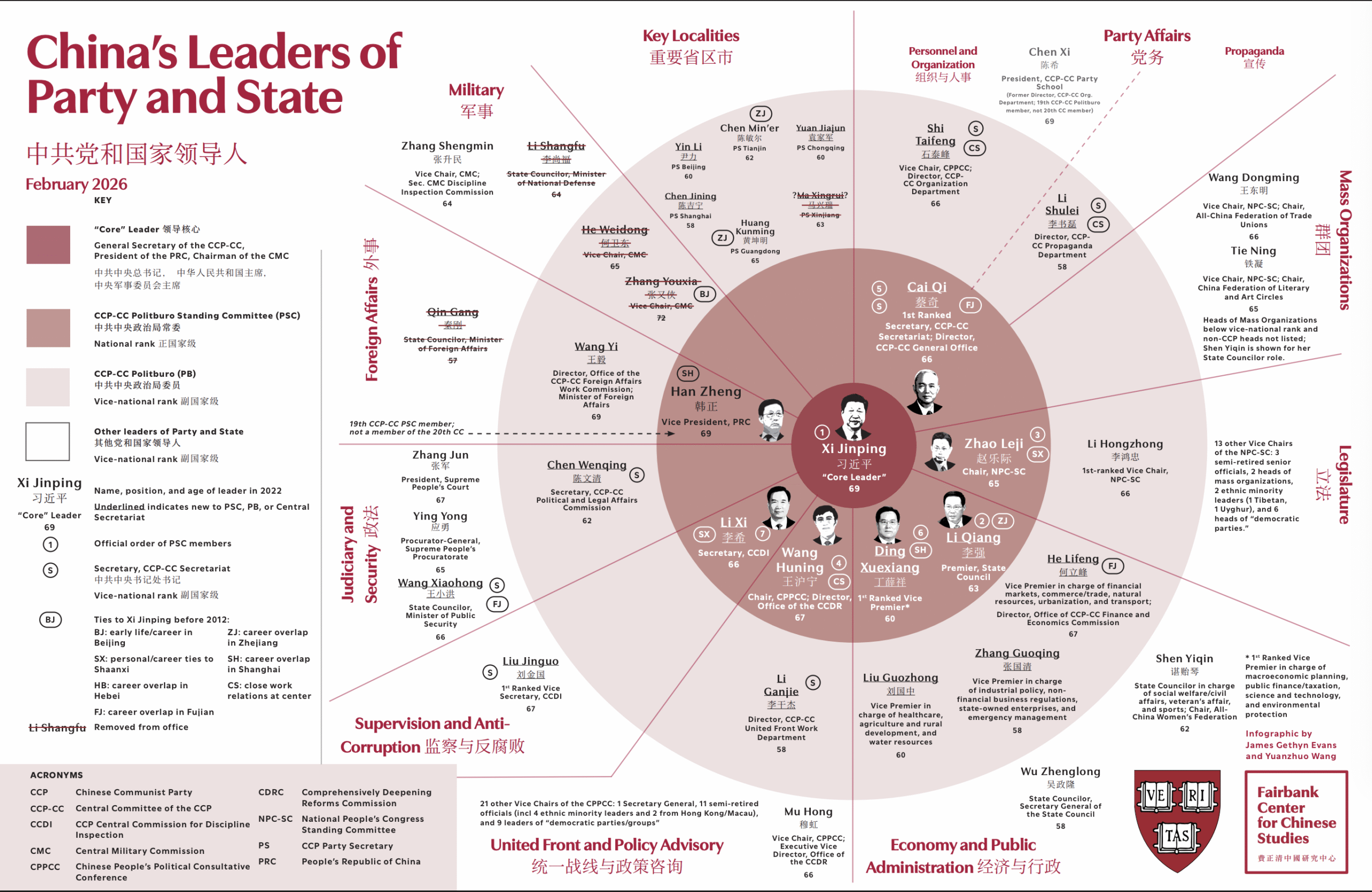
Please visit this link for a complete version of the infographic featured above.
Continuing removals of military officers and defense industry officials up to the highest levels have caused some to question the People’s Republic of China (PRC)’s ability to seize Taiwan. But while record personnel churn doubtless brings significant challenges, the actual track record of military preparatory exercises through the end of 2025 shows real determination and progress regarding China’s military capability. Observers should focus on this flourishing “forest” of capabilities, not simply on the felling of individual “trees.”
No defenestrations have been more dramatic than the announcement on January 24, 2026, that Central Military Commission (CMC) members Generals Zhang Youxia and Liu Zhenli are under investigation for “serious violations of discipline and law.” In the PRC system, such a formal declaration represents a premeditated verdict from which the accused typically cannot recover.
The CMC is the highest decision-making body and supreme command authority over China’s armed forces. Over Xi’s thirteen-years-and-counting in power, it has shrunk from 11 members in 2012 to just four by the end of 2025. In his latest purge, Xi has effectively reduced CMC membership to himself and just one other member. It remains unclear when, and to what extent, he will refill seats on this apex organ.
General Liu, formerly Chief of the CMC Joint Staff Department, had important operational oversight. General Zhang’s fall is even more noteworthy: a talented princeling, as first Vice Chairman of the CMC he was the top military leader under Commander-in-Chief Xi. On the defense industry side, Gu Jun, former general manager of the China National Nuclear Corporation, was officially put under investigation for “serious violations of laws and regulations” on January 19, 2026.
From Xi’s perspective, operational competence is inseparable from political reliability; purges are therefore intended not to weaken the force, but to ensure it develops and fights as directed. A January 31, 2026 editorial on the top-right front page of People’s Liberation Army (PLA) Daily explains his efforts: “The investigation and review of Zhang Youxia and Liu Zhenli once again demonstrates the clear stance of the anti-corruption campaign: no forbidden zones, full coverage, and zero tolerance. It is a resolute struggle to eliminate major political risks, a thorough and deep effort to eradicate the soil and conditions that breed corruption, and a powerful impetus for achieving the Centennial Military Building Goal. Practice has fully proven that the more the PLA combats corruption, the stronger, purer, and more combat-ready it becomes; the faster corruption is eliminated, the faster the military recovers and strengthens, and the more reliable the guarantee for the development of a strong military becomes.” The editorial declares that “the ‘diseased trees’ (病樹) have been precisely removed…resulting in a purer political ecosystem within the military….” It describes this as clearing as the way to continue the dramatic progress of “recent years, from the accelerated deployment of advanced weaponry and the formation of powerful military forces, to major training exercises that hone combat capabilities and deter powerful adversaries….”
Here’s the analytical bottom line: personnel purges coexist with, and may even facilitate, accelerating PLA capability development. In today’s China, multiple things are true at once. Fixating on “tree” removal risks missing flourishing “forest” growth. Removals are rampant across China’s entire Party-State-Military system. Meanwhile, however, China’s armed forces are advancing relentlessly in developing capabilities usable against Taiwan. Nowhere is this more apparent than in periodic large-scale exercises rehearsing potential operations against the island.
“Personnel purges coexist with, and may even facilitate, accelerating PLA capability development.”
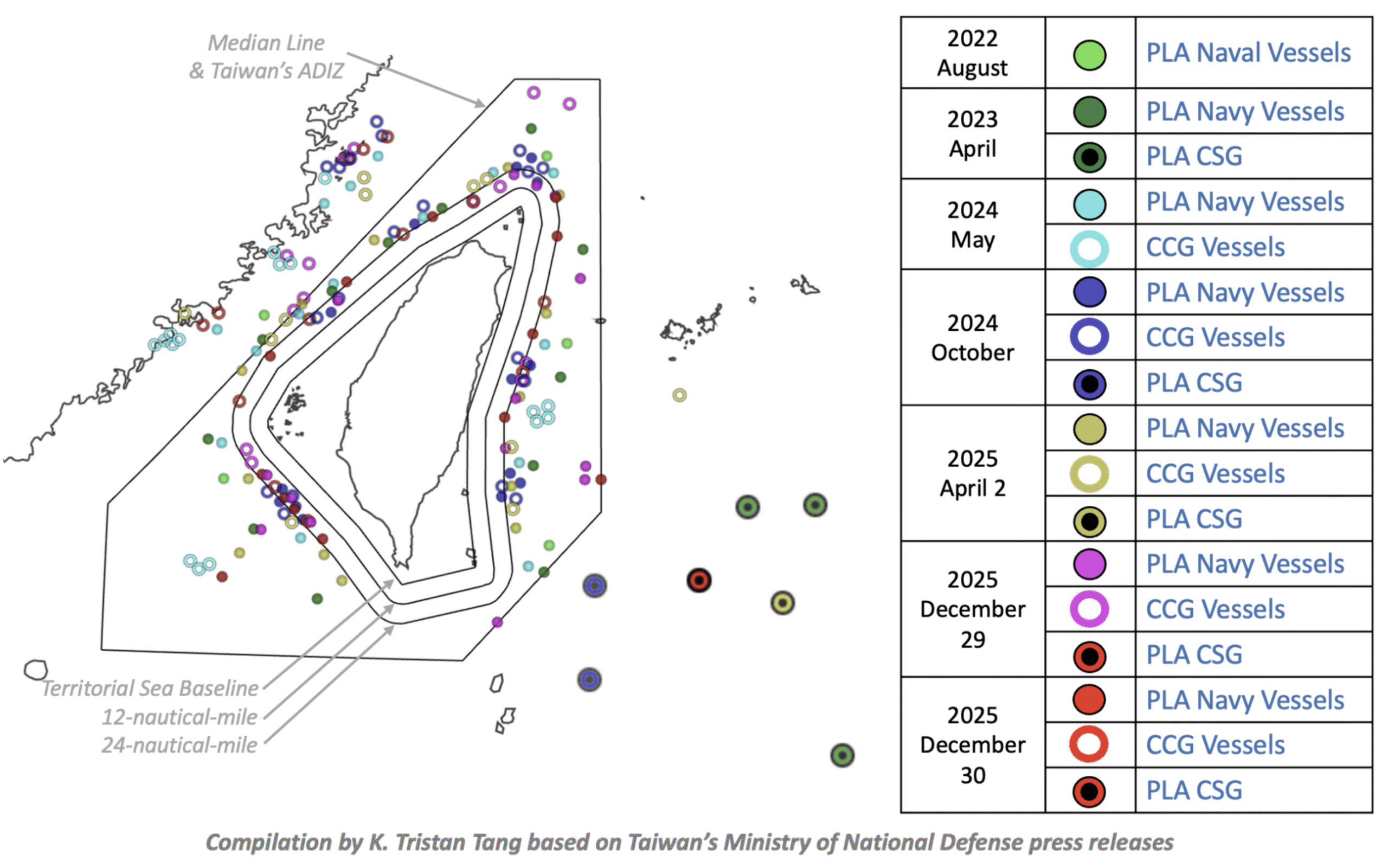
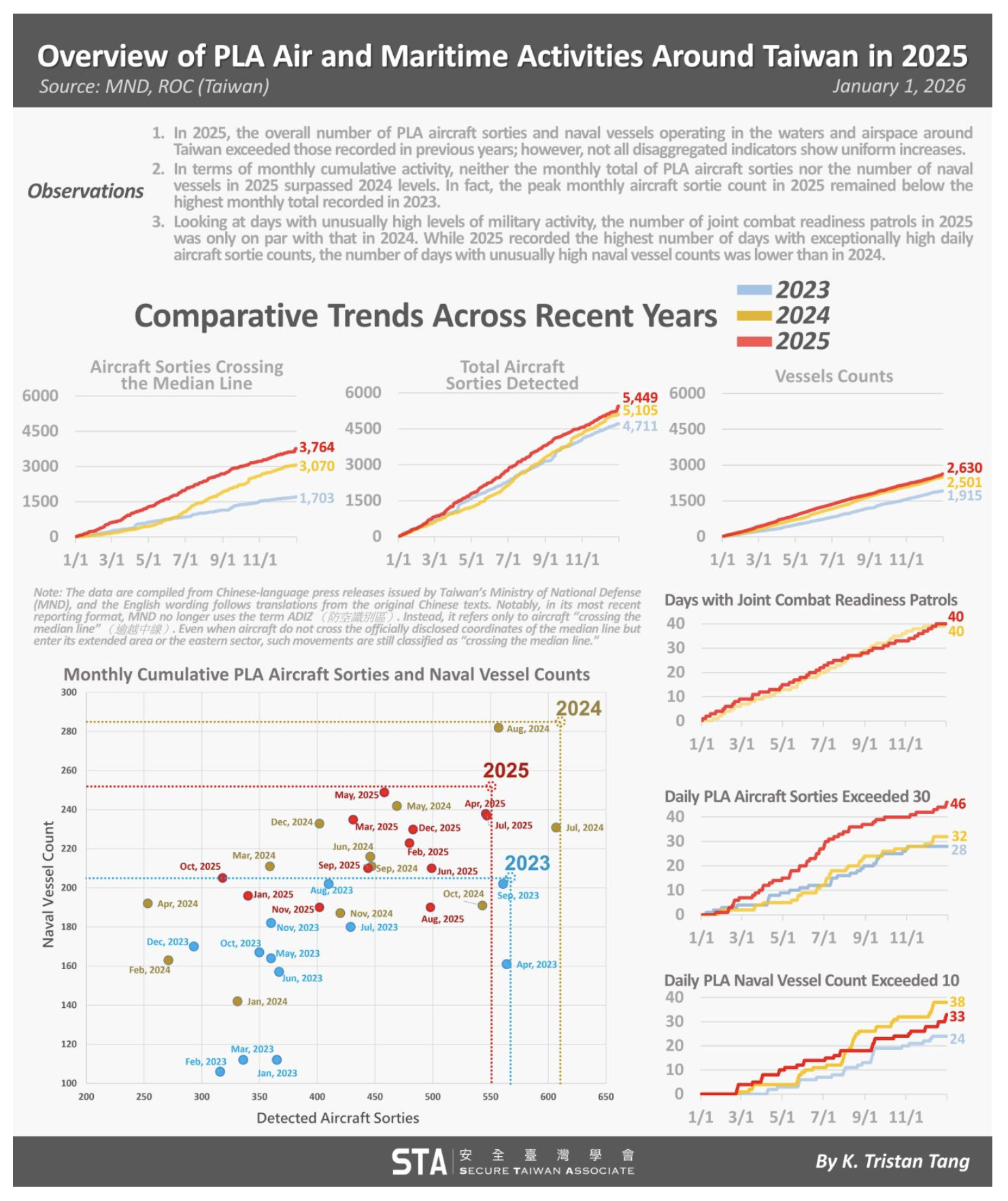
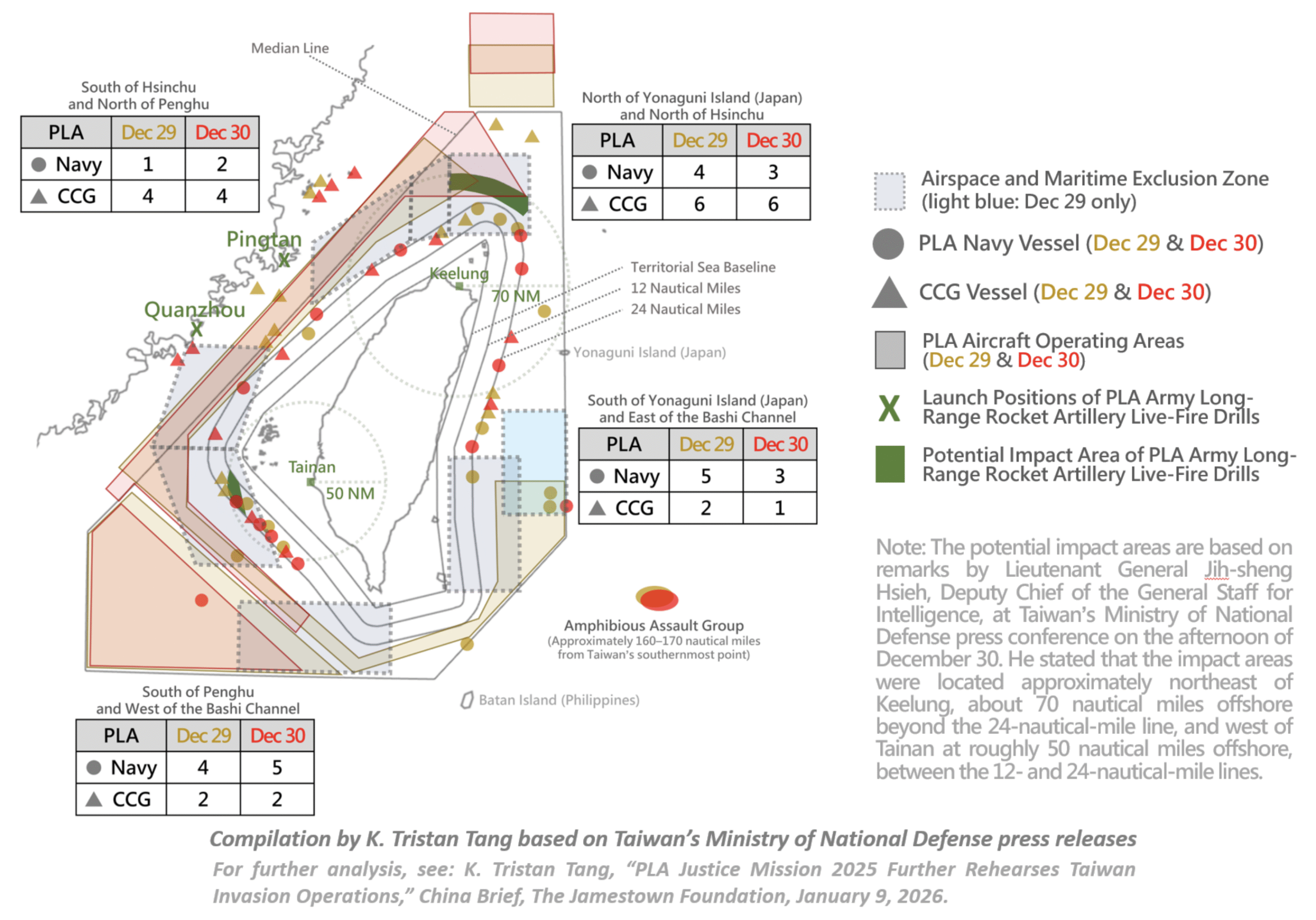
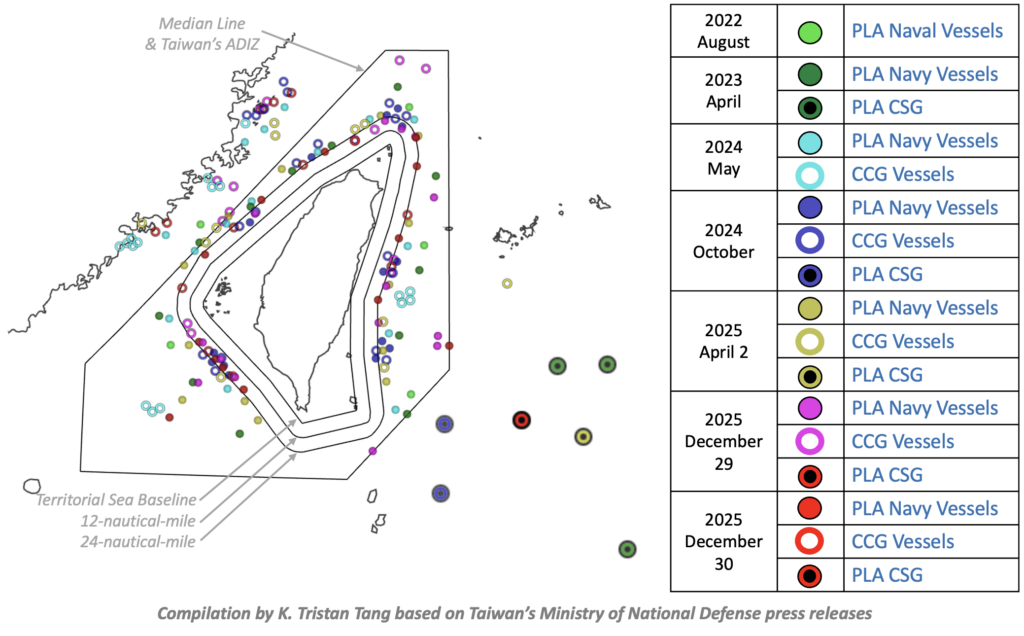
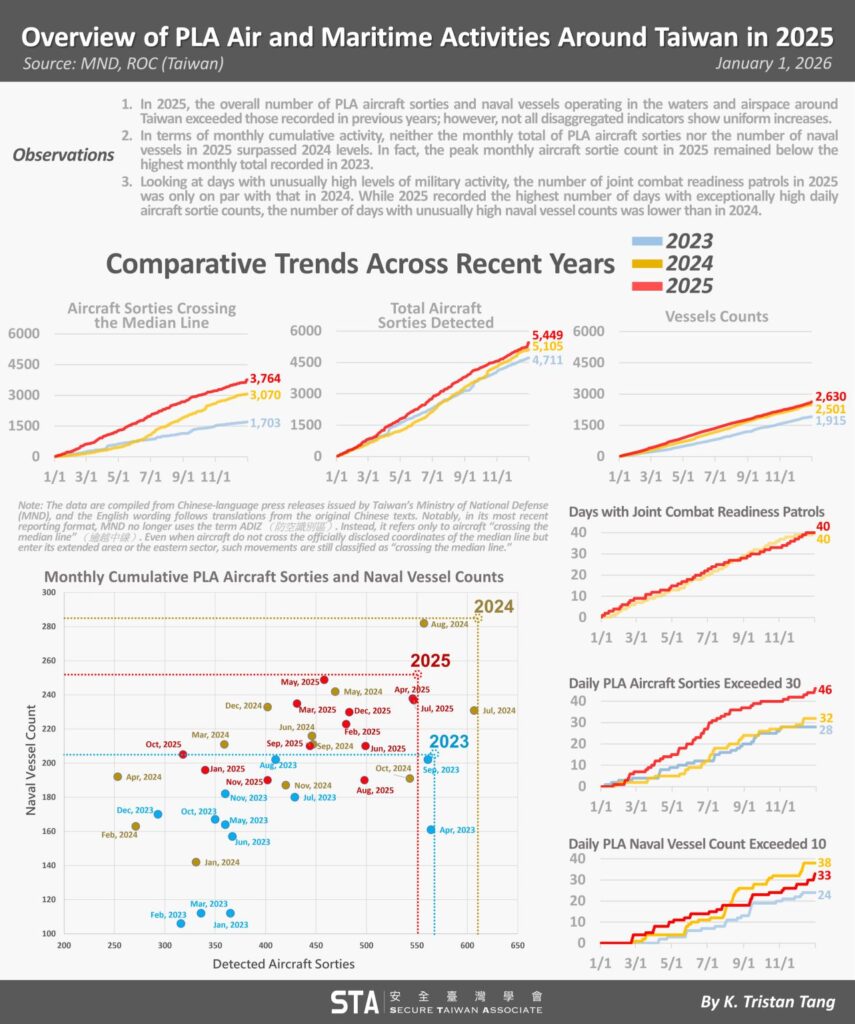
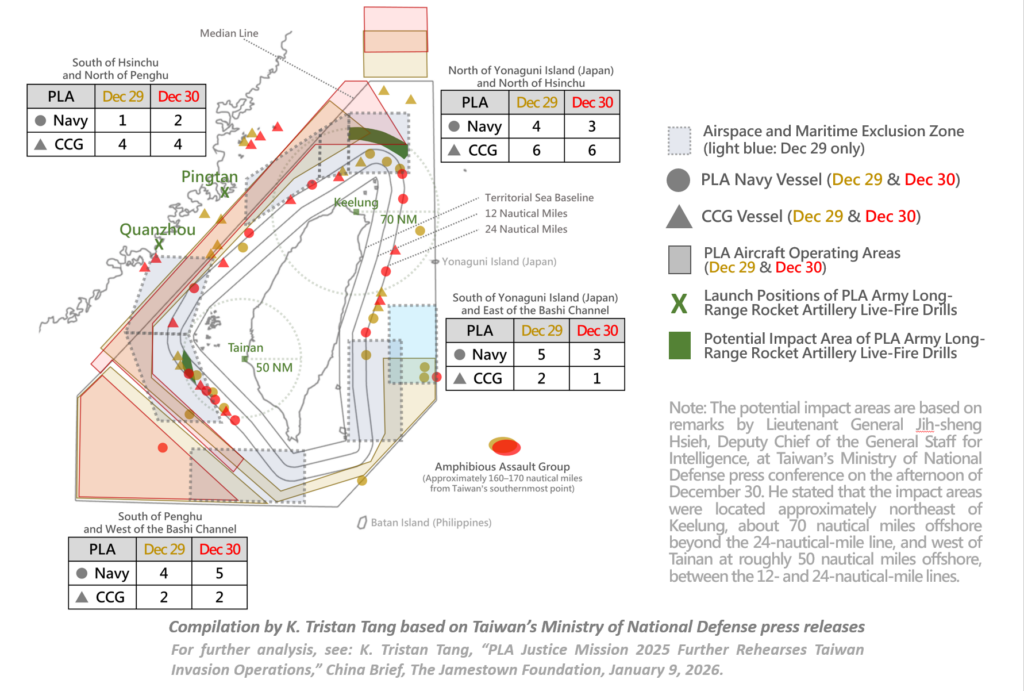
Ever since House Speaker Nancy Pelosi visited Taiwan in August 2022, infuriating PRC leaders, China has conducted recurring, high-visibility military operations around Taiwan several times per year, all under the Taiwan-facing Eastern Theater Command. The most recent of these occurred on December 29–30, 2025, when China’s armed forces conducted Justice Mission 2025, a large-scale joint exercise directed against Taiwan.
Normalizing Pressure Tactics
Representing a normalization of practice and pressure from Beijing’s perspective, these exercises are steady, substantial, and systematic—progressively integrating forces, validating command arrangements, and rehearsing capabilities relevant to coercion, blockade, strike, and invasion campaigns. They are best understood not as isolated or reactive demonstrations, but rather as cumulative preparation for real military options, while desensitizing Taiwan and its supporters to PRC military activity. In keeping with this seriousness of purpose, in each exercise, China’s military integrates something new. These additions are often subtle and not readily apparent amid the noise of a larger exercise, but they matter greatly to Xi and his armed forces.
Similar in scale to previous exercises, Justice Mission 2025 stood out for its prominent maritime dimension. PLA Navy and China Coast Guard vessels operated in close coordination in ways consistent with blockade or quarantine scenarios. The exercise also featured live-firing of PCH-191 close-range ballistic missiles, capable of covering Taiwan, underscoring the PLA’s emphasis on precision fires and joint strike integration.
Potentially related to these developments was the appearance of unusually large, highly organized formations of PRC-flagged “fishing vessels” in the East China Sea. According to geospatial analysis firm ingeniSPACE, which first identified the formation, an initial episode unfolded on December 23–25 (fully formed on December 25), when 2,000+ prepositioned vessels systematically assembled into two adjacent reverse-L-shaped formations with long legs on the order of roughly 290 miles. The vessels remained on station for 30+ hours before dispersing. A second episode occurred around January 11, when roughly 1,400 vessels formed a dense barrier/box-like formation spanning roughly 200 miles. The scale, geometry, coordination, and rapid assembly and dispersal of these formations are irreconcilable with normal fishing or economic behavior. Such activity is more plausibly interpreted as signaling, mobilization practice, and training involving China’s Maritime Militia—a key component of its armed forces. It underscores the reality that this third PRC sea force engages in threatening activities not only in the South China Sea, but also in the East China Sea, with, as ingeniSPACE analysts posit, serious implications for commercial shipping across the First Island Chain and free trade across the region.
Dress Rehearsals
Few U.S. officials are positioned to track day-to-day PLA operational patterns as closely as Admiral Samuel Paparo, who has led U.S. Indo-Pacific Command since May 2024 and previously commanded the U.S. Pacific Fleet. He is approaching five years’ daily observation of China’s military developments, down to the smallest observable detail. His prepared statement in his most recent Congressional testimony shows just how much progress he sees and how serious it is: “Beijing’s aggressive maneuvers around Taiwan are not just exercises—they are dress rehearsals for forced unification. The PLA escalated military pressure against Taiwan by 300% in 2024….”
No public report offers more extensive and authoritative analysis of China’s armed forces than the Pentagon’s annual China Military Power Report. The 25th edition, released in late December, evaluates Xi’s military objectives and options vis-à-vis Taiwan.
The report offers its clearest articulation yet of Xi’s directive to achieve, by 2027, the Centennial Military Building Goal, including the realization of capabilities necessary to prevail in a Taiwan conflict. This goal rests on three interlocking requirements: the ability to win a Taiwan war at acceptable cost even with U.S. involvement; deterring or constraining American intervention, including through nuclear means; and preventing the expansion of the conflict to additional fronts or allied participants.
Xi’s statements and actions make him appear determined to earn a prominent place in history by asserting some form of control over Taiwan during his time in power. He prioritizes controlling his military and achieving real warfighting capability for major missions over stopgap internal security efforts or symbolic prestige. Consistent with these ambitious aims, the report evaluates Beijing’s motivations and challenges across four particularly significant possibilities within a larger set of potential Taiwan-related campaign options, any of which could be pursued individually or in combination. Force structure buildup and exercises indicate that China is planning and preparing to be capable of executing all of them in some fashion.
Xi’s Options
The first is coercion short of war, pairing escalating military pressure with economic, informational, and diplomatic coercion. Already ongoing in the form of a continuous all-domain pressure campaign, this perhaps is Xi’s preferred course of action—he would like to engineer Taiwan’s surrender without resorting to war. It could include cyber operations, electronic warfare, and even limited kinetic strikes intended to intimidate Taiwan, disrupt infrastructure, and undermine public confidence. The report judges such an approach to be unlikely to achieve decisive results on its own because these tools have many constraints; because Taiwanese citizens may resist strongly; and because the United States retains significant options regarding deterrence and intervention.
A second possibility is a joint firepower strike campaign, relying on precision strikes (e.g., including with PCH-191 missiles) to paralyze Taiwan’s defenses and leadership. Here, the report highlights a key PLA weakness: persistent challenges in joint coordination and timely battle feedback across services and operational groupings.
The third option, a joint blockade campaign, would seek to compel capitulation by isolating Taiwan through sustained interdiction of maritime and air traffic. Such a campaign could be reinforced by missile strikes, limited island seizures, and integrated cyber and information operations designed to sever Taiwan’s external connections and apply cumulative pressure. There could be significant impairment of energy inputs and other imports, designed to enervate Taiwan’s will to resist and to stress the political fissures in its complex society. The report does not directly assess China’s ability to execute a blockade, but suggests that such an operation might well prove insufficient to achieve control over Taiwan.
The most demanding option of all is an amphibious invasion, which PLA doctrine terms a joint island landing campaign. This entails a full-scale Strait crossing requiring air and maritime superiority, penetration of Taiwan’s coastal defenses, establishment and sustainment of beachhead(s), and seizure of critical terrain—likely including key government institutions in Taipei. While the strategic limitations of lesser campaigns might eventually push Beijing toward this scenario, the report underscores its extreme complexity and risk, as well as the demanding logistical requirements.
Across all scenarios, the report identifies enduring constraints in China’s cyber and non-kinetic capabilities, stemming from limited combat experience and ongoing integration challenges, as embodied in the 2024 restructuring of its information forces. To address these gaps, Beijing is rapidly expanding warfighting capabilities and stress-testing their integration through increasingly large, complex, realistic exercises—Justice Mission 2025 among them.
How Xi might ultimately adjudicate among these campaign options remains a complex and contingent question. China’s continuous campaign against Taiwan employs military, political, economic, informational, “lawfare,” cyber, and diplomatic pressures to normalize PRC presence while eroding Taiwan’s autonomy and will to resist. Over time, Beijing could escalate to kinetic force in the form of a blockade or quarantine, sustained bombardment, or attempted invasion—if and when Xi judges that peacetime measures have been exhausted and that his armed forces are sufficiently prepared to prevail on his terms.
Coerced cross-Strait political agreements aside, a successful cross-Strait invasion might be the only military way for Beijing to be confident of achieving direct control over Taiwan. Yet such an operation would require an enormous cross-Strait lift capability that China has not yet fully secured. That remains the core conclusion of the U.S. Naval War College China Maritime Studies Institute (CMSI)’s book on Chinese Amphibious Warfare, as well as CMSI Note 14 and China Maritime Reports 19, 22, and 50.
Advances Despite Purges
Nonetheless, under Xi’s determined direction, Beijing appears to be striving to change that equation. While China’s world-leading shipbuilding industry could readily produce additional conventional amphibious platforms, Beijing has so far refrained from doing so at scale. However, claims that this restraint reflects a desire to avoid appearing provocative ring hollow in light of China’s sweeping military buildup—the most dramatic since World War II—and its sustained, large-scale exercises around Taiwan in recent years.
Instead, China appears to persist in an unconventional approach to expanding logistics. PRC planners apparently believe they can leverage PRC Maritime Militia and their dedicated platforms, as well as multifarious “civilian” shipping. This is a vital area that CMSI and its affiliates continue to research and publish on, including through CMSI Notes 4 and 18, as well as China Maritime Reports 1, 4, 16, 25, 35, 40, and 46.
As Lonnie Henley argues in China Maritime Report 21, the PLA does not view “civilian” shipping as a temporary stopgap, but rather as a central feature of its preferred operational concept. This approach draws on longstanding PLA Navy operational traditions, as chronicled by Toshi Yoshihara, and leverages China’s vast pool of “civilian,” state-directed, and PLA-linked maritime assets, including the Maritime Militia.
As the recent demise of Generals Zhang and Liu underscores, disciplinary removals across China’s services and defense industry continue to be an important part of Xi’s political gamebook. But removals have not halted Beijing’s military advance. Instead, they may ultimately facilitate it by eliminating officers Xi deems dysfunctional, disloyal, or otherwise unreliable, and not up to the task, in favor of younger, hungrier, more compliant and aggressive replacements.
“Removals…may ultimately facilitate it [Beijing’s military advance] by eliminating officers Xi deems dysfunctional, disloyal, or otherwise unreliable, and not up to the task, in favor of younger, hungrier, more compliant and aggressive replacements.”
Vice Admiral Wang Zhongcai, last publicly mentioned in July 2022, is one of at least 12 PLA Navy flag officers and more than 80 senior PLA officials at the two-star level and above who have been removed since Xi assumed power in 2012. His dismissal—despite extensive Taiwan-relevant experience, including service as China Coast Guard commander (2018–22) and later as Eastern Theater Command Navy commander—illustrates the scale of talent sacrificed in Xi’s sweeping purges. This includes, since 2022 alone, five of the six officers on the CMC and as many as 34 of the 44 officers in the Party’s Central Committee.
Yet despite pervasive leadership churn, the Eastern Theater Command continues to progress, just as China’s military as a whole continues to advance. Removals have intensified since 2023, but they are a feature—not a bug—of Xi’s thirteen-plus years in power. Multiple realities coexist: endemic corruption persists within a Party-State-Military system where political loyalty supersedes institutionalized accountability, even as China fields the world’s most readily-supplied, rapidly expanding military establishment.
“Multiple realities coexist: endemic corruption persists within a Party-State-Military system where political loyalty supersedes institutionalized accountability, even as China fields the world’s most readily-supplied, rapidly expanding military establishment.”
Conclusion: The Rot and the Rainforest
Investigations and purges on this scale would strain any nation’s military. But, by many measures, no other nation has a military talent and resource pool as deep as China’s. The Chinese Communist Party also boasts unparalleled ability to mobilize, concentrate, and allocate relevant resources. Within certain parameters, “corruption” and personnel turnover have not prevented Xi from preparing for—or potentially waging—war. Instead, the PLA continues to advance steadily, as measured in platforms fielded, munitions produced, training realism, and operational tempo.
China’s military development today resembles a dense, fast-growing “rainforest”: flourishing overall even as internal decay and renewal occur simultaneously, and individual trees—truly “diseased” or merely declared so—are felled selectively. Official PRC proclamations repeatedly link the removal of “rot” to ensuring necessary renewal. This is not merely performative propaganda; leading foreign analyses find Xi’s intensive effort in this regard to be serious and potentially effective.
While Xi has exceeded some of Mao’s removal metrics, he has by no means approached Stalin’s evisceration of his military on the eve of World War II. Stalin’s 1937–38 Great Terror removed roughly 35,000 Red Army officers and eliminated an extraordinary share of the senior command—including about 60 percent of marshals, nearly 90 percent of army commanders, and a majority of corps and division commanders—producing a degree of institutional disruption and frontline fragmentation far more severe than the selective removals under Xi, whereby the broader military structure has continued to expand and modernize even as individual leaders are excised.
This logic is echoed in CCP historical narratives emphasizing renewal through organizational rectification. As John Garnaut argues, “Xi apparently believes he can cultivate a new generation of leaders in short order for the world’s largest standing army. A devoted student of Soviet and Chinese Communist Party history, he knows that in just three years Stalin had reconstituted his top brass, led by Georgy Zhukov, who eventually turned back invading Nazi forces.” “The government’s line about General Zhang’s dismissal has specifically dug into similar time frames,” Garnaut elaborates. “After the announcement was made, The P.L.A. Daily noted that at Yan’an the ‘virtuous cycle of “removing rot—regenerating flesh—winning battles” enabled the army, in just three short years, to sweep away opposing forces, overthrow the reactionary rule of the Kuomintang (Nationalists) and usher in the birth of New China.’”
The Pentagon’s 2025 China Military Power Report reaches similar conclusions through a capabilities and operations lens. “The PLA continues to make steady progress toward its 2027 goals,” its Executive Summary emphasizes. “In other words, China expects to be able to fight and win a war on Taiwan by the end of 2027.” The report devotes extensive coverage to the rampant removals of officers and defense industry administrators. Its net assessment of their effects leaves no room for comfort: “Despite plausible short-term impacts to readiness, China remains committed to its strategic goals, with the ongoing anticorruption campaign having the potential to improve PLA readiness in the long term.”
Xi moves fast and breaks people: what matters are the Party’s objectives under his relentless direction, not individual careers. Personnel turbulence does not indicate self-sabotage or strategic stagnation. As China’s military continues its steady advance and intensifying exercises against Taiwan, observers should not miss the forest for the trees.