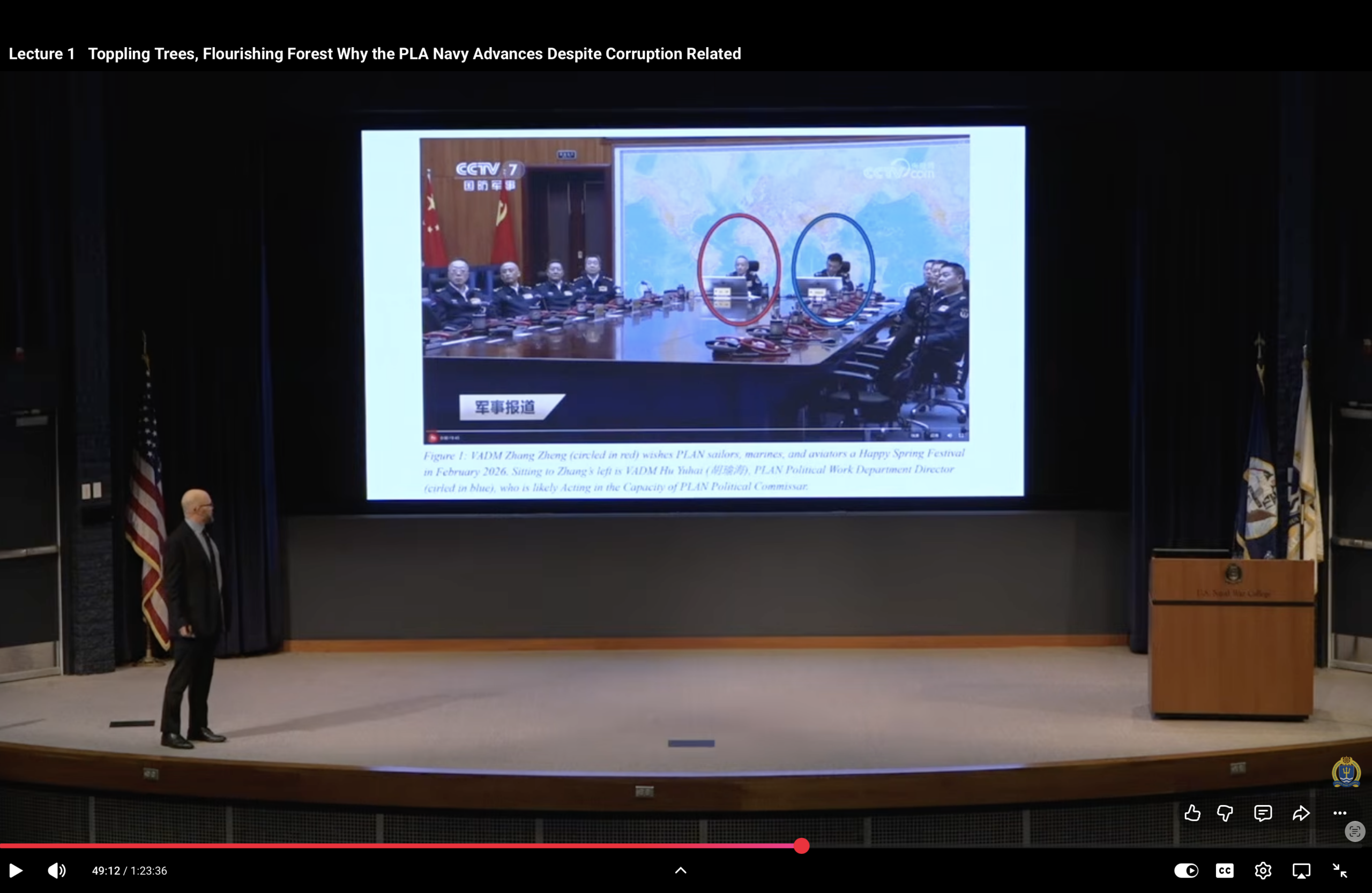
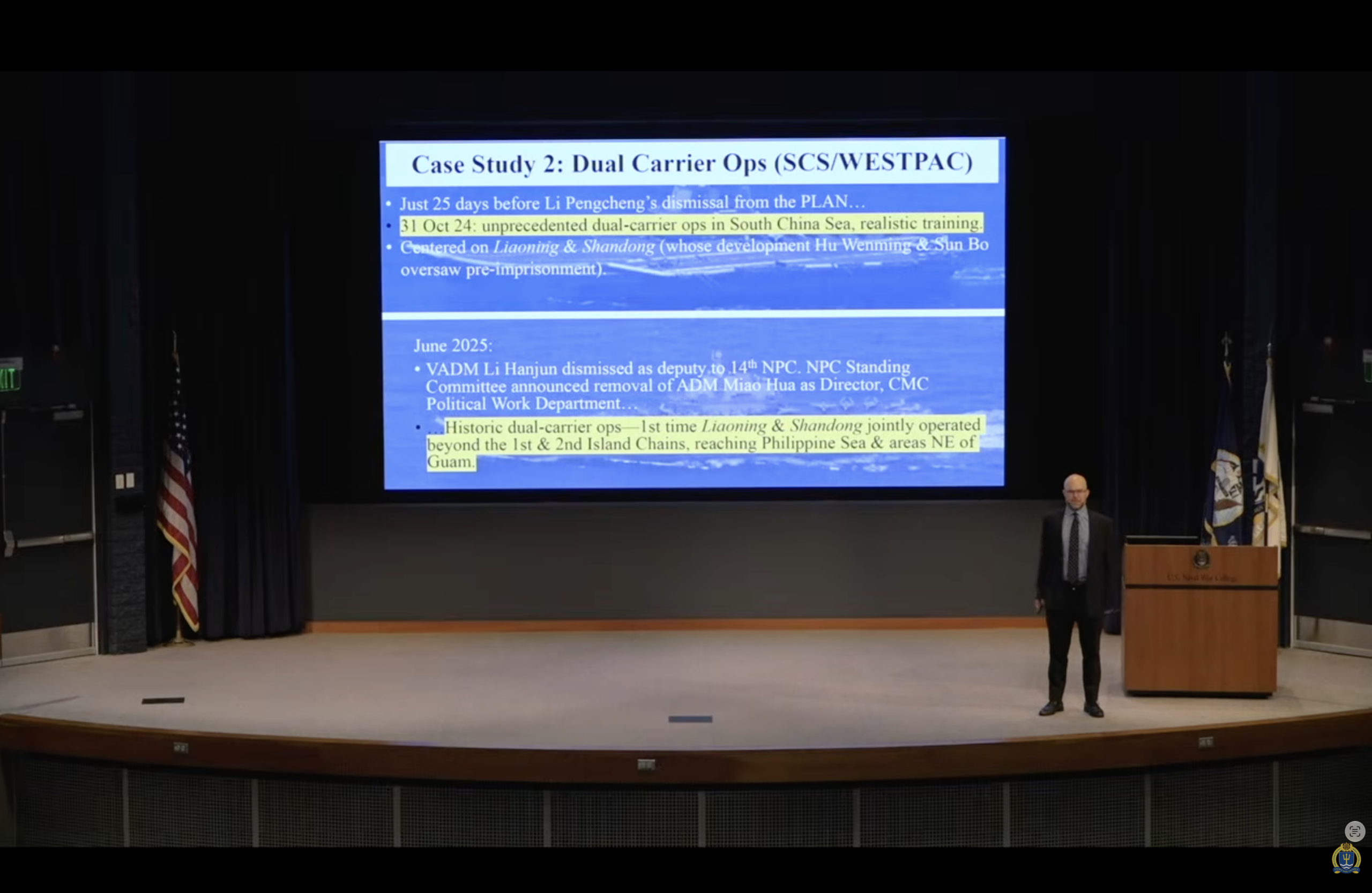
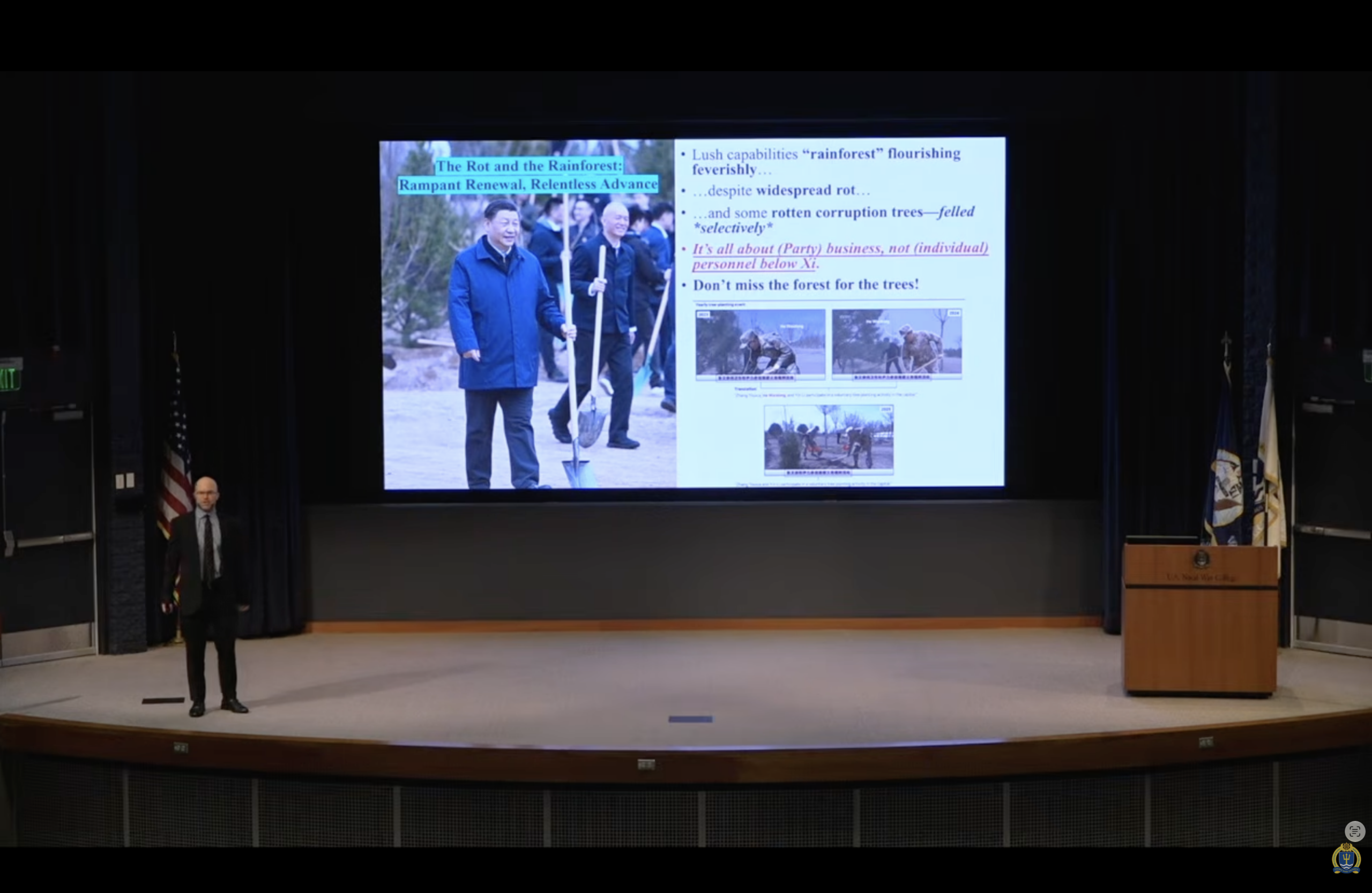
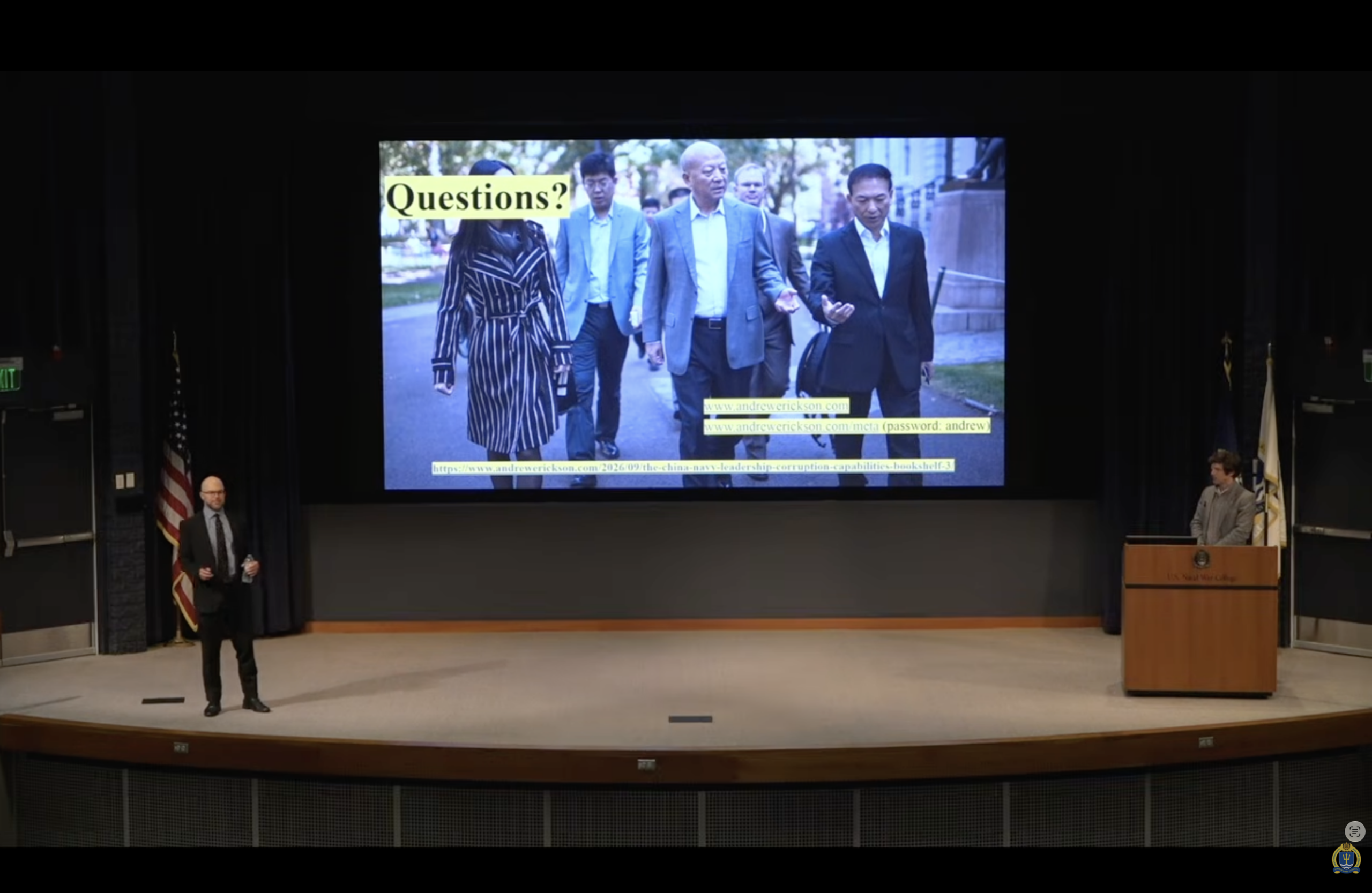
Toppling Trees, Flourishing Forest: Why the PLA Navy Advances Despite “Corruption”-Related Removals
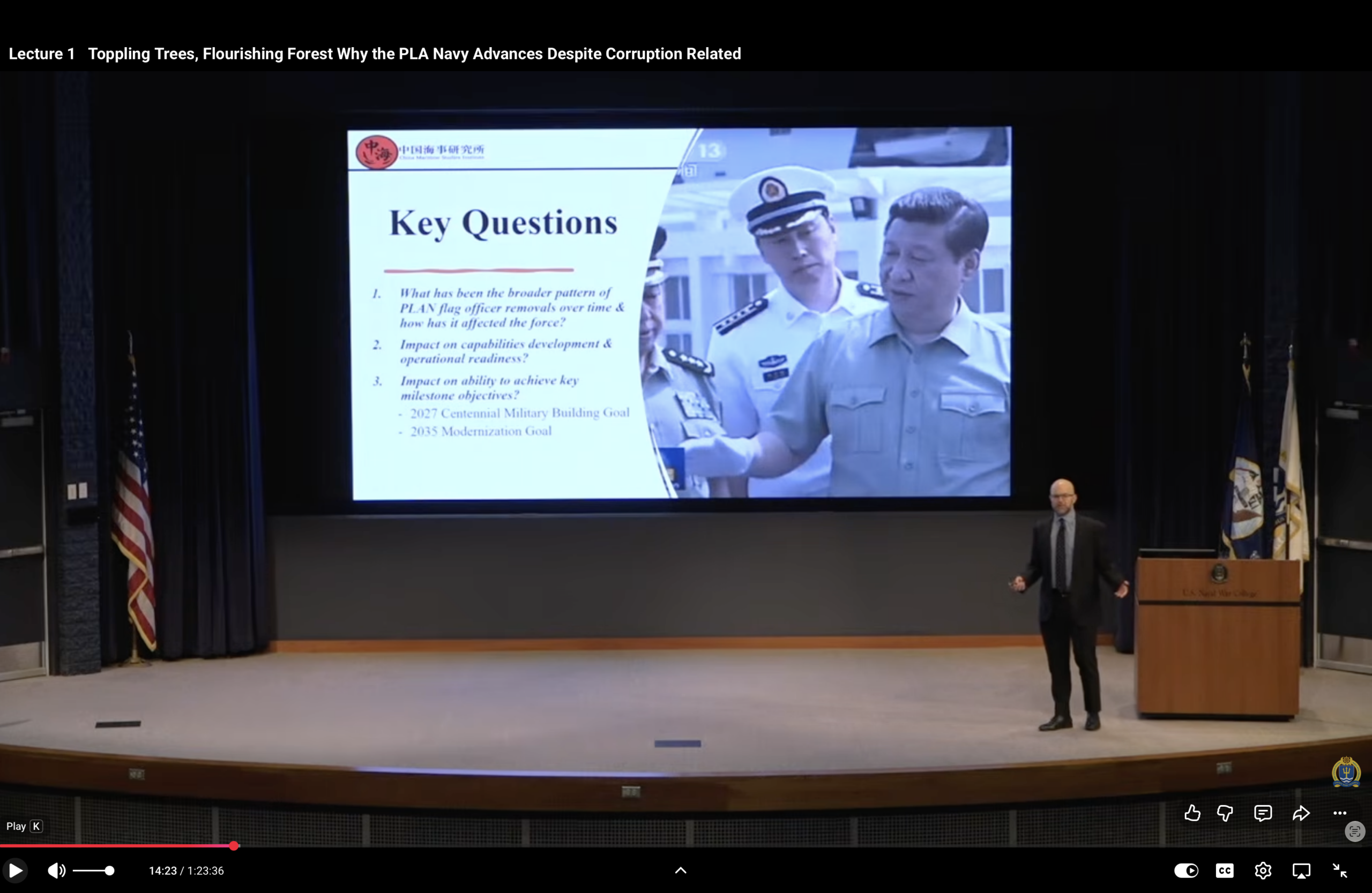
Andrew S. Erickson, “Toppling Trees, Flourishing Forest: Why the PLA Navy Advances Despite ‘Corruption’-Related Removals,” Issues in National Security Lecture, Naval War College, 22 September 2026.
Click here to watch on YouTube.
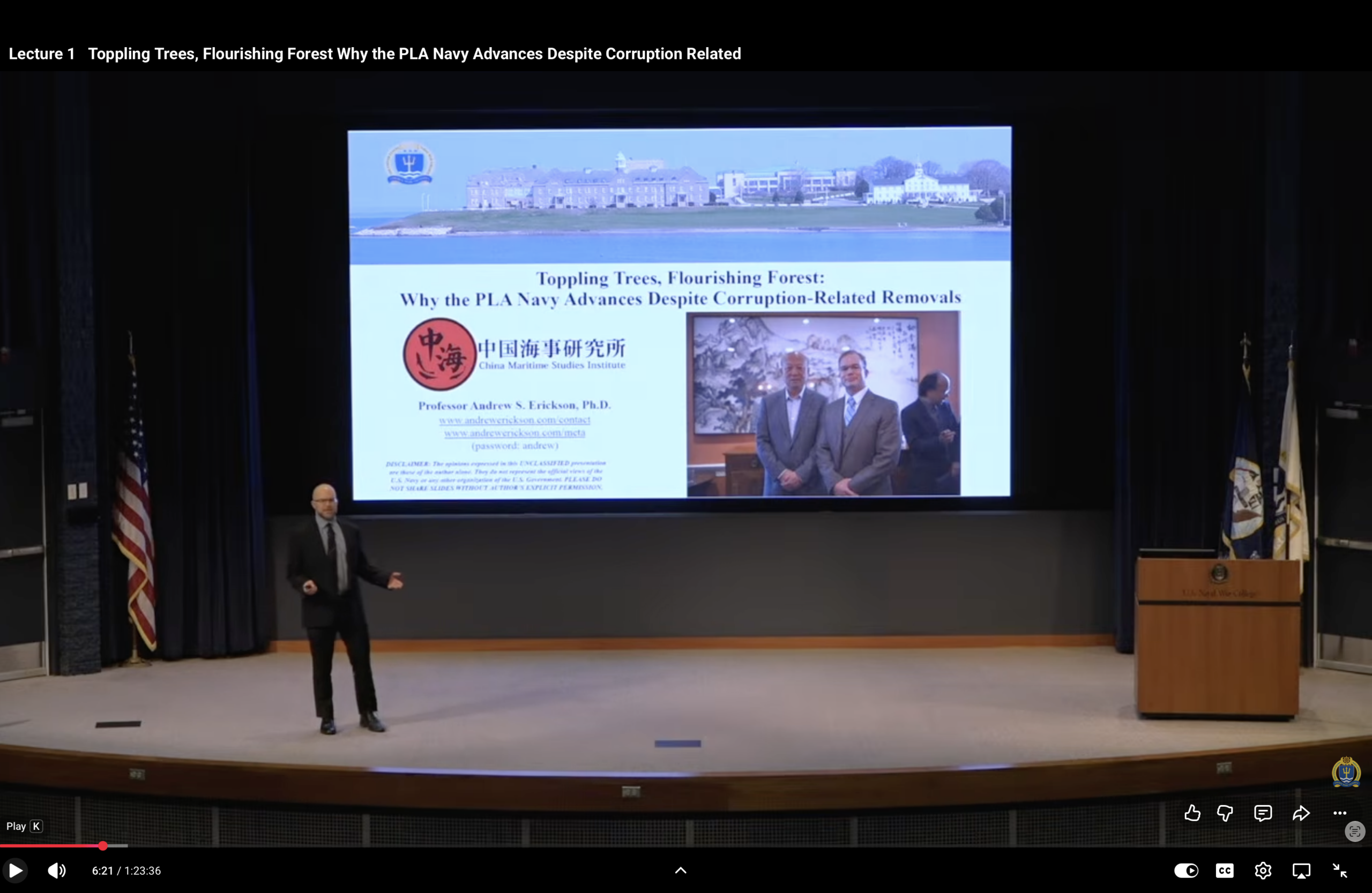
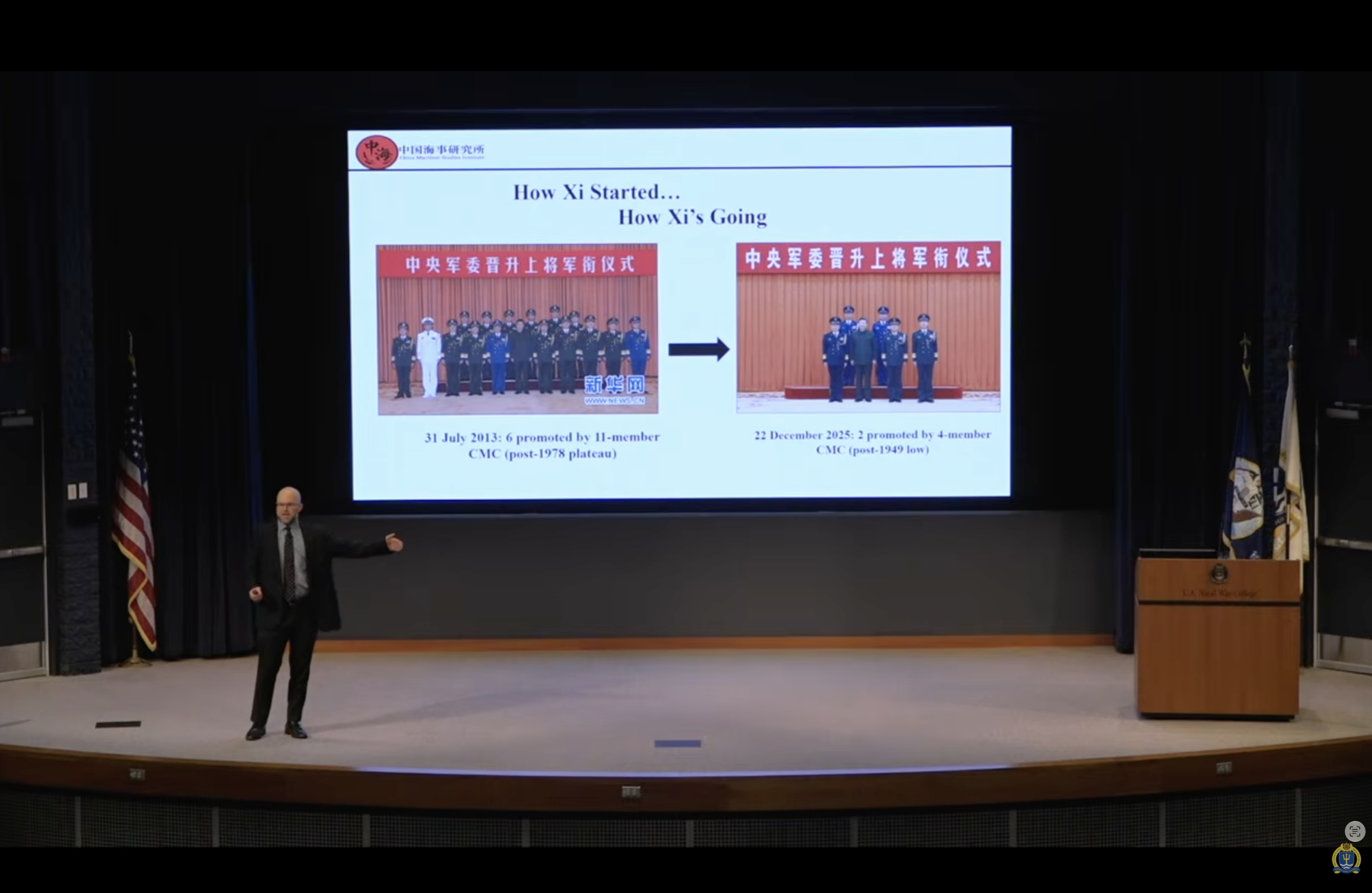
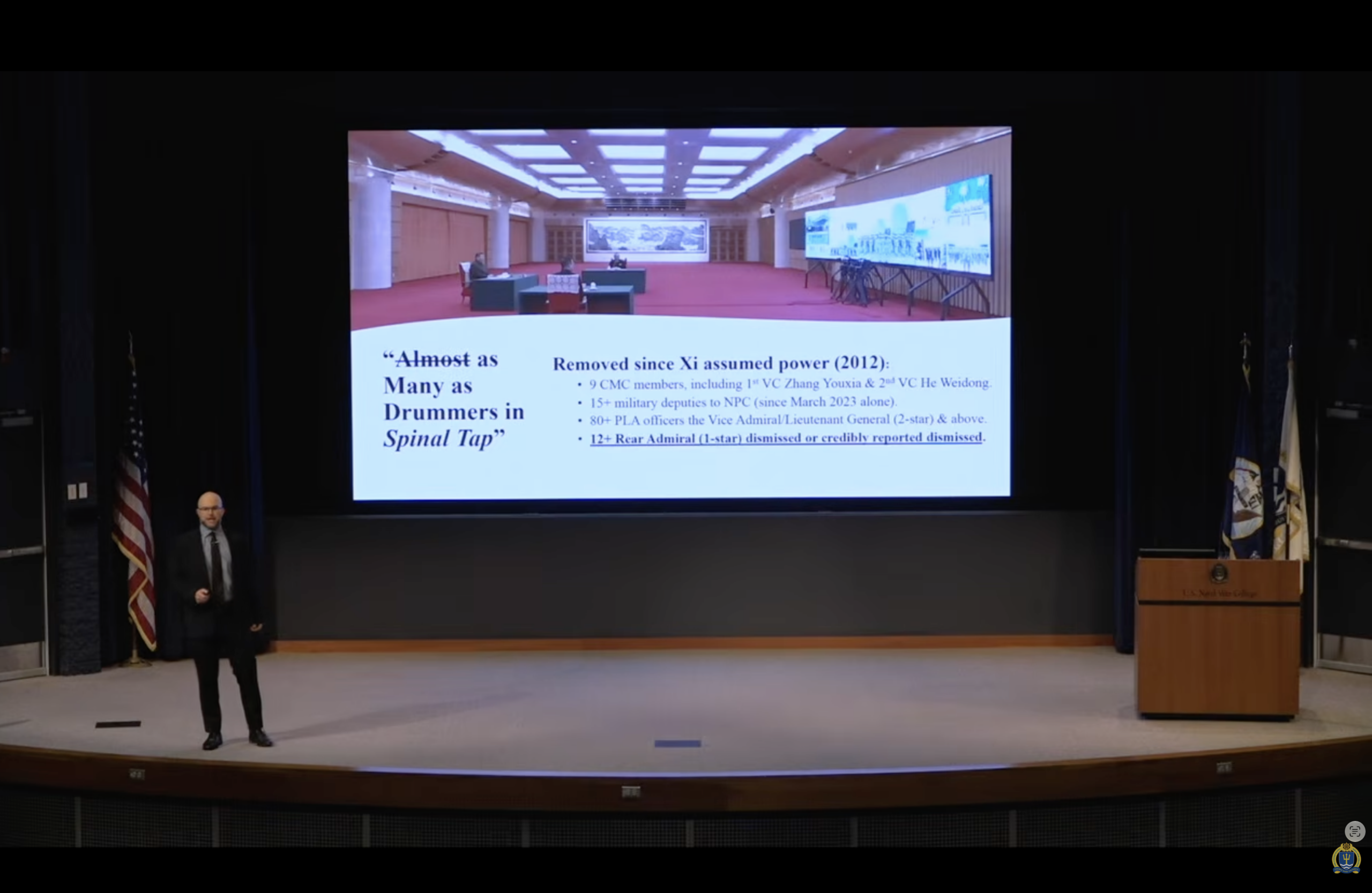
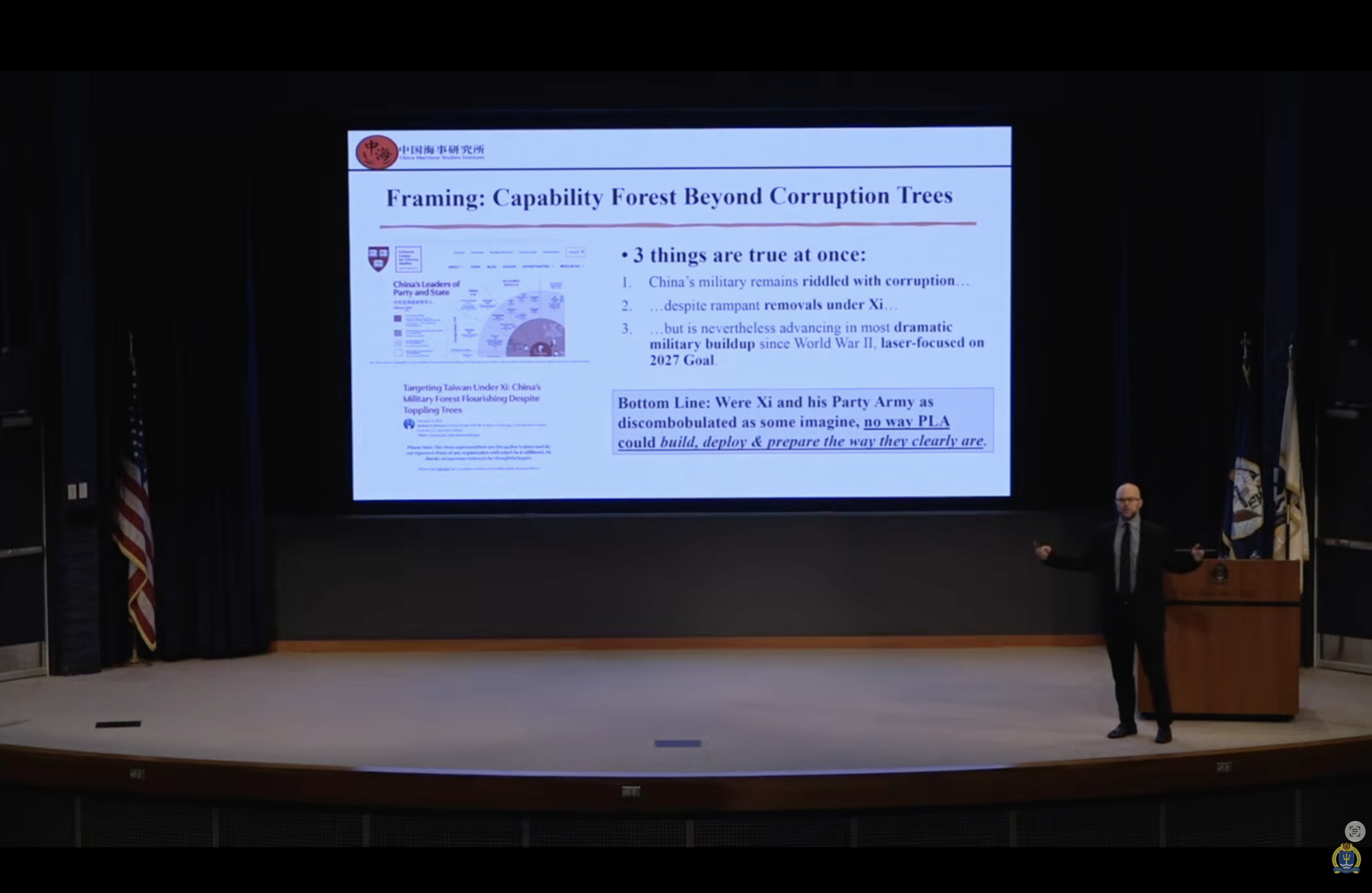
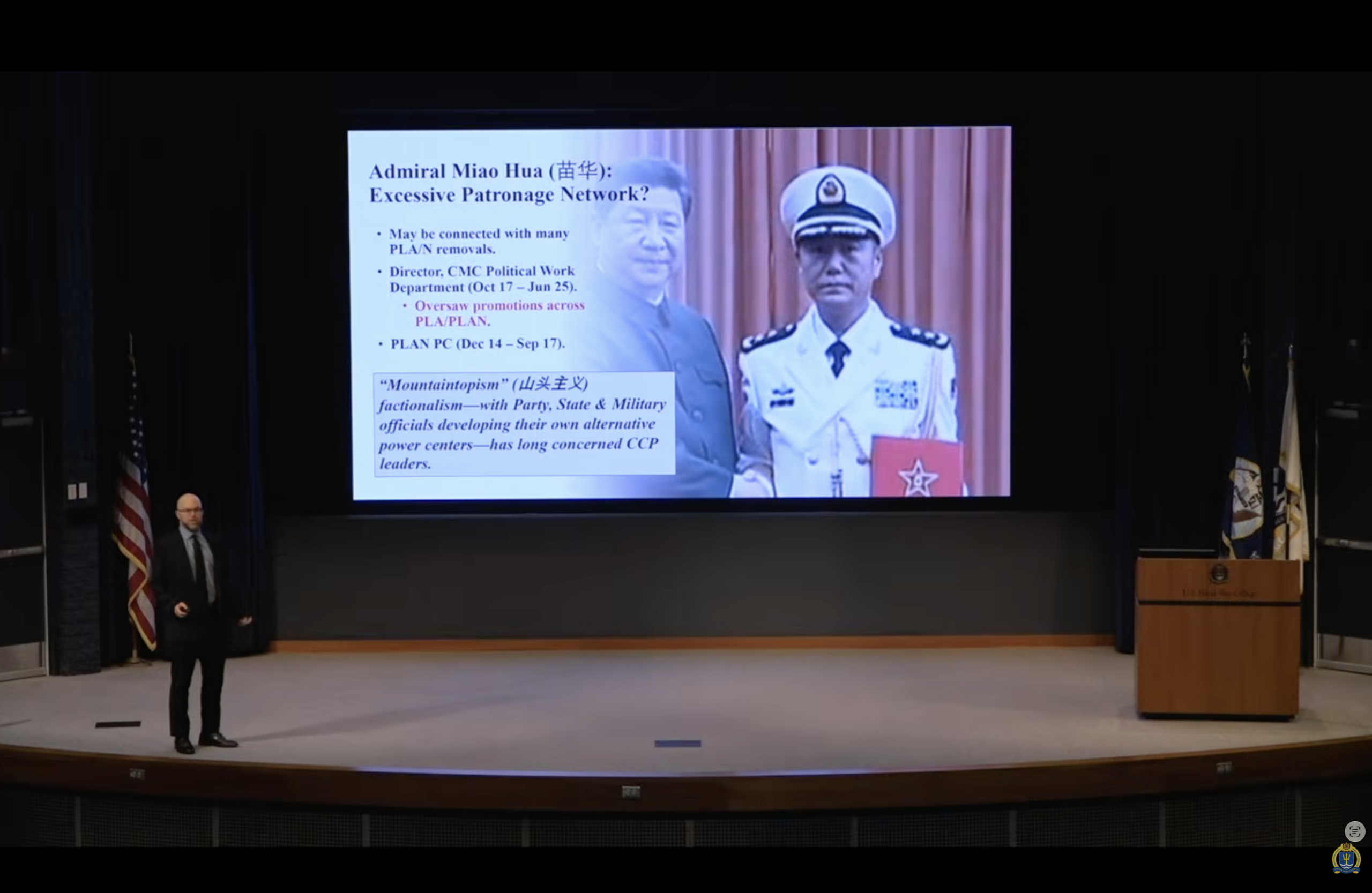
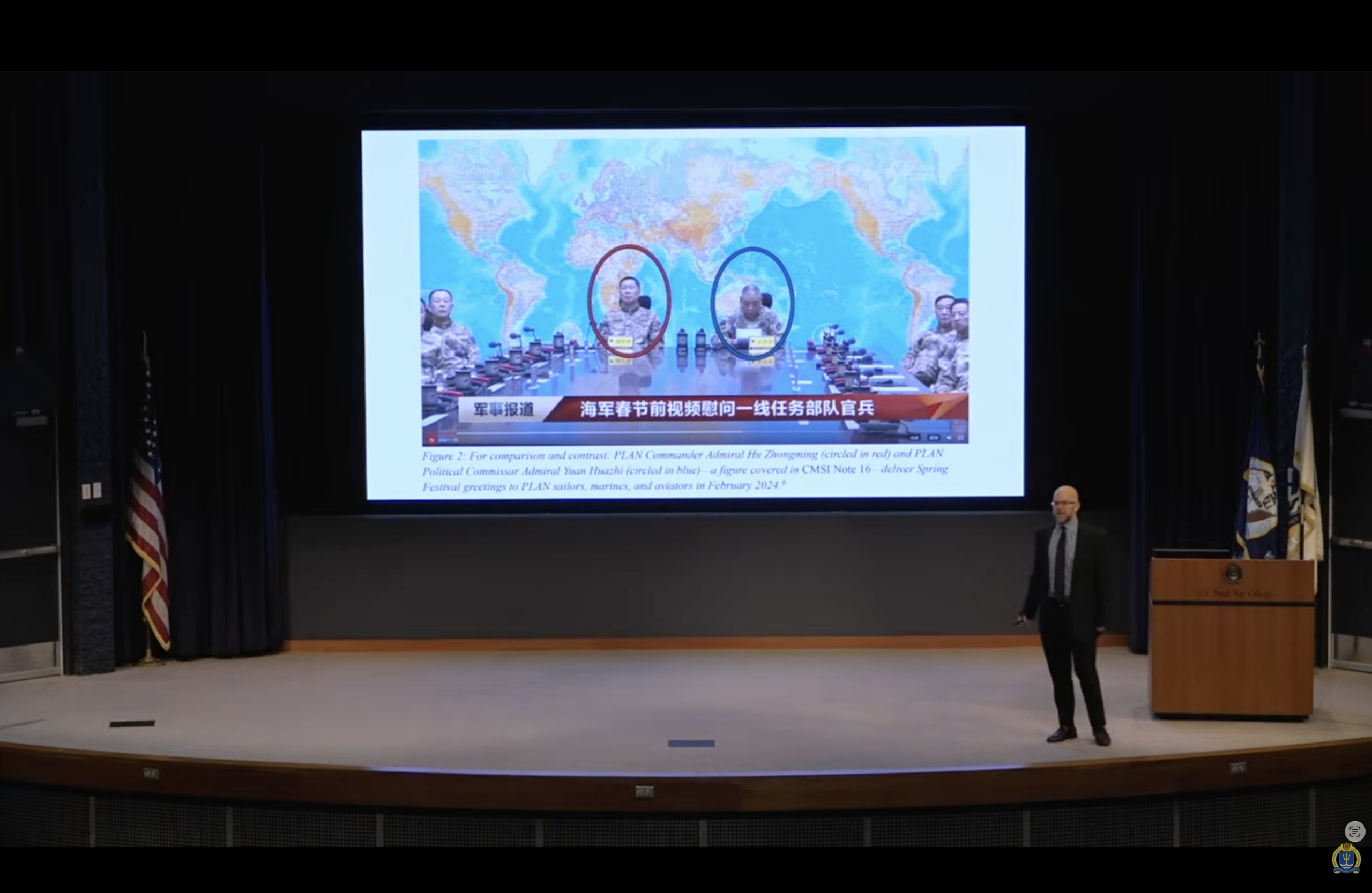
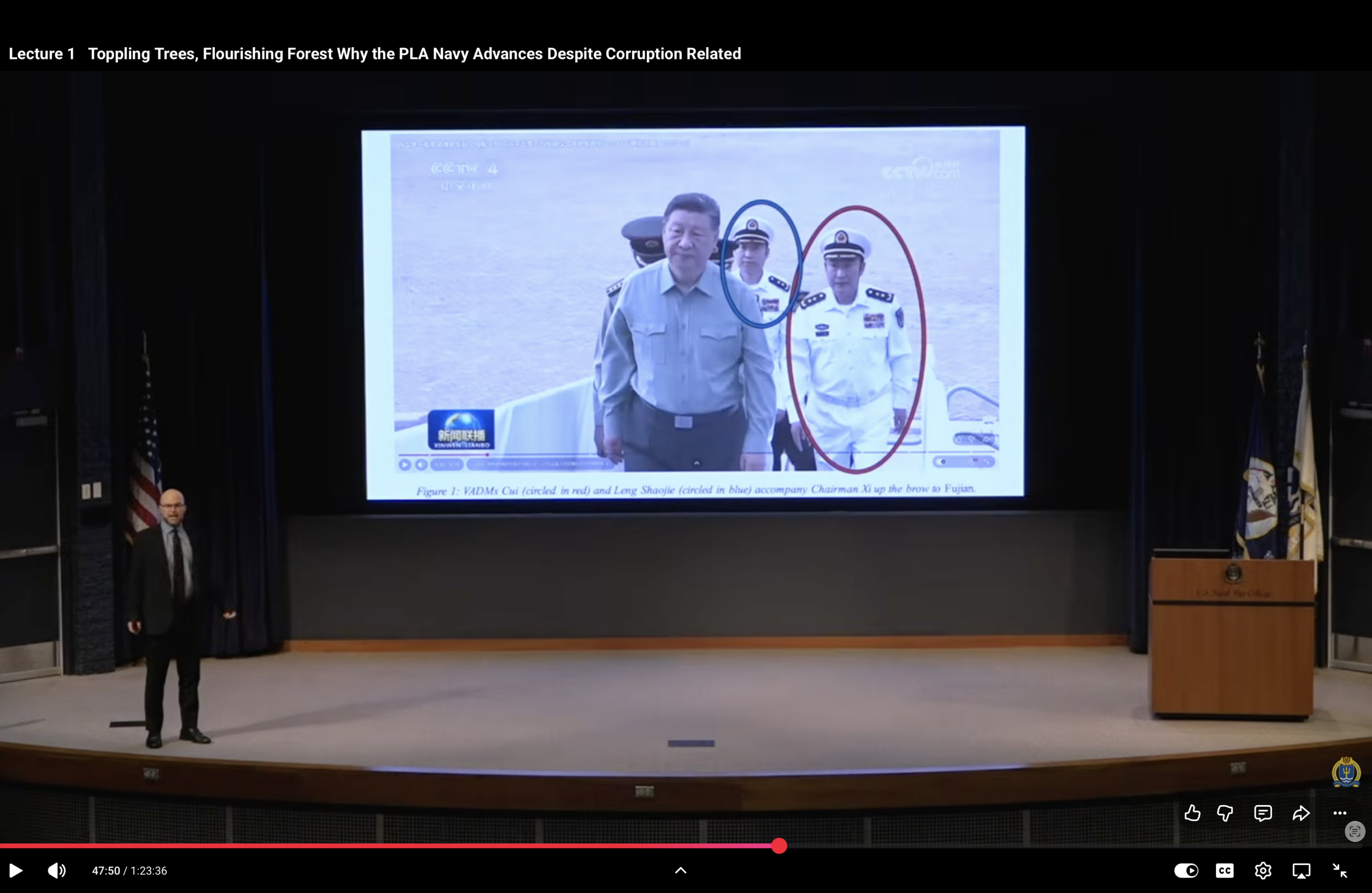
This INS lecture examines an apparent paradox in Xi Jinping’s military modernization: even as unprecedented purges remove senior officers and defense-industry leaders, China’s military—and particularly its navy—continues to expand and improve at a formidable pace.
Employing a “forest and trees” metaphor, the lecture argues that analysts risk mistaking extraordinary personnel turbulence for institutional paralysis. Xi’s removals undoubtedly impose costs, disrupt leadership networks, and expose persistent corruption and political dysfunction, but they coexist with—and may in some respects facilitate—continued capability development.
China possesses unusually deep pools of personnel, industrial capacity, technology, infrastructure, and state-directed resources, while the system under Xi prioritizes political reliability alongside operational competence and rapidly replaces leaders deemed corrupt, disloyal, or ineffective.
The resulting “forest” continues to flourish: the PLA is fielding increasingly sophisticated platforms and munitions, expanding production capacity, improving training realism and joint integration, and sustaining an intensifying operational tempo.
Nowhere are these trends more consequential than in the maritime domain and around Taiwan, where increasingly complex exercises rehearse coercion, blockade, precision-strike, and invasion-related capabilities.
The lecture therefore assesses China’s military trajectory through measurable outputs and operational behavior rather than leadership turnover alone, while distinguishing genuine near-term disruption from longer-term institutional effects.
Its central conclusion is cautionary: pervasive corruption and repeated removals are important vulnerabilities, but they should not be assumed to derail China’s military buildup. Individual trees are falling at a remarkable rate; the larger armed forces forest continues to grow.
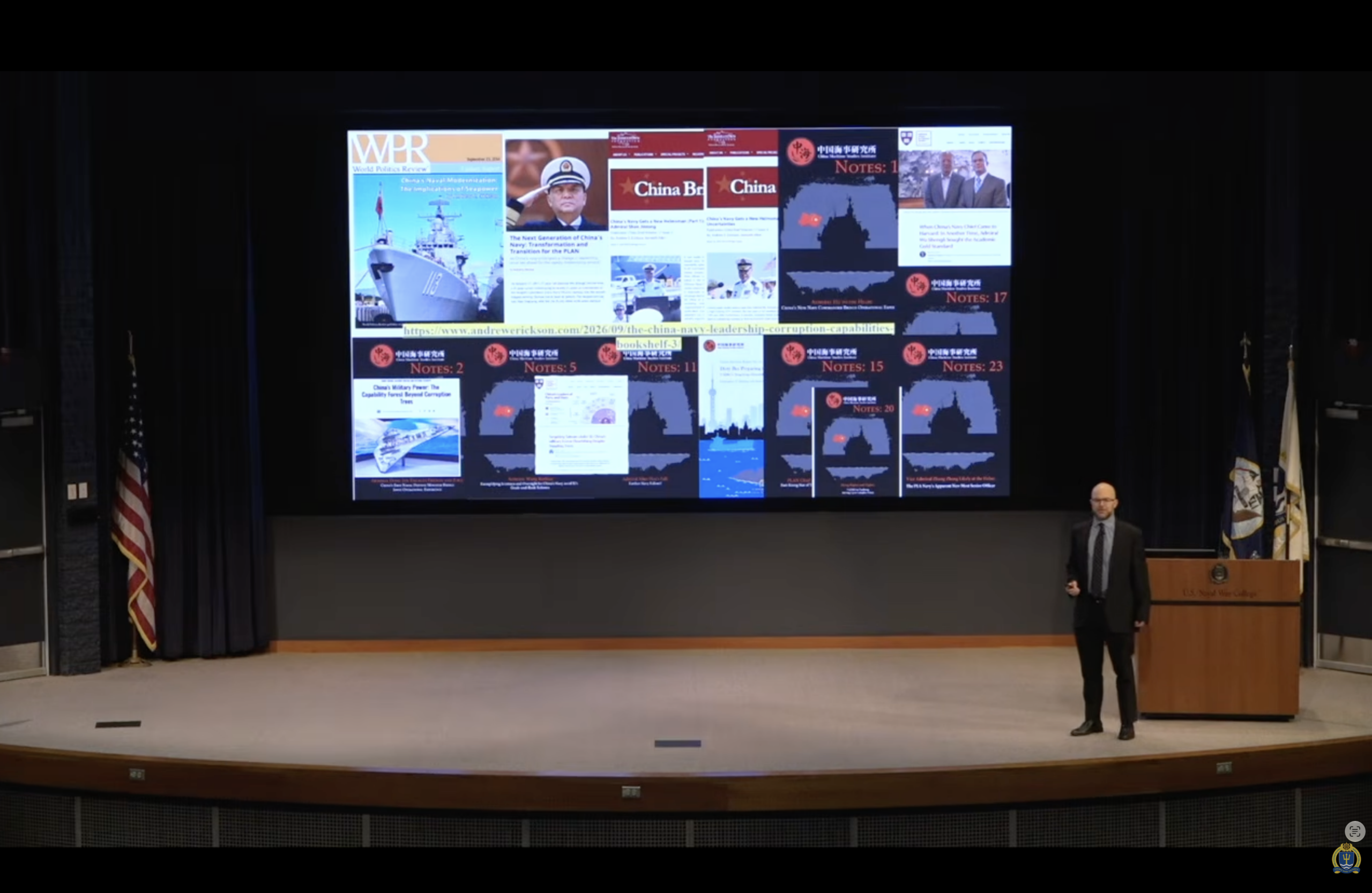
FOR RELATED READING & INFORMATION, SEE:
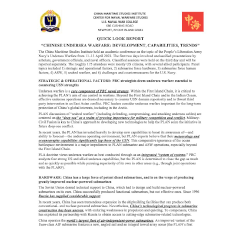
Andrew S. Erickson, “The China Navy Leadership: Corruption & Capabilities Bookshelf,” China Analysis from Original Sources 以第一手资料研究中国, 22 September 2026.

***