CMSI’s 20th Anniversary: Keynote Address by Admiral Gary Roughead
Admiral Gary Roughead, U.S. Navy (Ret.), “Charting the Course: 20 Years of CMSI and the Future of China in the Maritime Military Domain,” Keynote address delivered in the Mahan Reading Room, Naval War College, Newport, Rhode Island, 24 September 2026.
- Here is the official Naval War College writeup.
- My personal reflection on CMSI’s founding and development is available here.
From CMSI Director Chris H Sharman, US Navy (Ret.):
China Military Maritime Watchers: What does it really mean to be a maritime power?
“Charting the Course: 20 Years of CMSI and the Future of China in the Maritime Military Domain” — Here are the Keynote remarks by Admiral (Ret.) Gary Roughead, the 29th Chief of Naval Operations, delivered at CMSI’s 20th anniversary commemoration.
Admiral Roughead has had a front-row seat to China’s maritime transformation. From his engagement with Admiral Liu Huaqing, a key architect of China’s naval modernization, to his tenure as Commander of the U.S. Pacific Fleet and Chief of Naval Operations, he has witnessed that transformation over decades. His tenure as Pacific Fleet commander coincided with CMSI’s founding, making him uniquely positioned to reflect on the Institute’s contributions and the challenges ahead.
His keynote underscores a central insight that has guided CMSI’s work for two decades:
“We often compare our navy to theirs, counting the number and types of ships in each. But a maritime power is more than a navy.”
Admiral Roughead challenges us to look beyond ship counts to China’s global merchant fleet, shipbuilding capacity, port access, and broader maritime enterprise.
He also offers a sobering assessment of what lies ahead:
“China’s broad, deep maritime approach and ambition are unlikely to stop when Chairman Xi passes from the scene.”
What does this mean for U.S. maritime power—and what should CMSI be studying over the next 20 years?
***
“Charting the Course:
20 Years of CMSI and the Future of China in the Maritime Military Domain”
Keynote address by former Chief of Naval Operations (CNO) Admiral Gary Roughead, U.S. Navy (Ret.) at the commemoration of the twentieth anniversary of the China Maritime Studies Institute (CMSI)’s official public launch.[1]
Delivered in the Mahan Reading Room, Naval War College, Newport, Rhode Island,
24 September 2026.
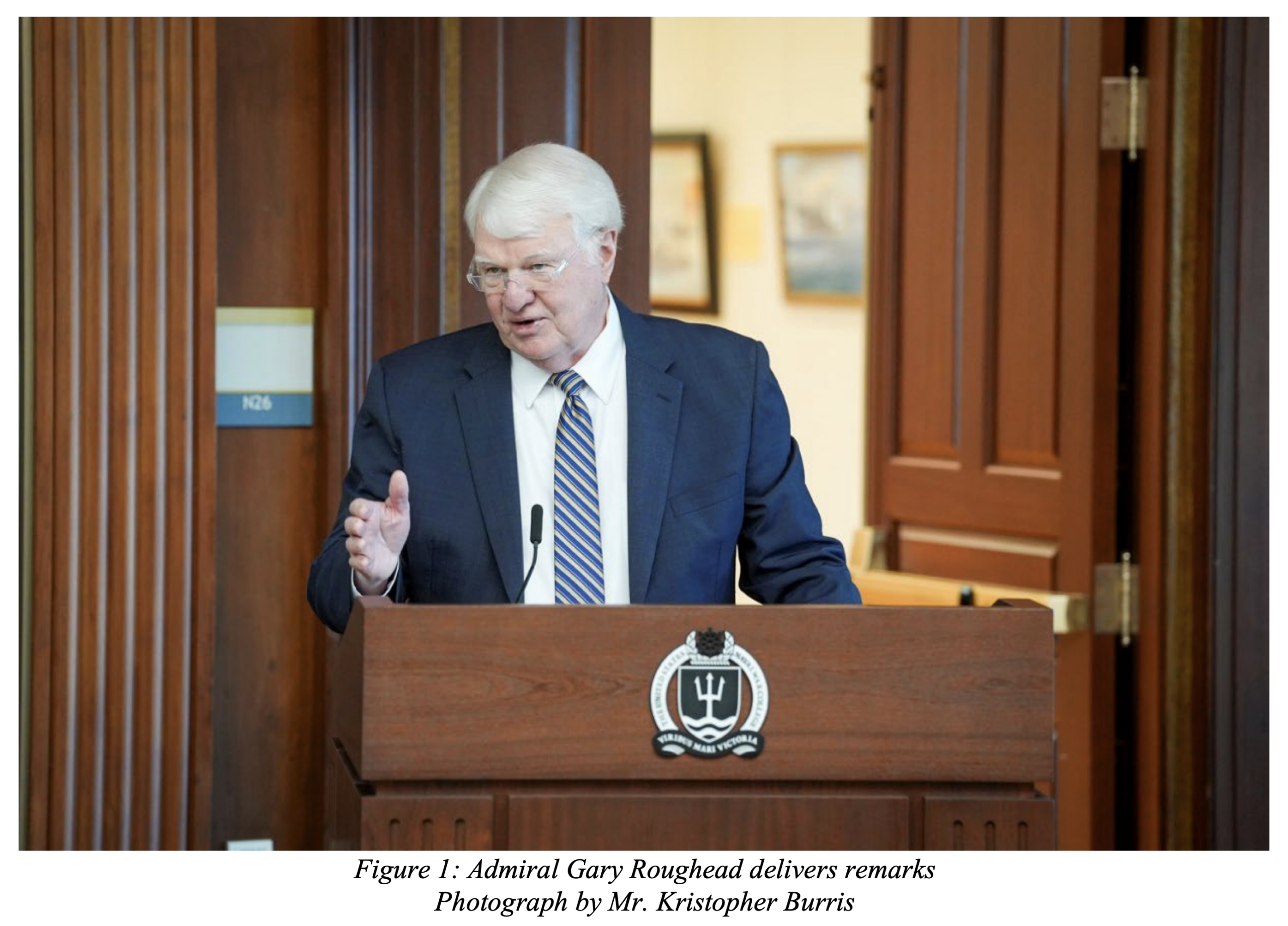
Figure 1: Admiral Gary Roughead delivers remarks
Photograph by Mr. Kristopher Burris
Thank you for the introduction and thank you to CMSI and the Naval War College for the invitation to offer remarks on CMSI’s 20th anniversary.
Admiral Walker, fellow former Chiefs of Navy, faculty and staff, and especially the young leaders assembled here… It’s always a pleasure to return to Newport and to the Naval War College. Time has flown by since my last visit, and much in our world has changed.
The Navy has three extraordinary educational institutions: the Naval Academy, the Naval Postgraduate School, and the Naval War College. All comprise an important continuum, and as CNO, in a paternalistic sense, I loved them all equally, guarded them from detractors, and advocated for them equally. But truth be told, as a Pacific Fleet commander and as CNO, the Naval War College was top of mind for me. I visited it more often than the others, was more attuned to what was going on here, and it was where I came to explore, be stimulated, and be invigorated as I worked through the issues most pressing to me.
The international dimension—the brilliant young leaders from around the world who immerse themselves in thinking here and the assembly of current global naval leaders is the gold standard of international cooperation.
The Naval War College has been, is, and must remain the intellectual center of gravity of our Navy and the global touchstone for naval and maritime thought.
With my Pacific and Asian focus, CMSI was particularly of interest and a point of pride. Its founding and my assuming command of the Pacific Fleet were almost concurrent. Although the country and all the armed services, at the time, were intensely and justifiably focused on the wars in the Middle East, those who envisioned, advocated for, and—in Chief Engineer parlance—lit CMSI’s first fires, were prescient, thoughtful, and focused.
My return to the Pacific Command in 2003, after less than a decade away, jolted me with how much China and the People’s Liberation Army (PLA) had changed. My two snapshots were impactful points of comparison, but I like to watch movies, and what struck me was the trajectory, structure, and China’s unquestionable focus, investment, and energy underpinning the changes.
The few shops, primarily in Washington, DC, that focused on China and hadn’t jumped exclusively to the Middle East weren’t digging deep enough and tended to be echo chambers. The timing of CMSI’s founding could not have been better. Having observed institutes and academies in China study our open sources intently and their familiarity with the intricacies of our strategies, approaches, priorities, and investments—indeed, sometimes with greater familiarity than our leaders in Washington—we needed to do the same. CMSI was not and is not an echo chamber and has been delivering ever since.
This small band of scholars here at Newport punches far above its weight. Leaders, including me, had some unique PRC exposure at the time. We thought we knew China, the PLA, and the PLA Navy (PLAN). CMSI gave us deeper insight into the drivers of Beijing’s maritime ambition through rigorous analysis, not superficial musings. The secret sauce was and remains the team’s focus, intellect, instincts regarding what is consequential, and the ensuing collaboration among China hands, linguists, and practitioners.
As CNO, the opportunity to drive budgets that have impact can be frustrating at times, but the 2008 Program Objective Memorandum (POM) that included CMSI was a no-brainer.[2] It is a testament to the power of the POM pen and the value that CMSI has generated over the years.
CMSI stands apart, as its name suggests. Housed at the Naval War College, and as most others are inclined to do, it could have been the China Naval Studies Institute. But maritime is far more consequential than naval alone. Most are fixated on navies as the measure of maritime power, which is a huge blind spot. CMSI’s broader maritime appreciation and aperture set it apart.
Although I obviously remain intensely interested in naval affairs, my post-retirement affiliations—which include commercial shipping, investing, technology, and education—have reinforced the value, relevance, and uniqueness of CMSI’s broader remit.
As a nation, stimulated by recent executive orders, we may be on the cusp of greater awareness of naval and maritime matters. The wars in Ukraine, and to a greater extent, Iran and the maritime Middle East, have reinforced the impact of disrupted maritime commerce and the value of naval power and its differentiated characteristics and unique considerations from the longstanding land bias of the nation and the Joint Force. A greater understanding and commitment, particularly in terms of budgets, must emerge that naval and maritime power must already exist in being when a crisis arises. Naval and maritime power cannot be wished into existence when needed and then ridden hard. Navies are maintained, not raised.
It’s unfortunate the public has not been able to see the extraordinary competence and hard work of our Sailors because of the current aversion to embedded press. All the more reason for this being the moment for the Naval War College and CMSI to seize.
CMSI has articulated the essence of the maritime challenge of our time. Most recently, in its excellent China Maritime Report, Chairman Xi’s Navy.[3] For the first time in decades, we face a prime competitor, an adversary that is led by a navalist. The last of that breed were FDR and Churchill, and they were on our side. Just running through the list of CMSI China Maritime Reports, Notes, Red Books, Studies, and Translations makes Xi’s and China’s maritime and naval bent readily apparent.
It really is quite extraordinary that, in my career—indeed, the latter part of my career and my second chapter—China, a former Eurasian empire and land power, transformed itself into the dominant maritime power, challenging the United States as the dominant naval power. That unique strategic shift is lost on most.
We often compare our navy to theirs, counting the number and types of ships in each. But a maritime power is more than a navy. A maritime power has a global merchant fleet, a robust and productive shipbuilding industry, and assured access to global ports it may own, operate, and otherwise control.
By all those measures, China has surged ahead in a very short period.
China’s commercial shipbuilding infrastructure and capacity are unmatched. Unlike in the United States, its shipyards build both commercial and naval ships. It has created a more fungible shipbuilding workforce. In commercial ship construction, it has displaced Japan and Korea to seize the top spot. To the Trump administration’s credit, it strongly emphasizes revitalizing American shipbuilding, but catching China will be a heavy lift, and our workforce shortfalls are real.
CMSI has been telling China’s maritime and growth story, not superficially, but through unique scholarship and perspectives. Highlighting the role and characteristics of its Coast Guard, Maritime Militia, and research fleet. The last of these, out of the American public’s eye, has expanded greatly and has been ranging ever wider over the years, gathering critical oceanographic data and, importantly for the future, locating and mapping critical seabed mining opportunities, as well as the transmission lines of global commerce: undersea cables. Most believe wealth rides on the PowerPoint lightning bolts from Earth to satellites and back. Making others aware of China’s enterprise approach on the seafloor highways of commerce and wealth cannot begin soon enough.
China’s broad, deep maritime approach and ambition are unlikely to stop when Chairman Xi passes from the scene. Meanwhile, Beijing will undoubtedly face internal headwinds. Some, like its self-inflicted demographic problem, will intensify.
For us, will we realize the recent call to revitalize our maritime and naval power? It will come at great cost, but not doing so will cost far more. We are seeing that cost in the Middle East today. Whether naval or commercial, the strains are showing. Missed by many who track fuel prices is the boost the Iran war has afforded China’s shipbuilding enterprise. In the past few months ship orders to China are nearly three times the year-earlier level as shippers contemplate longer, more energy-consuming voyages and new mixes of ships.
My hat is off to today’s naval and maritime leaders. As always, today’s leaders must address the day’s most pressing issues and build what the nation needs for the future. In their case, they are leading a Navy engaged in the most intense naval conflict since World War II.
I no longer have the POM pen nor authority to move things along, but I’ll offer some thoughts on how I see CMSI and the Naval War College adding value in the coming years. Who knows, when we gather for CMSI’s 40th we can see how things played out….
It’s unfortunate that U.S. military leaders, and our Navy in particular, do not enjoy the same degree and frequency of senior leader engagement that I experienced. As all of you know, it was opaque, hard, mostly unsatisfying. Many saw it as not worth it, but it did provide context, a sense of personalities and tone shifts, and a messaging opportunity. Even the highly orchestrated and controlled visits and show-and-tell, over time, told a story. CMSI’s products as preparation helped clear our opaque lens. Now CMSI is the lens.
The immediate needs of operational commanders will remain at the top of the list. How we get into China’s view and calculus regarding contingencies involving Taiwan and the South China Sea, among others, is essential, but I believe we must also expand our view geographically and temporally. Some have heard me recount a conversation I was privy to with Admiral Liu Huaqing in 1994, when he characterized the short term as 50 years. We need a longer view. Where will the PLAN’s growing carrier fleet roam in the years ahead and to what end? How will China and the PLAN play in shifting relationships in what I call the “Mega-region,” the vast area from the Eastern Mediterranean to East Asia, particularly the great Indian Ocean.[4] CMSI should be on the speed dial for that.
Warfare has changed dramatically, even in the short time since I hung up the uniform. Significant geopolitical changes are afoot, and technology, as it always has, will change warfare—but perhaps more in the next few years than ever before. Precision is no longer solely a privilege of the great powers, and we are getting the preview in Ukraine and the Middle East that cheap mass challenges defense and survivability. What will China and the PLA learn from that, and how will they act on it? What will be the take-away in countering cheap mass? Again, CMSI has a long history of ferreting out thought trends far before others.
Perhaps as China grows increasingly confident, there will be more open-source boasting and reveals, fact and misinformation, which will be fertile ground for CMSI to plow. As the PLAN ranges farther, there will be regional dynamics to explore. Commercial seabed activities will offer insights into dual-use technologies. I cannot see undersea warfare not being a priority for China. Will China’s silent service be able to avoid touting its prowess? What might be gleaned from boastful publications?
How will we understand how knitting the growing maritime enterprise together, from shipping and shipbuilding and ports to systems like LOGINK [the PRC state-supported national logistics information and data-exchange platform], might advantage China and disadvantage others? LOGINK is used both domestically and internationally and covers 90% of global container shipping. It and other systems facilitate deep data sharing that reveals commercial data with security and operational implications. How will technology that can ply, map, and understand the seafloor be used by China?
Regarding technology, the app is king in China. We work to refine the technology and want to perfect it. China, by contrast, moves quickly from application to civilian and military use. Get the app out, use it, refine it, redeploy it—repeatedly. If things fail, learn and do it quickly. On the commercial side, a willingness to push the apps onto its Belt and Road foundation and other willing users only accelerates application improvements and, by the way, embeds their technology more broadly.
How does China’s maritime enterprise benefit from the non-maritime apps and investments that have proliferated in the past decades? These include telecoms, power grids, logistic systems, and factories.
Highlighting the maritime industrial base—capacity, quality, innovation—those insights are more challenging and perhaps more important than counting output. I’m of the mind that every discussion of force comparisons must begin by understanding and comparing respective industrial bases, including supply chains. Those comparisons are not your purview, but your knowledge of China’s maritime enterprise is the place to start.
At the risk of appearing to jump on the issue of the day, what is the artificial intelligence (AI) play in all of this? As with apps, China will move quickly to proliferate and have others adopt its models over others.
I had the good fortune to witness the PLAN’s human dimension change over three decades; now those interactions are rare, if they exist at all. My first PLA unit visit was in 1994, to a regiment with a storied operational history. But it was nothing more than a walkabout showing how much money the unit was making by manufacturing a range of products, from shoe polish to tools, and by selling its agricultural produce. An ‘A’ in entrepreneurship, not so good on combat readiness. That is a far cry from the PLA/PLAN of today.
CMSI has provided great insight on the changing structure, culture, and professionalism of the PLAN. Your focus on the training, quality, and thinking of leaders and among the ranks of the PLAN is especially valuable. The dots you connect in this evolving human dimension will perhaps be the most important work you will do.
Again, it’s easy to offer more work from the sidelines, or to be a clown when you are not the ringmaster responsible for the big show. But the Naval War College, with CMSI’s unique insight, approach, and competence, should consider a wider window on regional and global reactions to China’s maritime ambition. No one else will do it in the same impressive way, nor can they.
I don’t urge CMSI to become something it is not, and particularly not an adjunct intel analyst. But no one sees, understands, and can articulate China’s maritime-related currents as well as CMSI. You are unique.
CMSI, the Naval War College, and the Navy should press as hard as you can on greatly expanding readership and awareness of CMSI’s great work. Be proactive and available beyond the pure security bubble with offerings such as Andrew Erickson’s excellent testimony for the U.S.-China Economic and Security Review Commission.[5]
You are the best in the business, and twenty years of your extraordinary work give you a unique perspective and pride of place. It’s important to show the complex movie in the way you do and not let others’ snapshots tell a superficial story.
Thank you, congratulations, and all the best in the next twenty years.
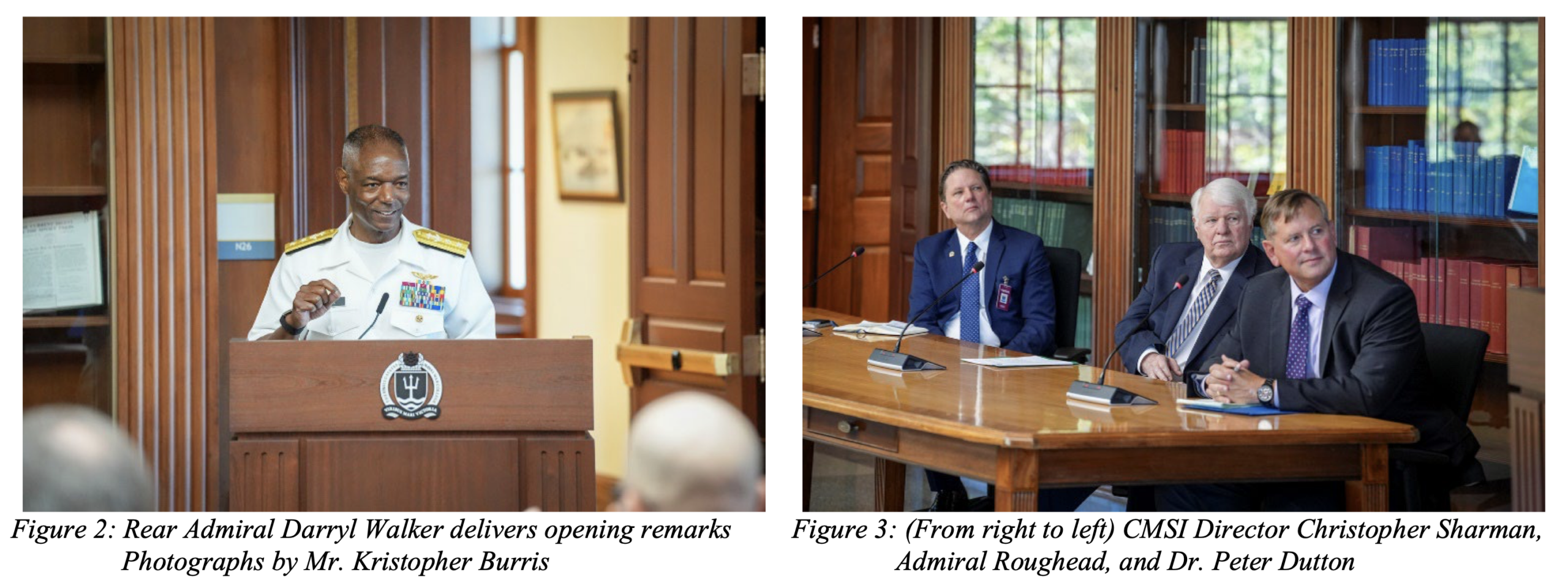
Figure 2: Rear Admiral Darryl Walker delivers opening remarks Figure 3: (From right to left) CMSI Director Christopher Sharman, Admiral Roughead, and Dr. Peter Dutton
Photographed by Mr. Kristopher Burris
[1] The views expressed in these remarks do not necessarily represent the perspectives of the Department of War or the Naval War College.
[2] The POM describes how the Services and Defense agencies want to allot future funding for a program so that it meets Service Program Guidance (SPG) and Defense Planning Guidance (DPG). The POM includes an analysis of missions, objectives, alternative courses of action, and allocation of resources covering the 5-year Future Year Defense Program (FYDP).
[3] Ryan D. Martinson, Chairman Xi’s Navy, China Maritime Report 54 (Newport, RI: Naval War College China Maritime Studies Institute, 2 June 2026), https://digital-commons.usnwc.edu/cmsi-maritime-reports/54/.
[4] Admiral Gary Roughead, “Eurasia’s Southern Rim: A Blue Economy Mega-region,” The Caravan (Stanford, CA: The Hoover Institution, Stanford University, 9 June 2026), https://www.hoover.org/research/eurasias-southern-rim-blue-economy-mega-region.
[5] Andrew S. Erickson, Statement for the Record for Hearing on “Part of Your World: U.S.-China Competition Under the Sea,” U.S.-China Economic and Security Review Commission, Washington, DC, 2 March 2026, https://www.uscc.gov/sites/default/files/2026-03/Andrew_Erickson_Statement_for_the_Record.pdf.
FURTHER READING:
- “China Maritime Studies Institute Celebrates 20 Years with Lecture by Former Chief of Naval Operations, Panel Discussion,” U.S. Naval War College Public Affairs, 25 September 2026.
- Andrew S. Erickson, “CMSI’s 20th Anniversary! China Maritime Studies Institute Established Two Decades Ago within Naval War College,” China Analysis from Original Sources 以第一手资料研究中国, 2 October 2024.