China Maritime Report #52—“Everything Everywhere All At Once: The Growing Complexity of PLA Amphibious Exercises”
Jason Wang, Marvin Hamor Bernardo, Pei-Jhen Wu, and Andrew S. Erickson, Everything Everywhere All At Once: The Growing Complexity of PLA Amphibious Exercises, China Maritime Report 52 (Newport, RI: Naval War College China Maritime Studies Institute, 22 April 2026).
CLICK HERE TO DOWNLOAD A CACHED PDF.
From CMSI Director Christopher Sharman:
China Military Maritime Watchers: This is the most comprehensive analysis available of the PLA’s August 2025 amphibious “capstone” exercise.
The China Maritime Studies Institute (CMSI) is pleased to publish China Maritime Report No. 52, “Everything, Everywhere, All at Once”—a detailed examination of the PLA’s large-scale amphibious exercise opposite Taiwan simulating an invasion scenario.
This exercise combined scale, realism, and geographic fidelity in ways not previously observed.
Some key takeaways:
- From drills to rehearsal: A multi-phase, multi-axis amphibious operation integrating landings, logistics, and command and control into a unified campaign construct.
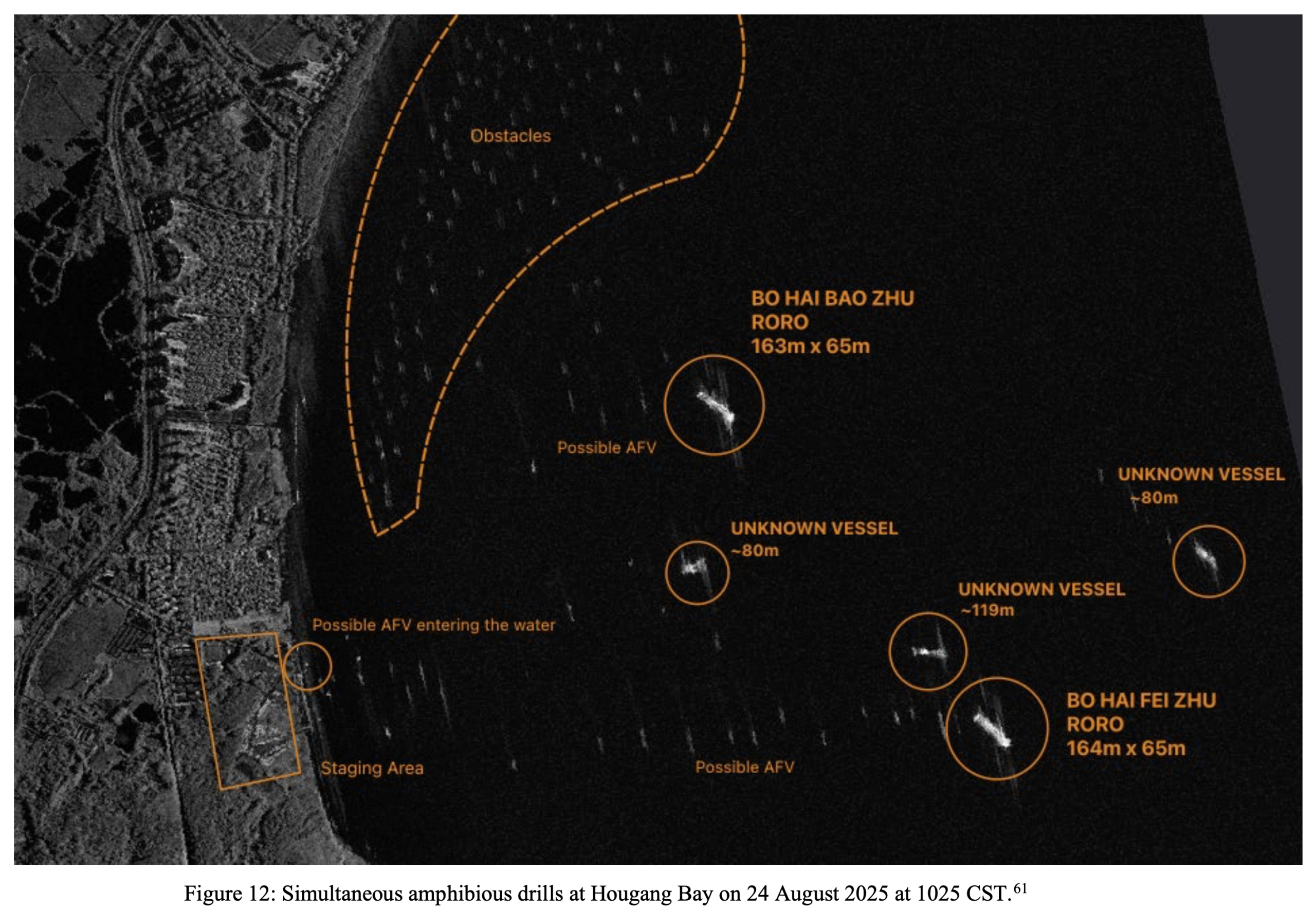
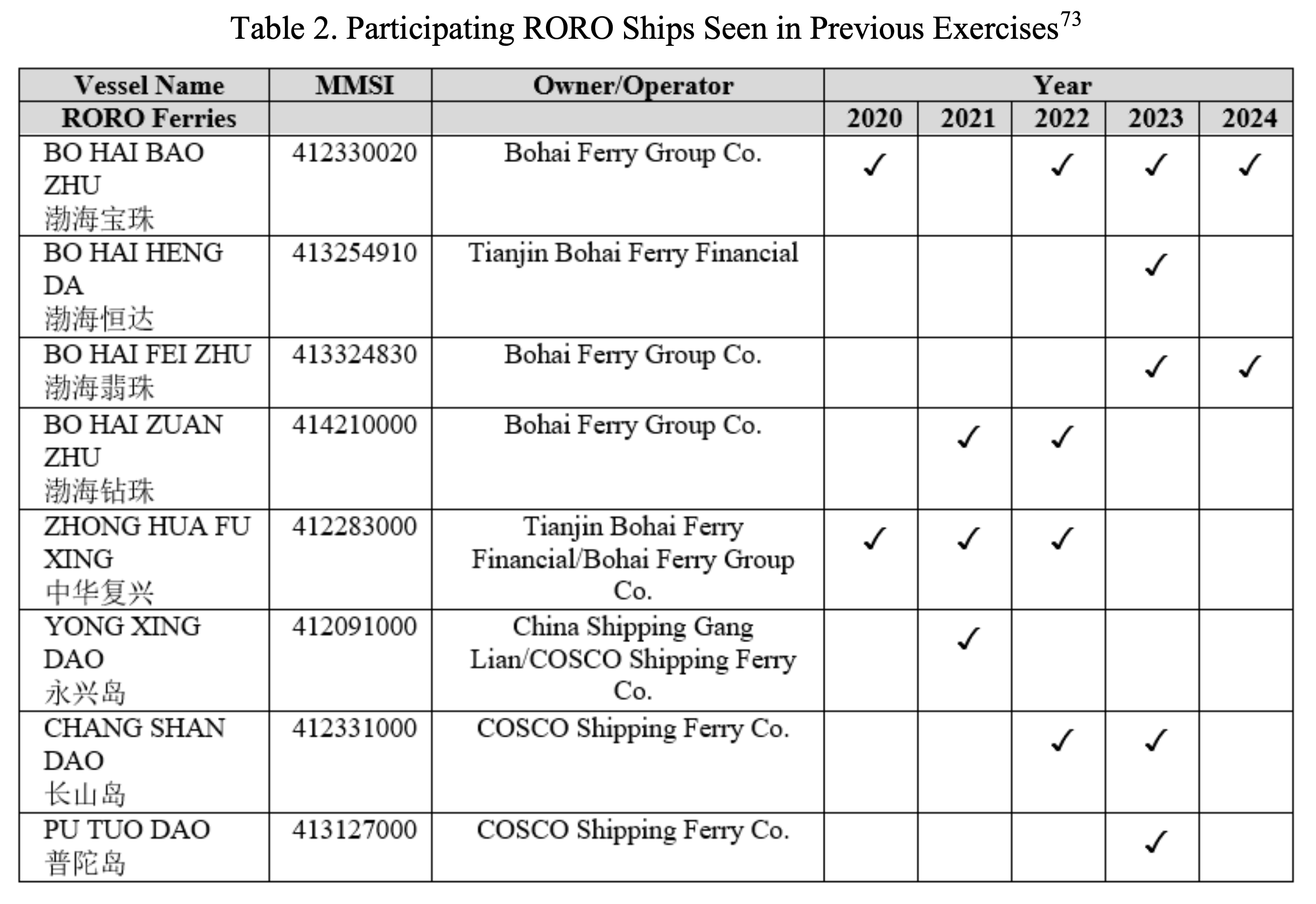
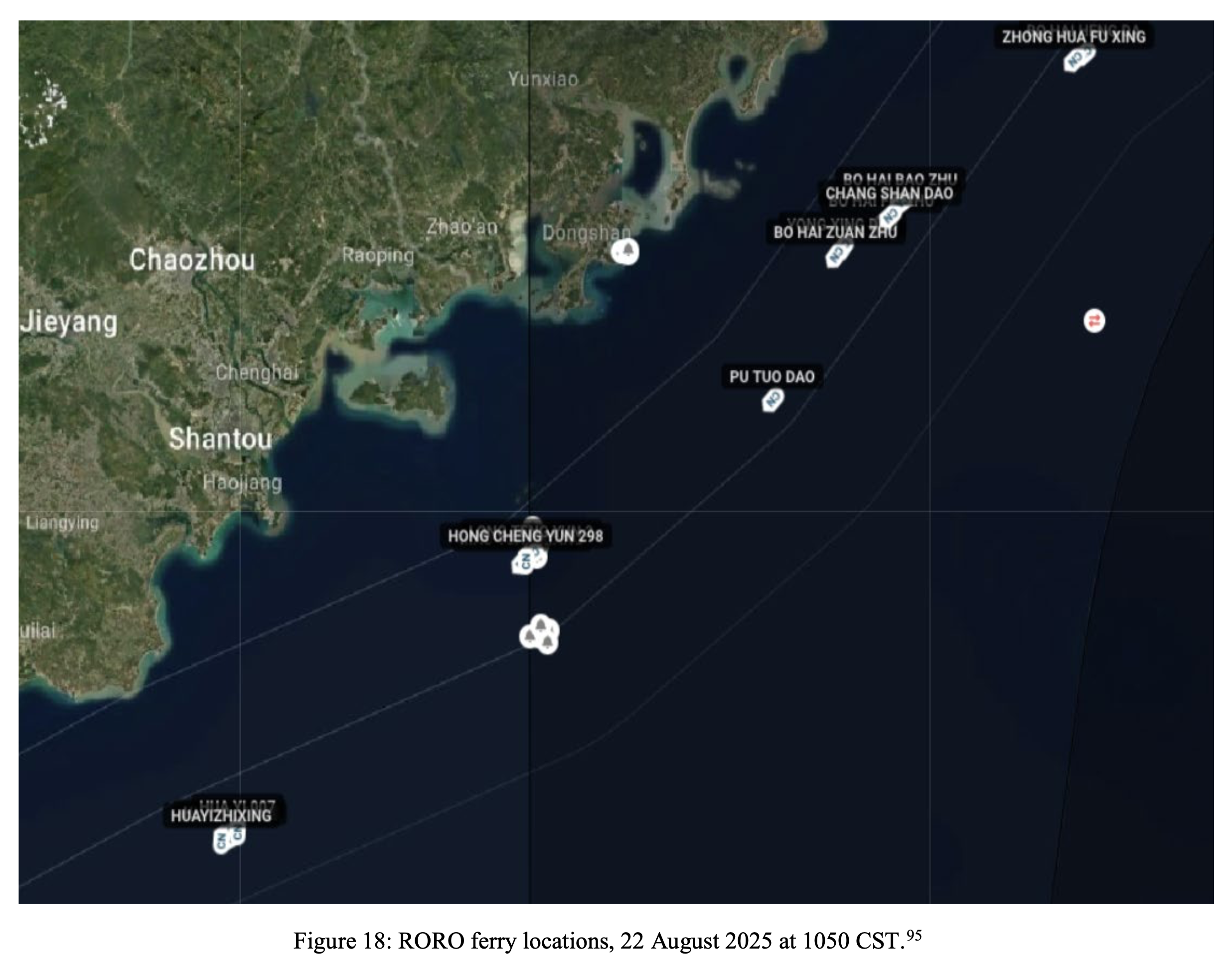
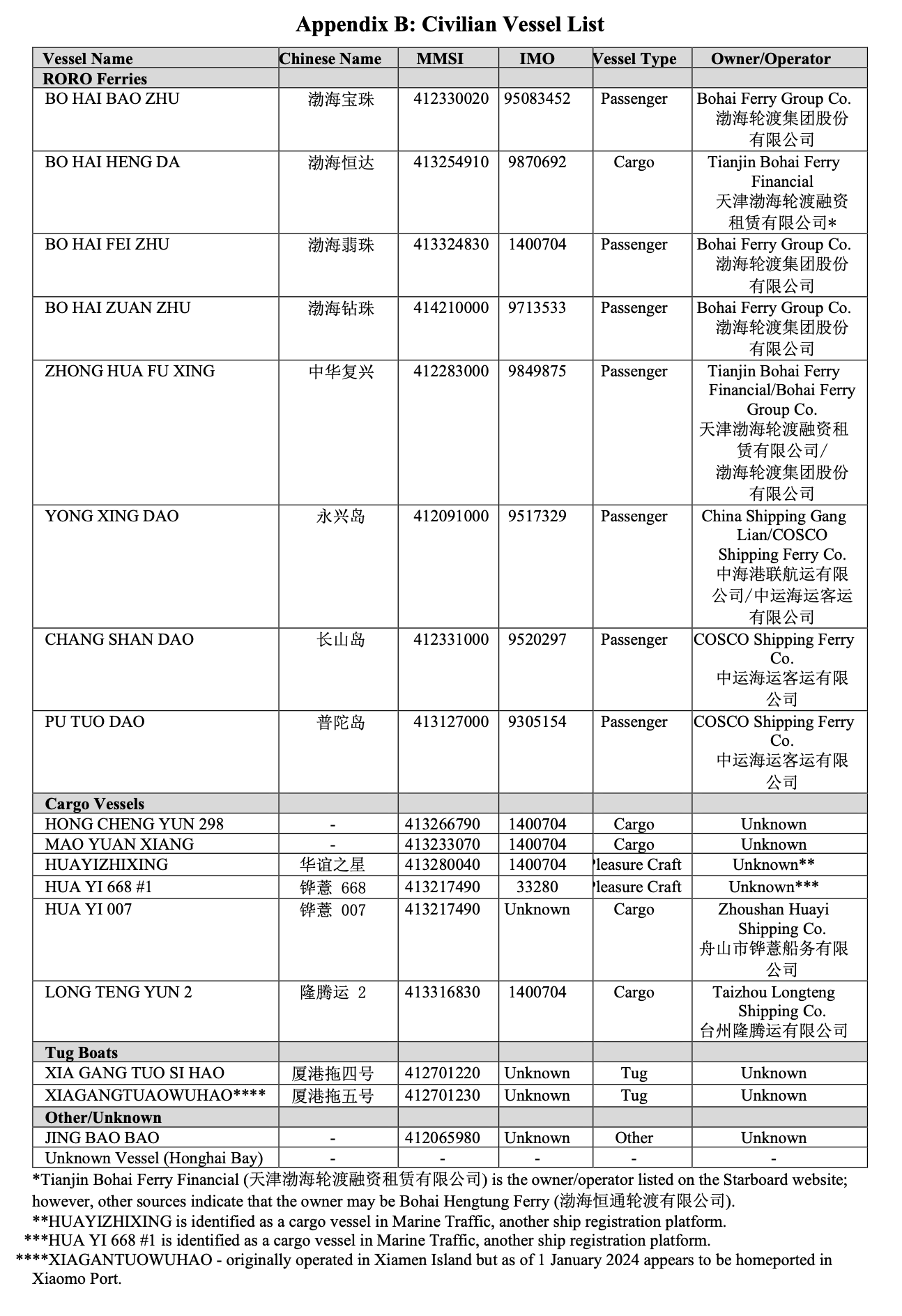
- Civil-military lift at scale: Extensive use of ROROs, LCTs, and other dual-use vessels highlights a maturing solution to amphibious lift—and complicates indications and warning.
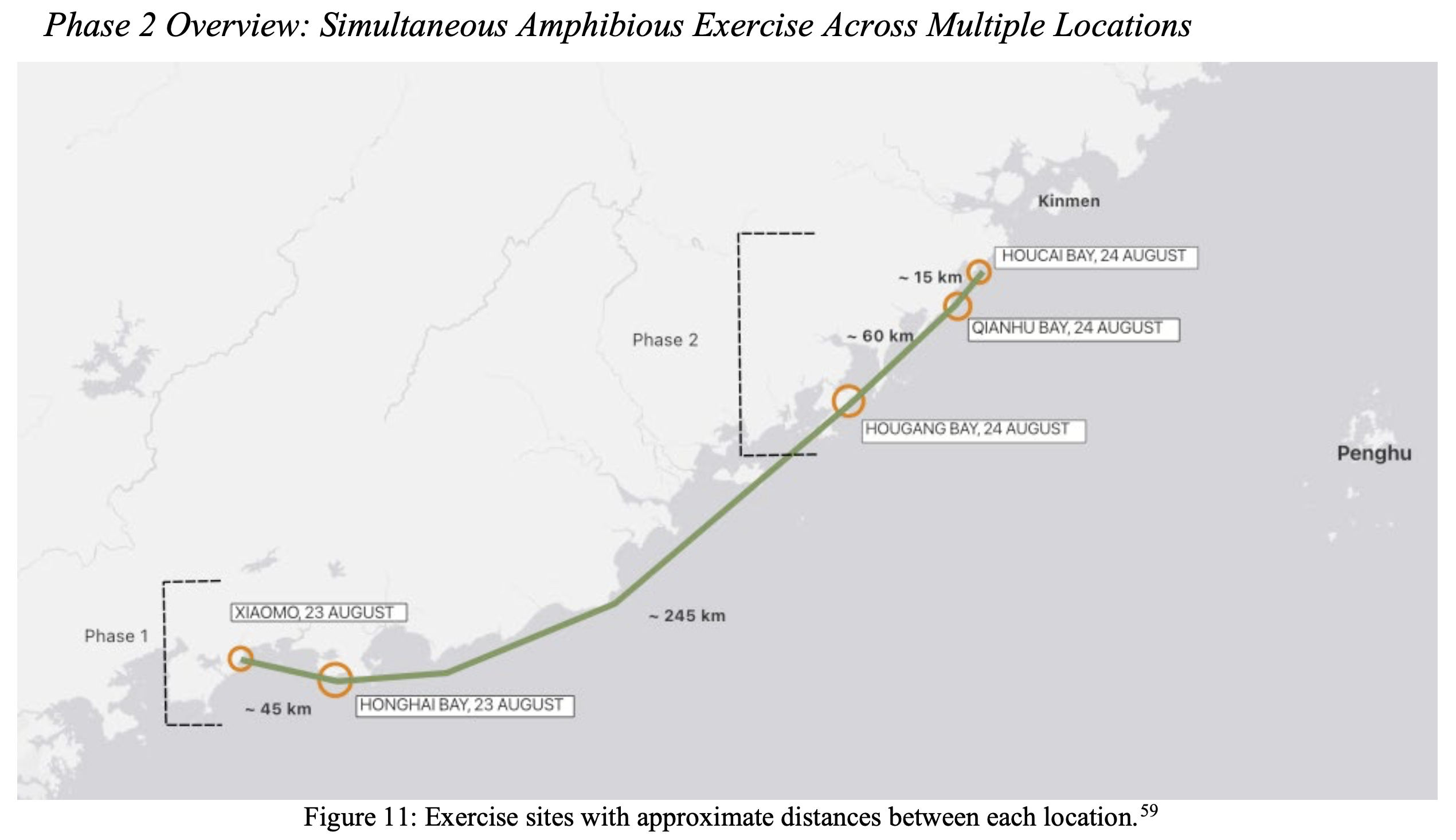
- Distributed operations at Taiwan scale: Activity spanned ~360 km, mirroring Taiwan’s west coast—suggesting deliberate alignment with real-world invasion planning.
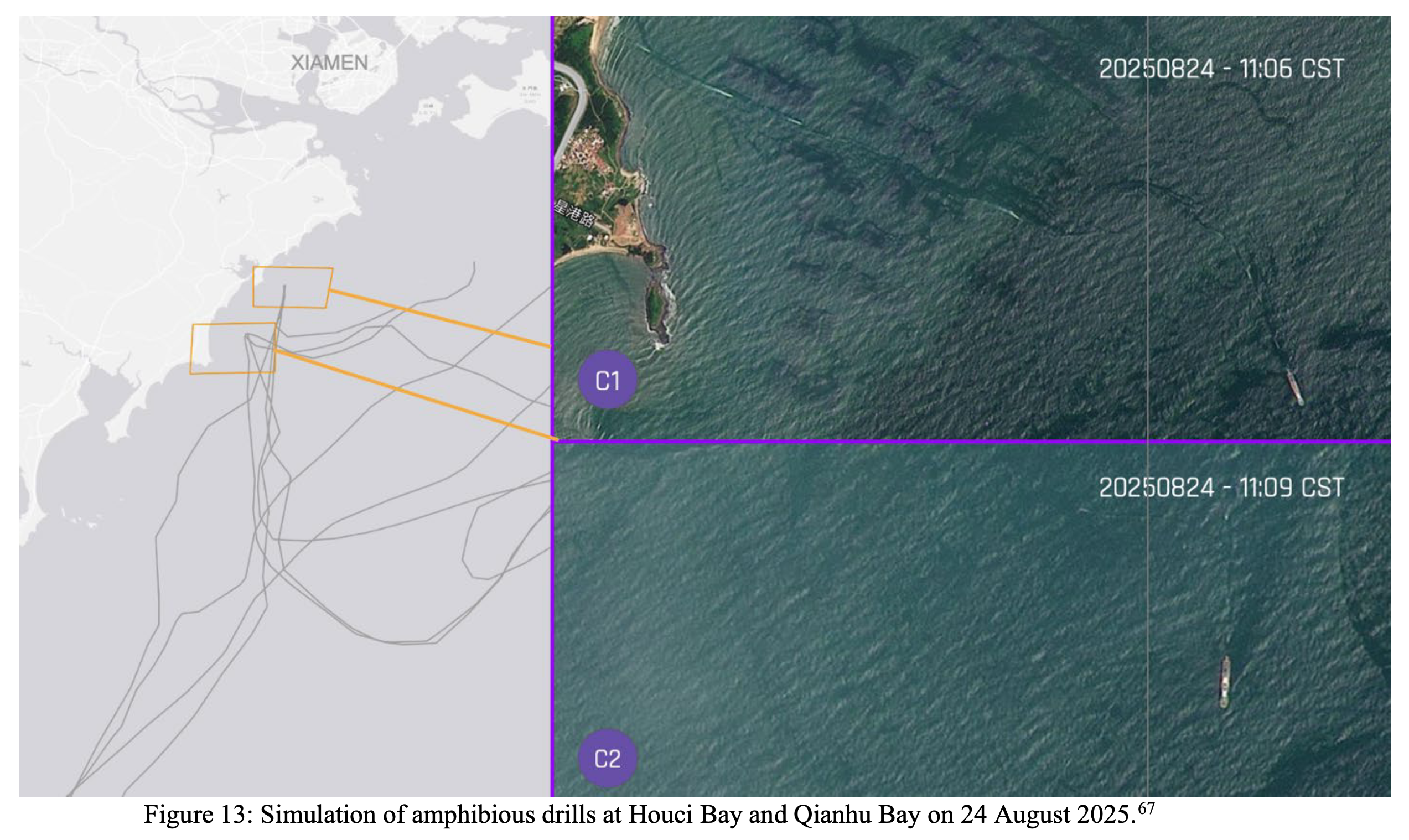
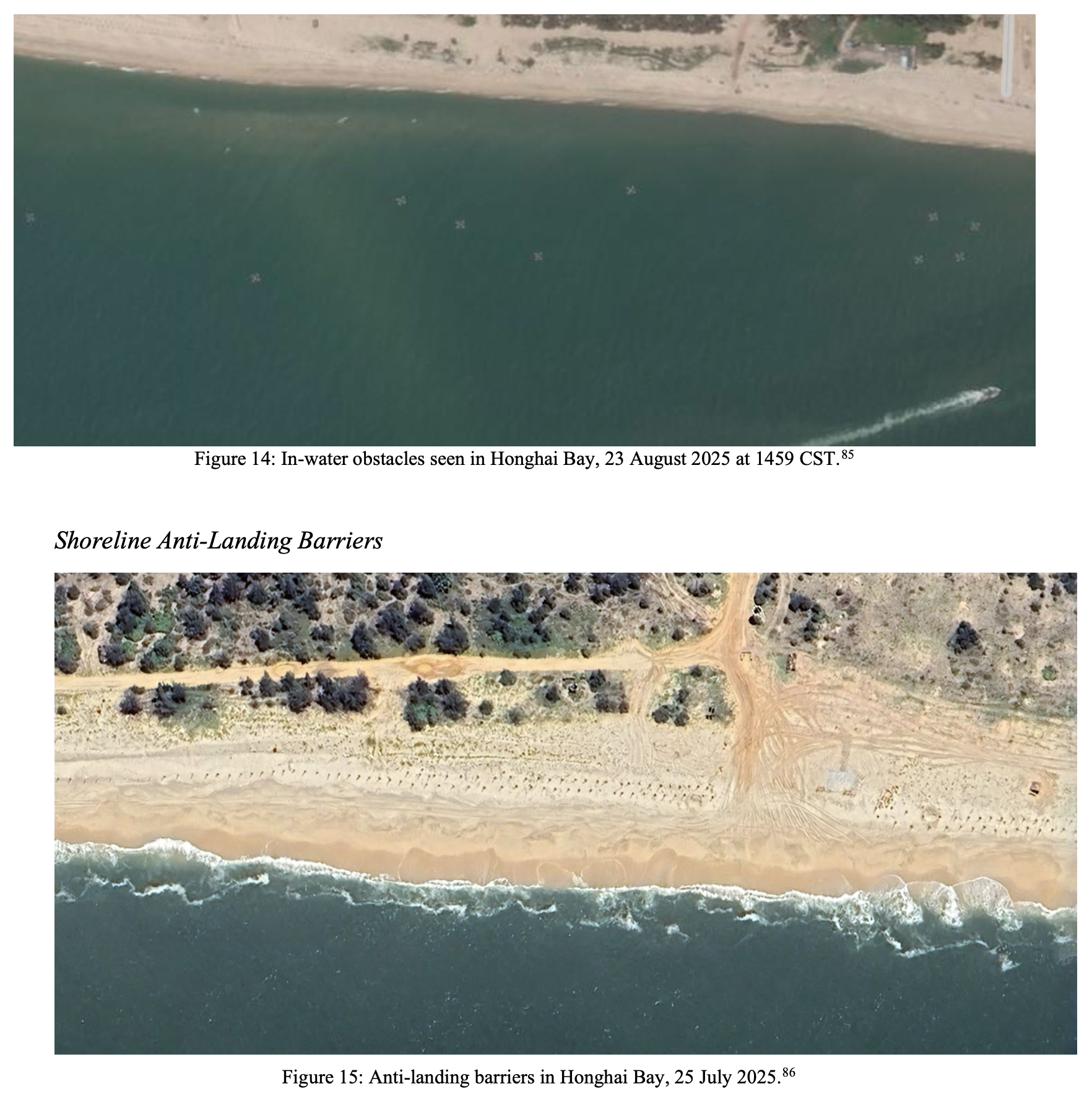
- Training in realistic littorals: Inclusion of aquaculture obstacles and anti-landing barriers reflects preparation for complex coastal environments.
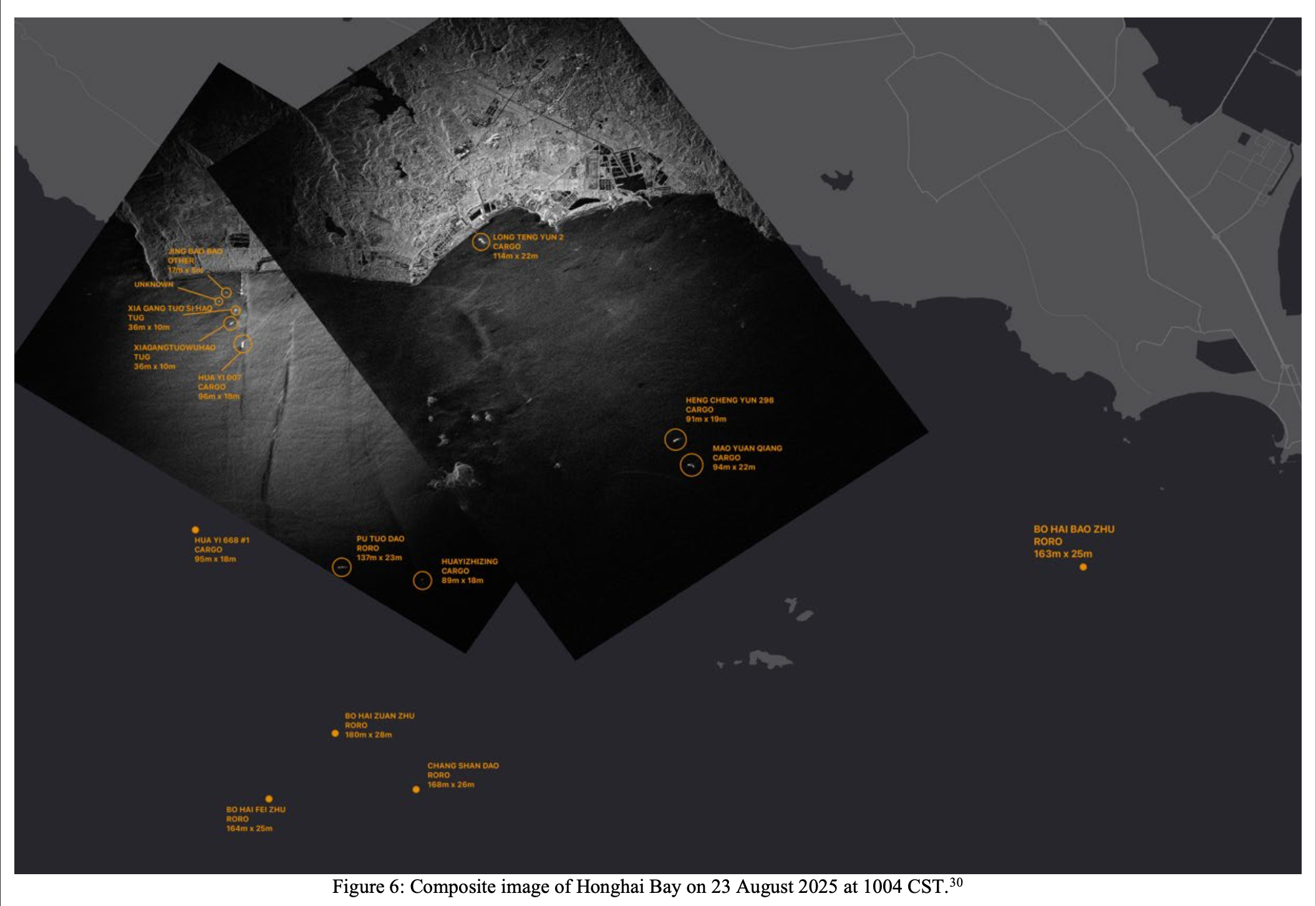
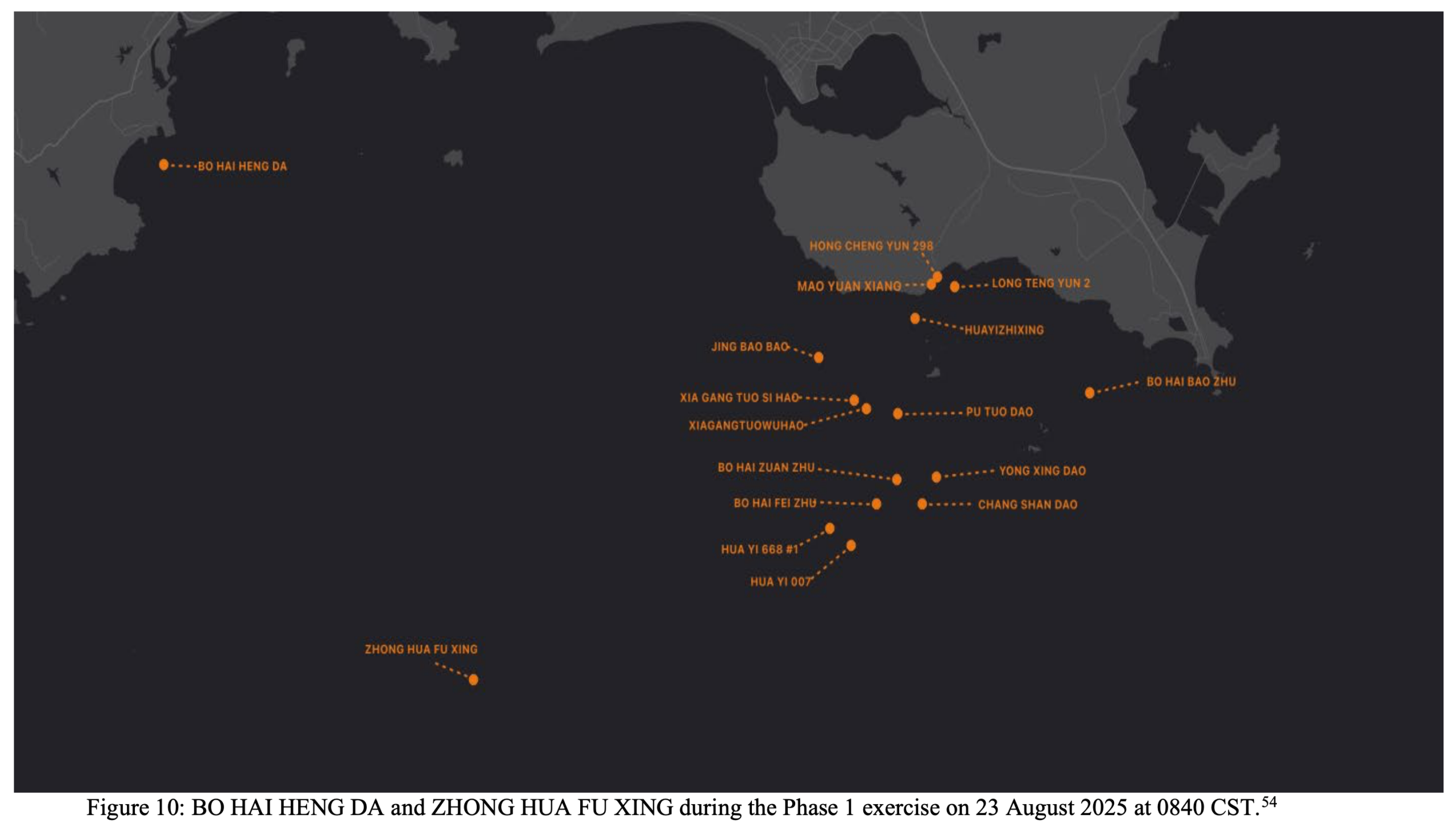
Authored by Jason Wang, Marvin Hamor Bernardo, Pei Jhen-Wu, and CMSI’s Andrew Erickson, the report draws on commercial imagery, includes an hour-by-hour reconstruction of the exercise, and catalogs participating civilian vessels.
It also places 2025 in context by comparing it to the four previous capstone exercises—highlighting key trends and inflection points.
This report is filled with details and offers insights you won’t find elsewhere.
As the next exercise cycle approaches, this report identifies the operational patterns—and warning indicators—that deserve close attention.
About the Authors
Jason Wang is a national security researcher and COO of ingeniSPACE, a Silicon Valley geointelligence analytics house.
Marvin Hamor Bernardo is a PhD candidate at the National Chengchi University, Taiwan, and serves as a maritime domain analyst at ingeniSPACE.
Pei-Jhen Wu is a national security researcher and imagery analyst at ingeniSPACE.
Andrew S. Erickson, Ph.D., is Professor of Strategy at the Naval War College’s China Maritime Studies Institute and a Visiting Scholar at Harvard University’s John King Fairbank Center for Chinese Studies.
Main Findings
- In August 2025, the People’s Republic of China (PRC) conducted a large-scale exercise to simulate an invasion of Taiwan. This “capstone” amphibious exercise suggests that People’s Liberation Army (PLA) training and preparations for a future Taiwan campaign are becoming more focused, realistic, and sophisticated.
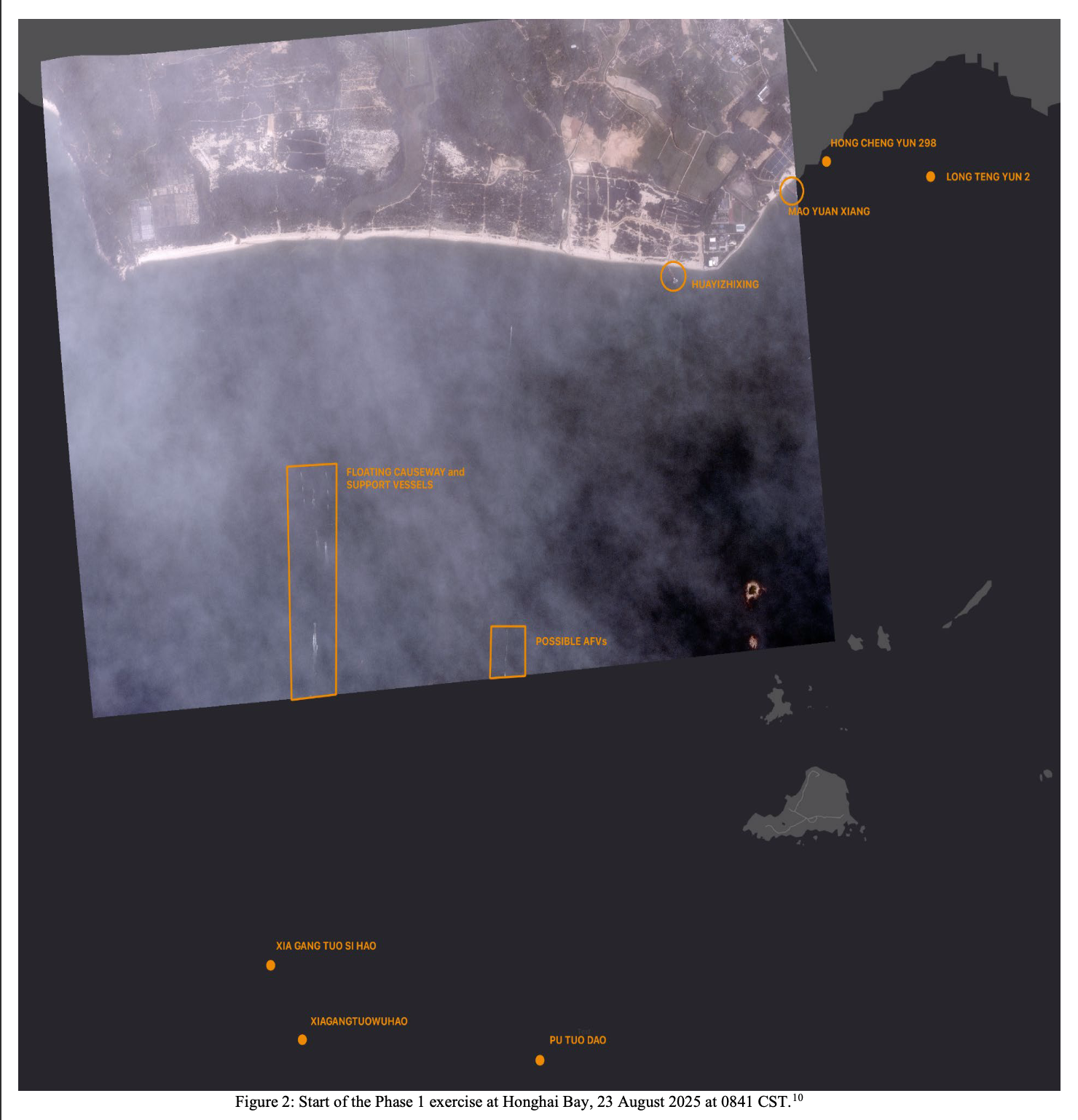
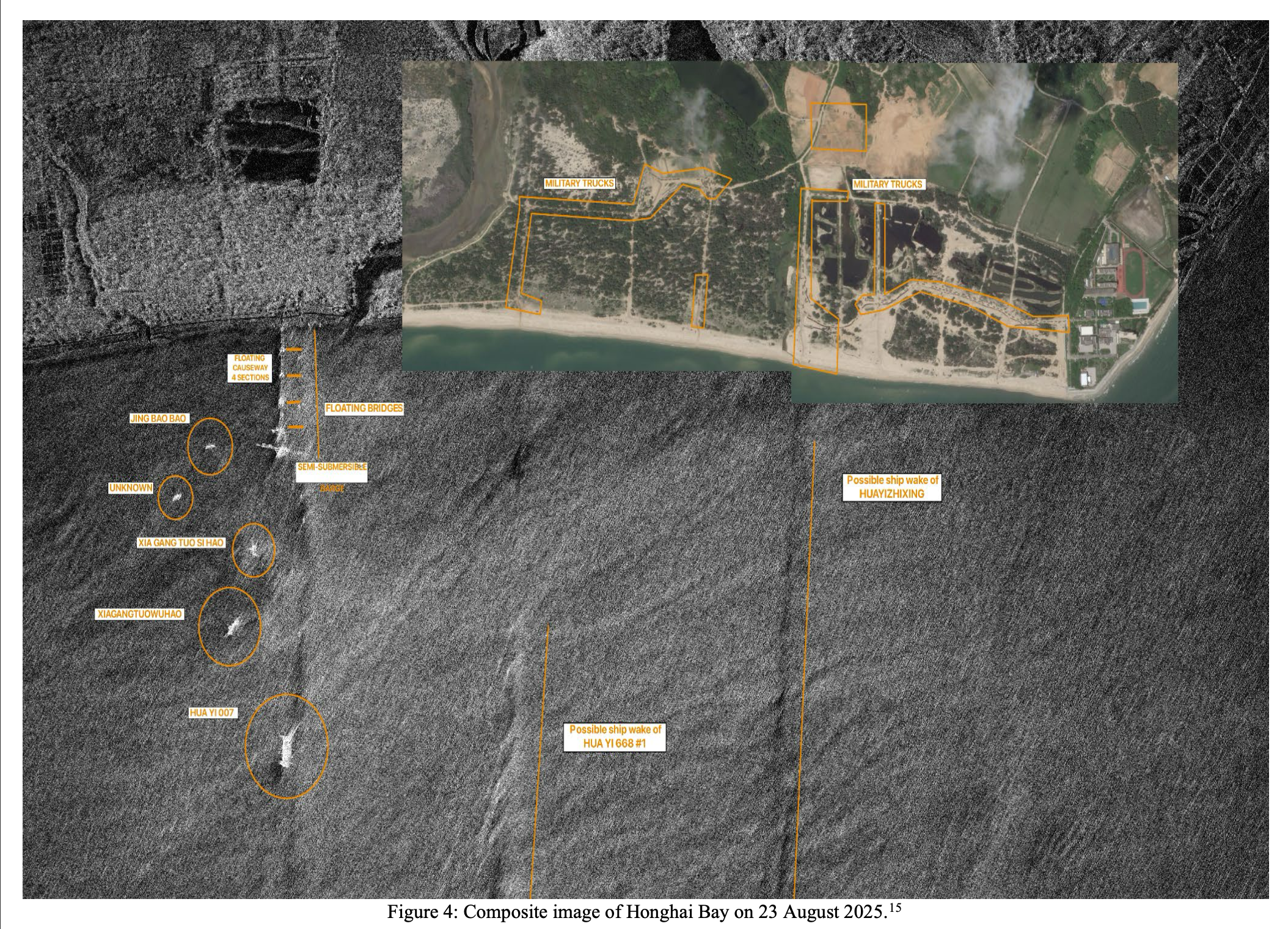
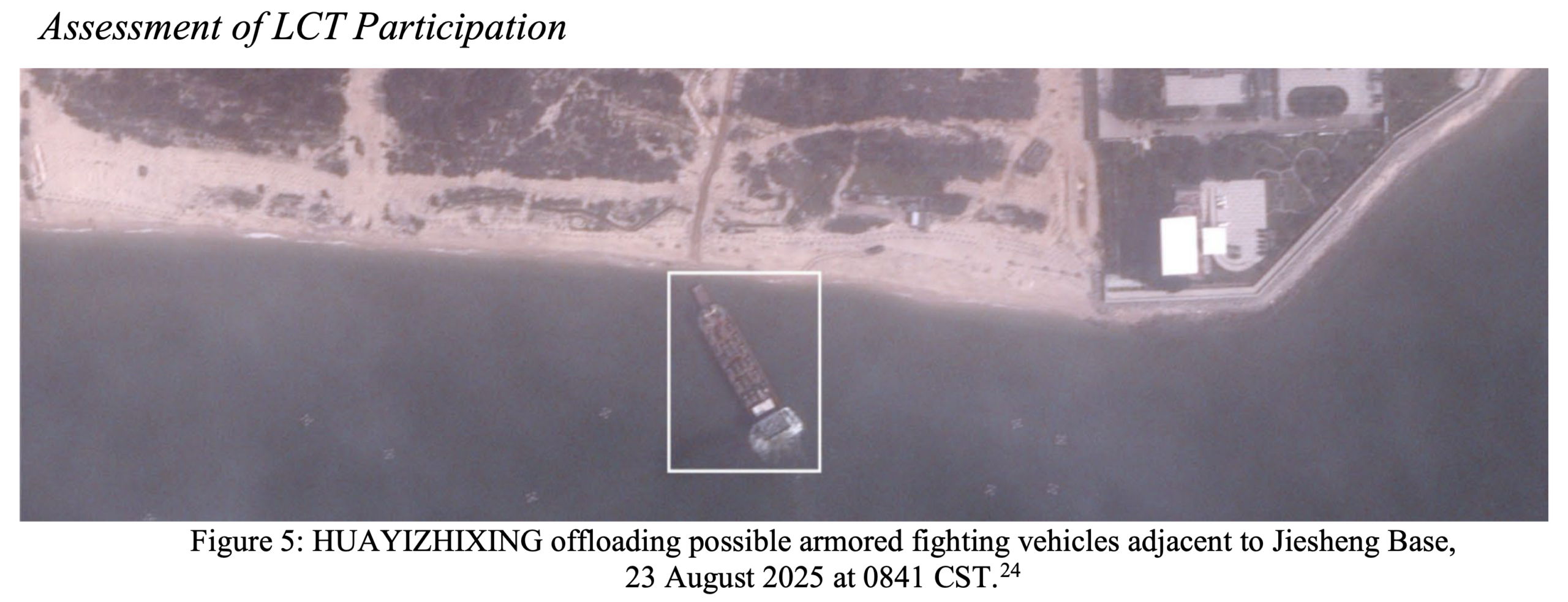
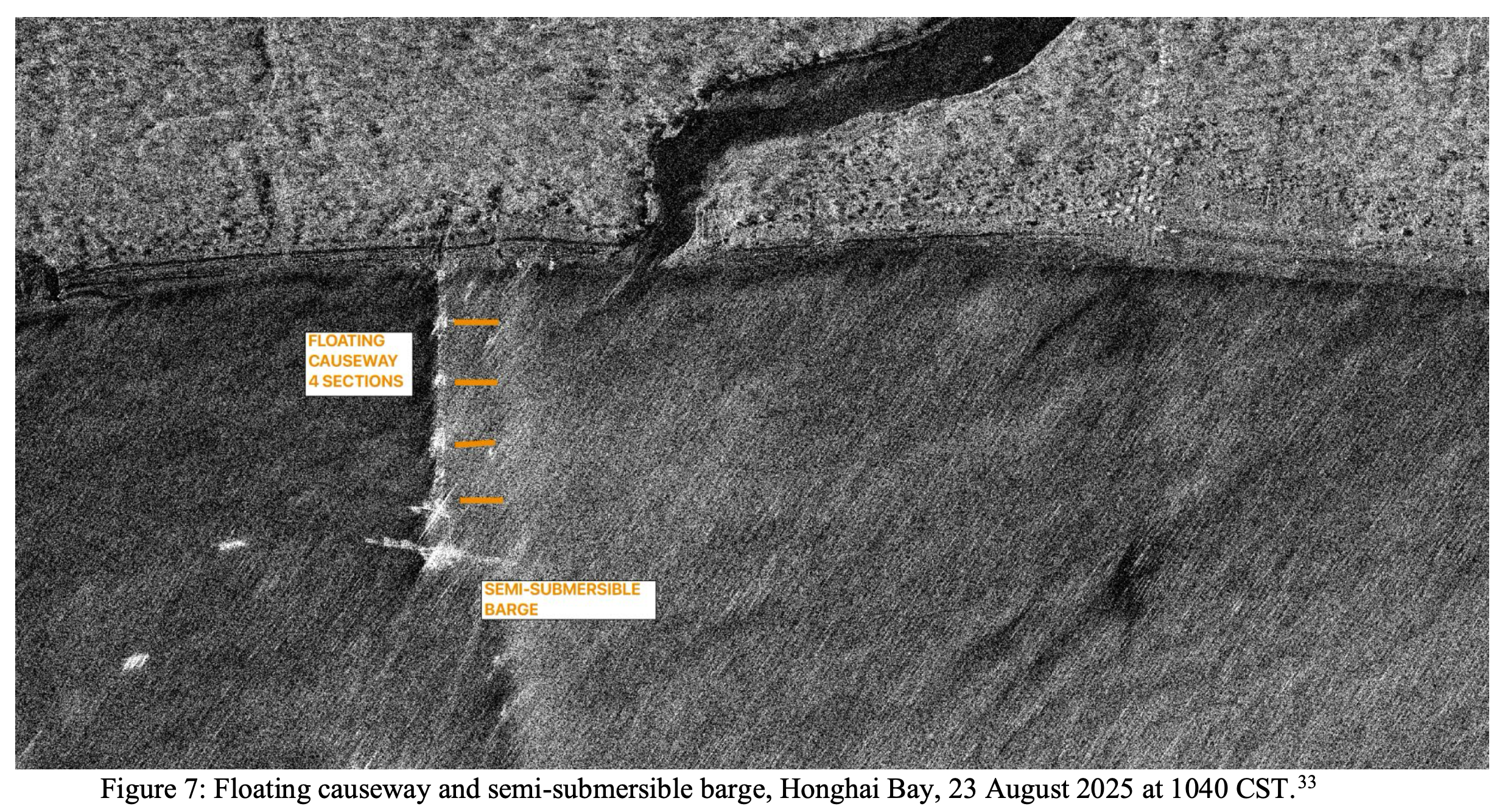
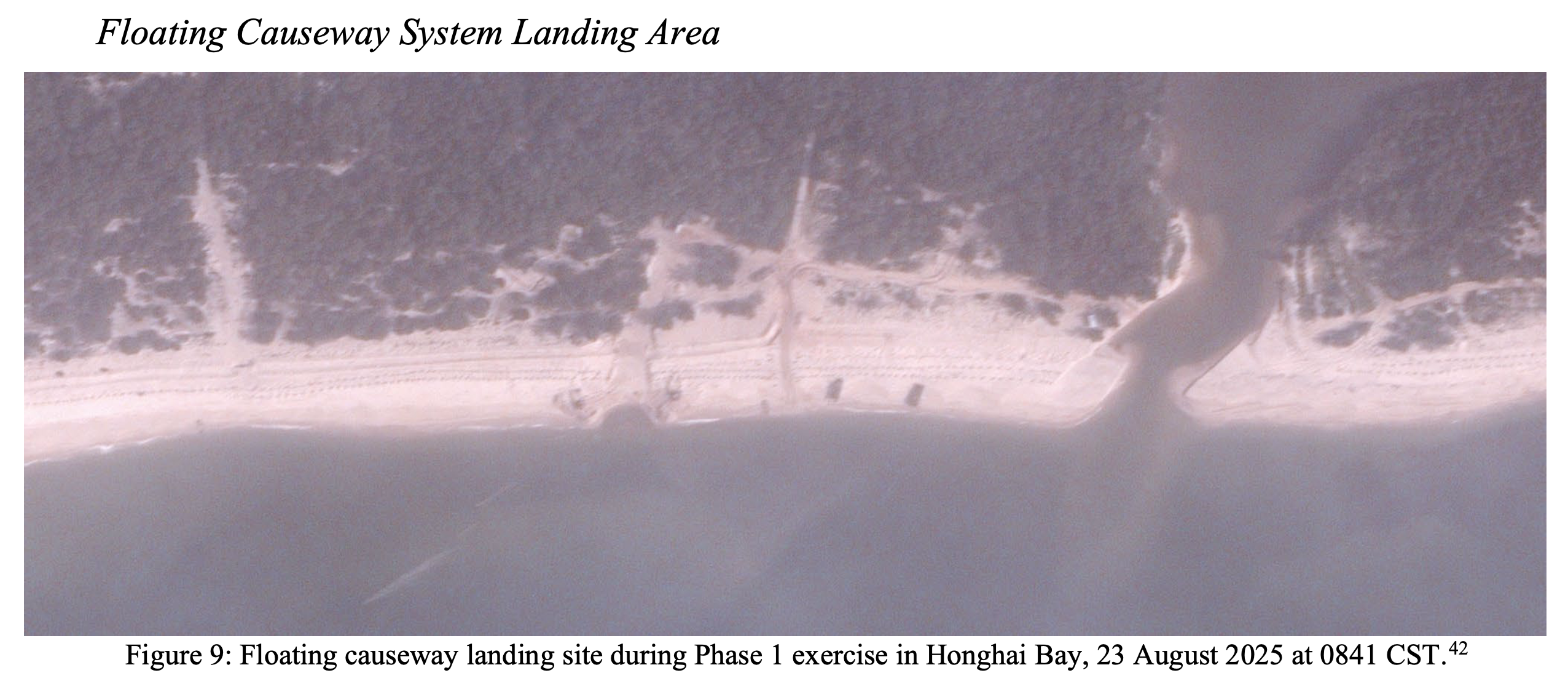
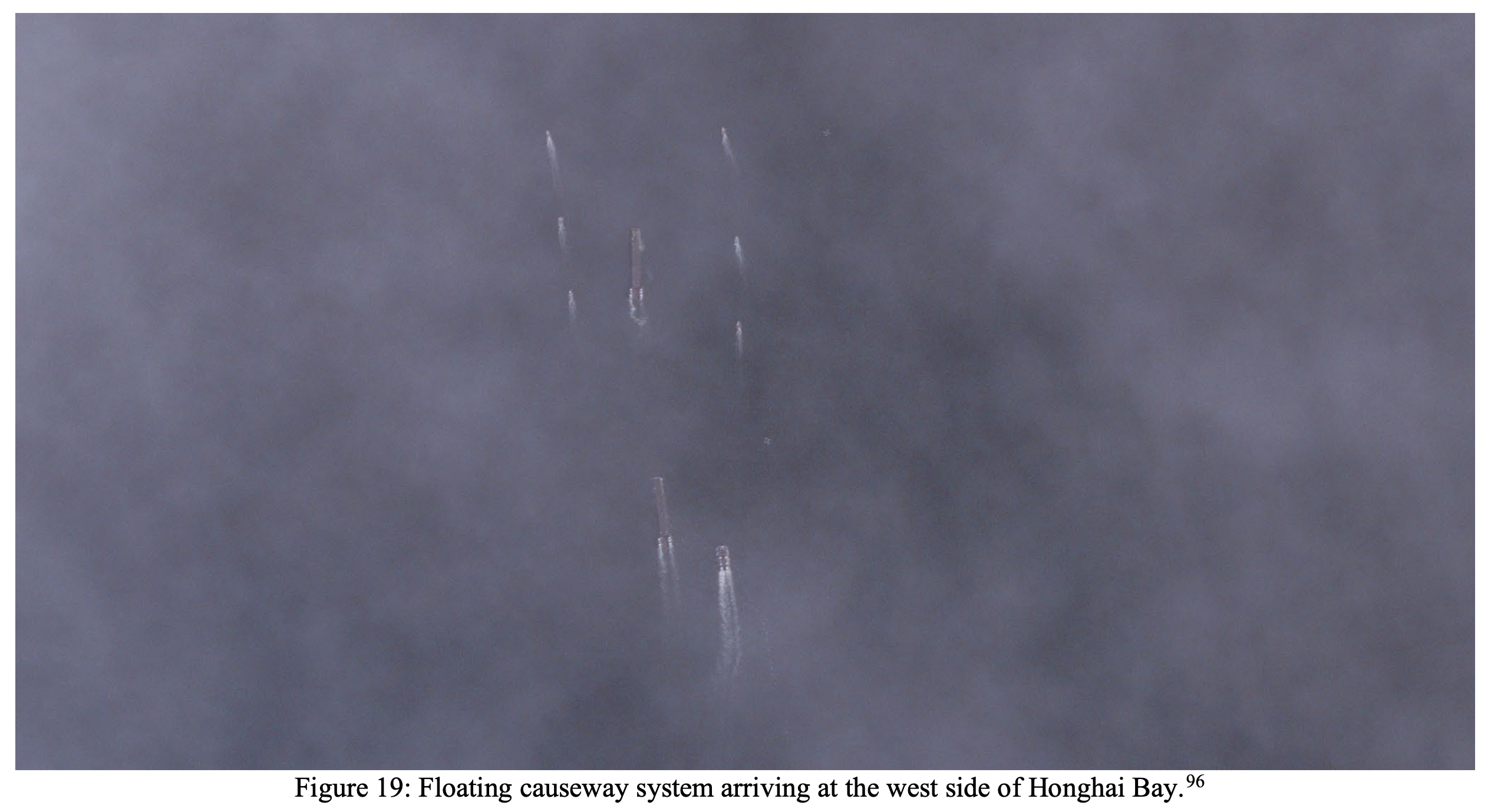
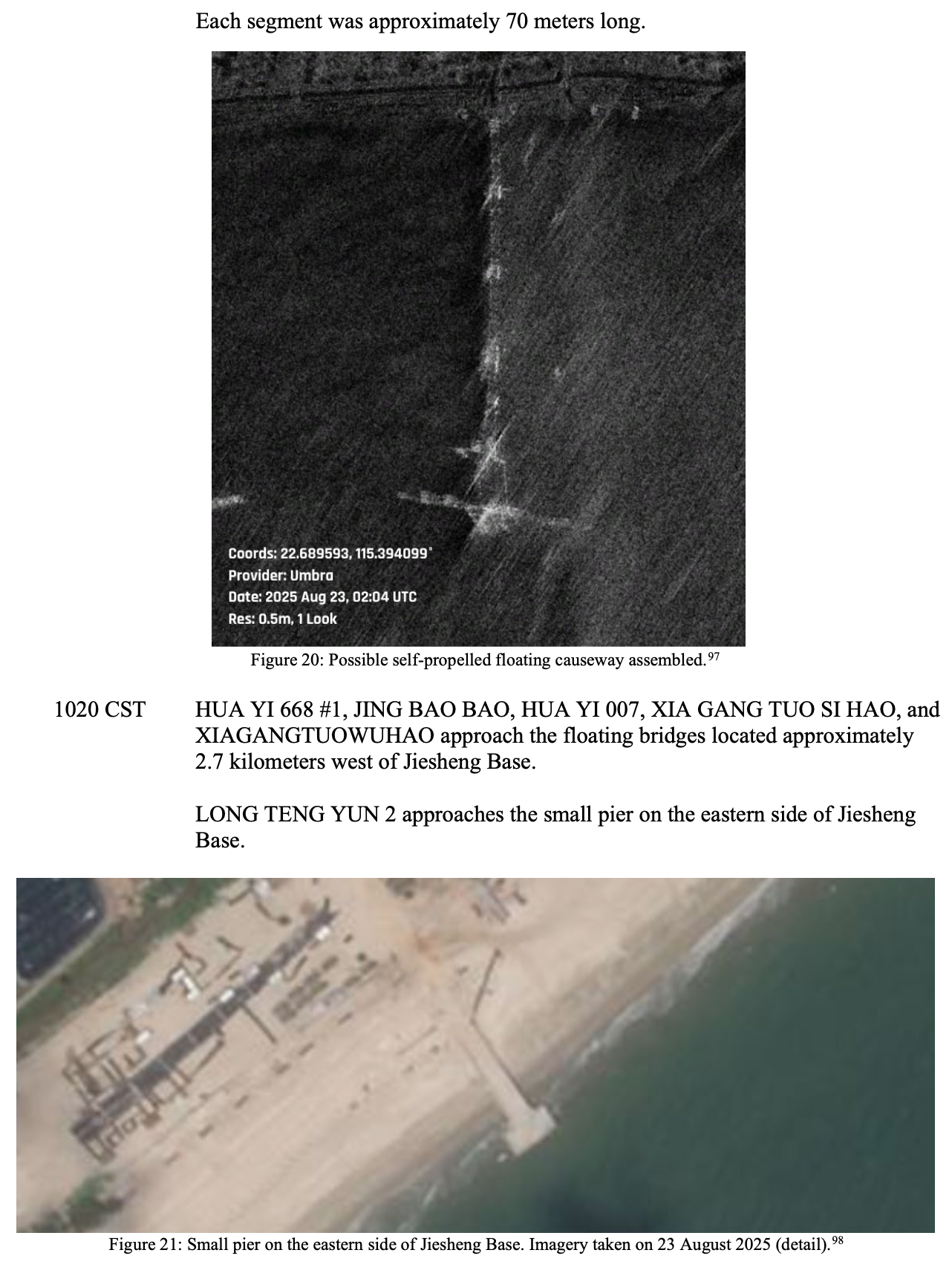
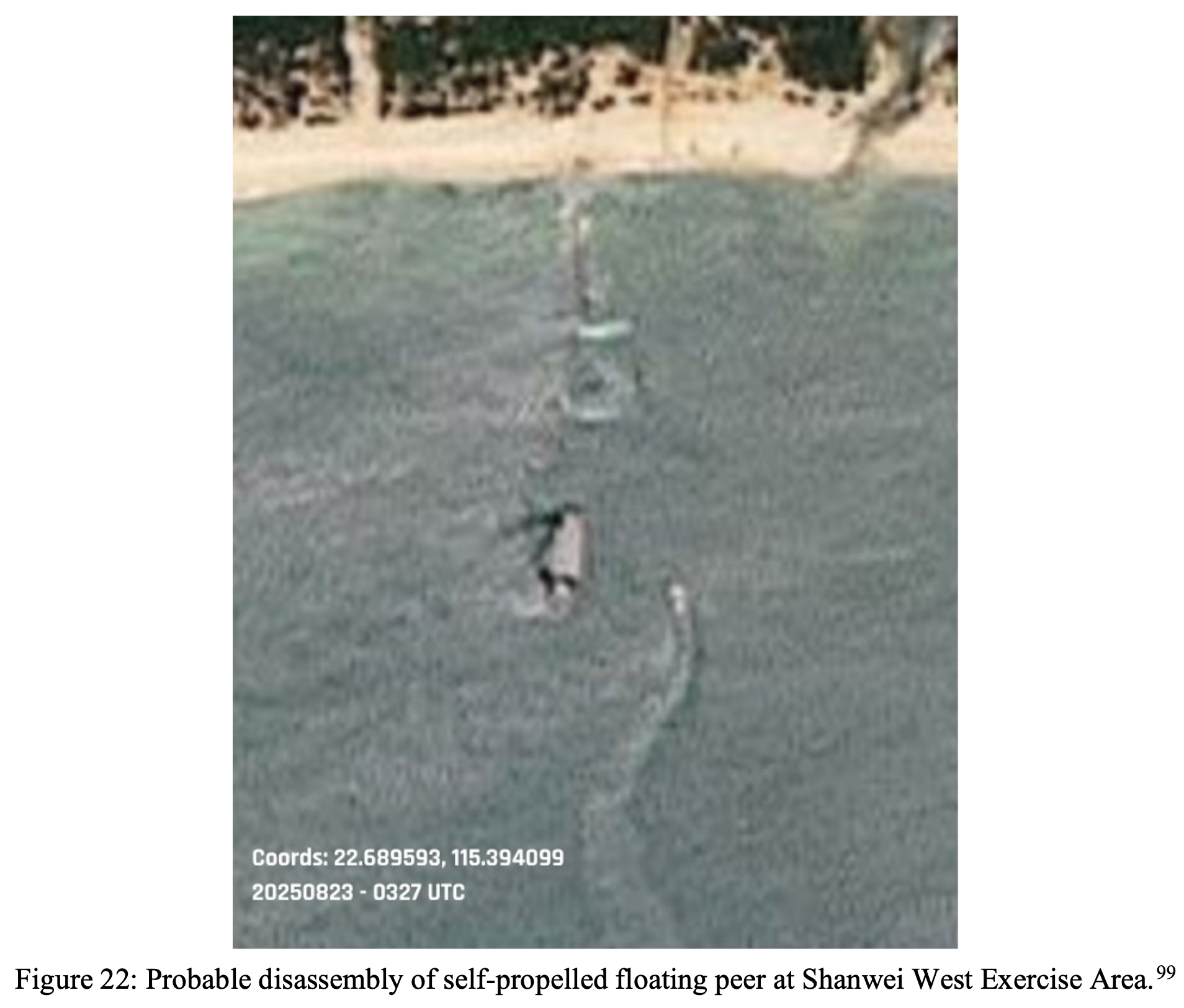
- The exercise consolidated elements from previous years into a single simulated operation. It integrated a floating causeway system, anti-landing barriers and obstacles, and amphibious Landing Craft Tank (LCT) vessels that landed forces directly onto beachheads.
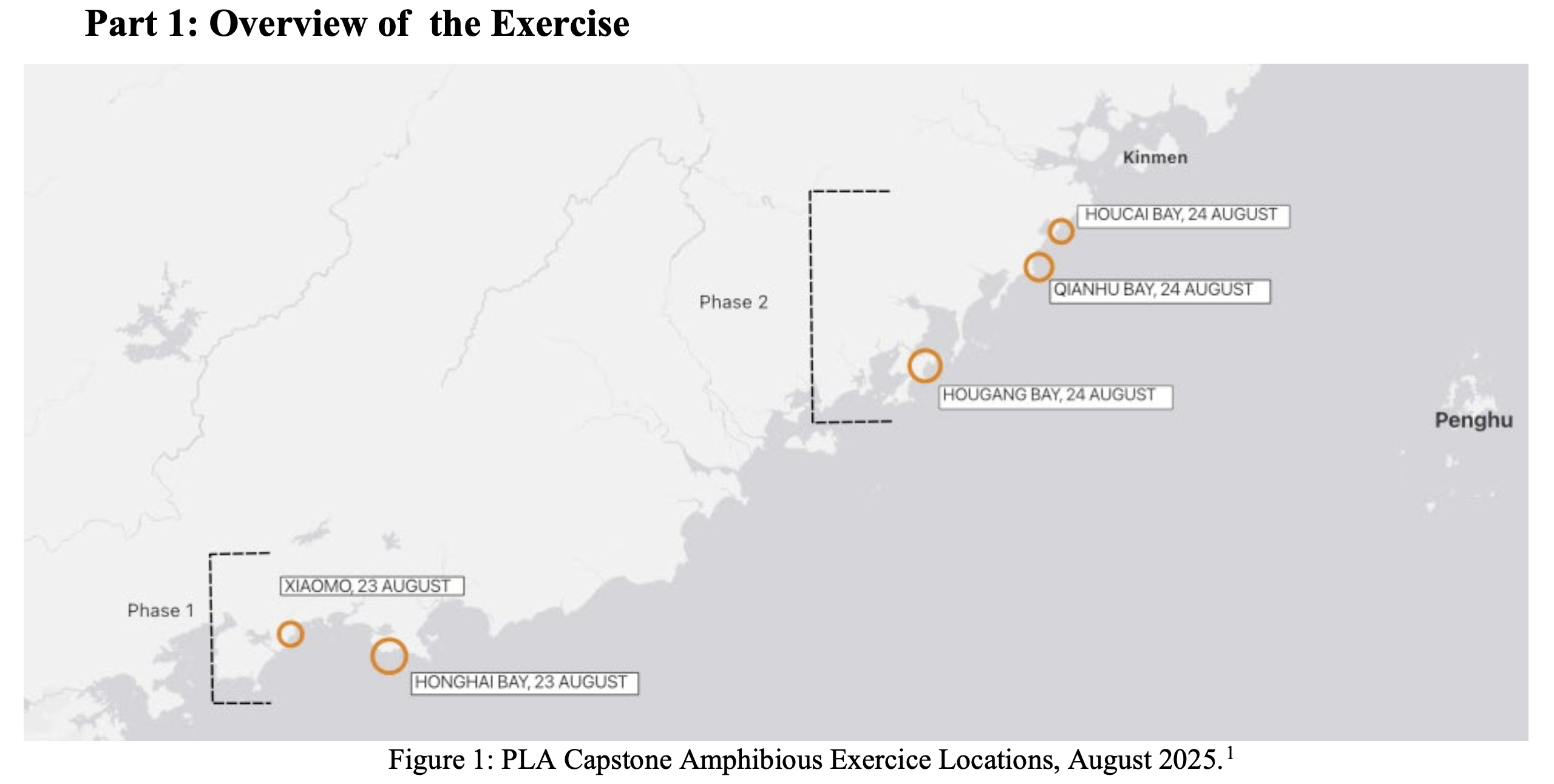
- For the first time observed, the PLA conducted a phased exercise with simultaneous amphibious landings in three distinct locations. Exercise areas incorporated civilian aquaculture obstacles like those expected to be found along Taiwan’s coastline, increasing environmental and tactical realism.
- The exercise occurred at simulated “landing locations” opposite Taiwan, particularly within the Zhangzhou-Xiamen-Quanzhou littoral zone. The locations were distributed at distance intervals comparable to likely wartime beachheads along Taiwan’s western coastline. The total distance between discrete exercise locations was approximately 360 kilometers, roughly the distance between Taipei and Kaohsiung.
- Not merely hypothetical in nature, the exercise reflected a specific geographical and operational focus. It appears to be part of a larger trend whereby the PLA is mapping its exercises onto analogous geography that reflects envisioned targets.
- Future research should explore the potential applications and implications of PLA efforts to train with similar distances and geometries as would be found in prospective conflict zones.
- Starting this summer, observers should scrutinize future capstone amphibious exercises to better understand the PLA’s strengths, weaknesses, and underlying operational assumptions.