China Maritime Report #53—“Filling the Ranks: China’s Military Recruiting System and the PLA Navy”
Erin Richter and Joshua Arostegui, Filling the Ranks: China’s Military Recruiting System and the PLA Navy, China Maritime Report 53 (Newport, RI: Naval War College China Maritime Studies Institute, 6 May 2026).
CLICK HERE TO DOWNLOAD A CACHED PDF.
From CMSI Director Christopher Sharman:
China Navy Watchers: As China’s Navy (PLAN) expands into a more technologically advanced force, can it recruit the personnel needed to operate and sustain an increasingly sophisticated fleet?
The China Maritime Studies Institute (CMSI) is pleased to publish China Maritime Report (CMR) #53, Filling the Ranks.
This CMR is the first publication resulting from our May 2025 conference at the Naval War College, “The People of China’s Navy & Other Maritime Forces.”
Drawing extensively on original Chinese-language primary sources, Dr. Erin Richter and Joshua Arostegui unpack the systems, institutions, and policies that underpin recruitment across the PLA, with particular attention to the PLAN’s growing demand for technically skilled manpower.
— The report provides a rare look into how the PLAN recruits and assigns conscripts, officers, pilots, and civilian technical specialists through an increasingly sophisticated system of “precision recruitment.”
— It highlights the CCP’s broader effort to professionalize military manpower as the PLAN transitions into a more technologically advanced and globally operating force. New initiatives—including twice-yearly conscription cycles, targeted training programs, military-civil educational partnerships, and data-driven recruiting systems—are designed to improve readiness while increasing the proportion of college-educated and technically skilled personnel entering the force.
— Yet the PLAN’s manpower ambitions face significant headwinds. China’s economy continues to compete aggressively for top technical talent, recruiting officials remain overburdened, and physical fitness levels among potential recruits continue to generate concern.
CMR #53 is a stark reminder that assessing the future effectiveness of China’s navy requires more than evaluating shipbuilding output and weapons modernization.
The future of Chinese naval power will depend not only on ships and weapons, but on the PLAN’s ability to recruit, train, and retain the technically proficient personnel needed to fight and sustain a modern navy.
Main Findings
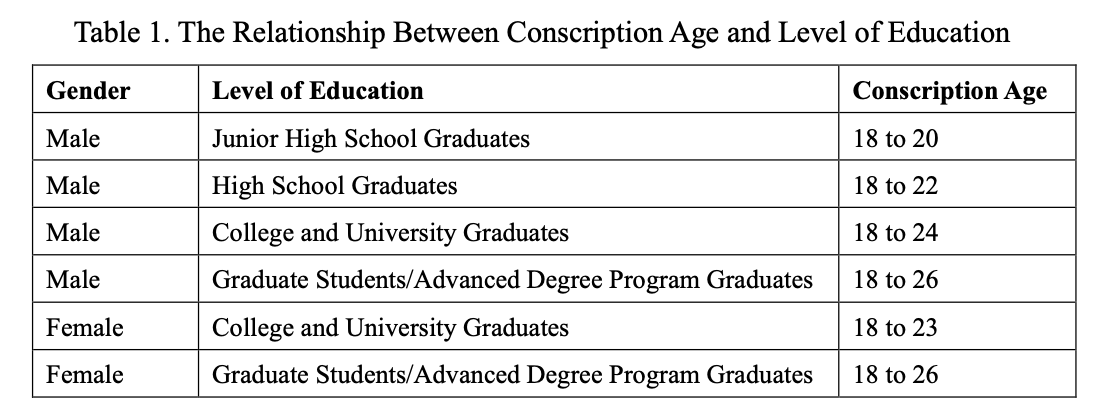
- The PLAN manages direct recruitment of some non-commissioned officers, officers, and civilian personnel. However, the recruitment, mobilization, and service assignment of conscripts is centrally managed by the PRC government.
- Each year, the PRC establishes military conscription quotas for provincial-level governments to meet through recruitment. While compulsory conscription can be enforced, the government rarely compels individuals to enter military service due to China’s large population and high rates of volunteerism.
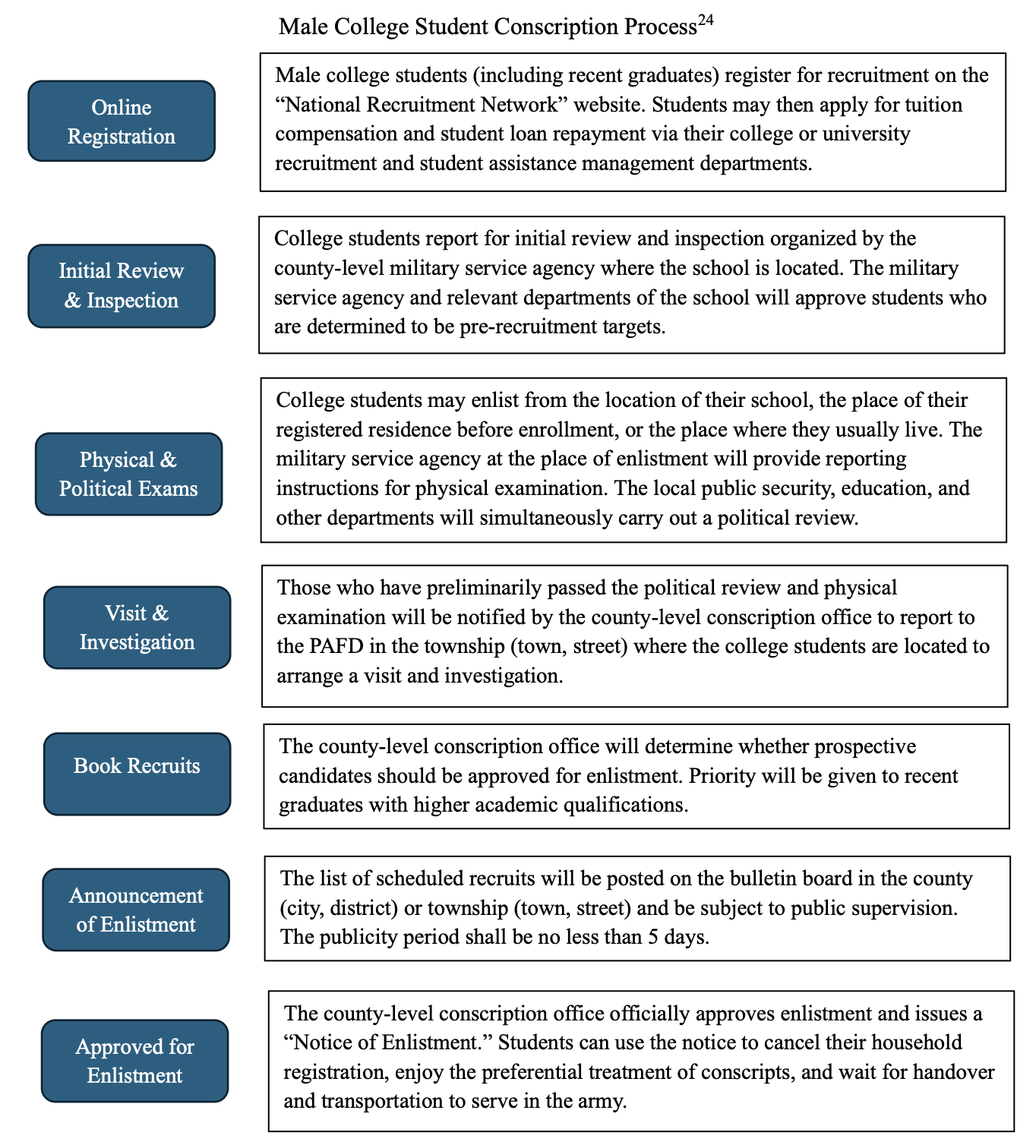
- In 2021, the PLA shifted to a twice-a-year conscription cycle by distributing the flow of conscripts into and out of the force across two time periods rather than one. This shift to spring and fall recruitment was designed to achieve higher average unit-manning levels year-round.
- The majority of PLAN manpower requirements are filled through the general military conscription process, and while a conscript’s preferences may be taken into consideration, they are ultimately assigned based on their education, fitness, and military quota.
- The PLAN conducts direct recruitment of specific professional and technical personnel through military and civilian cadre recruitment programs. The PLAN also has a special program to recruit pilots separate from the general conscription system, managed by the PLAN Recruitment Office.
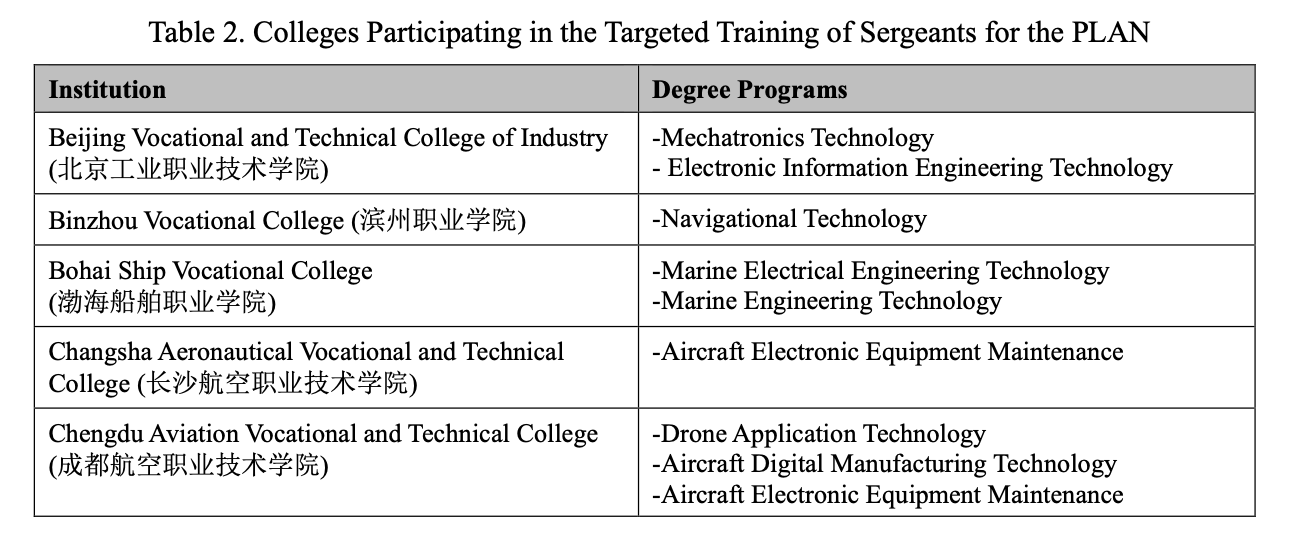
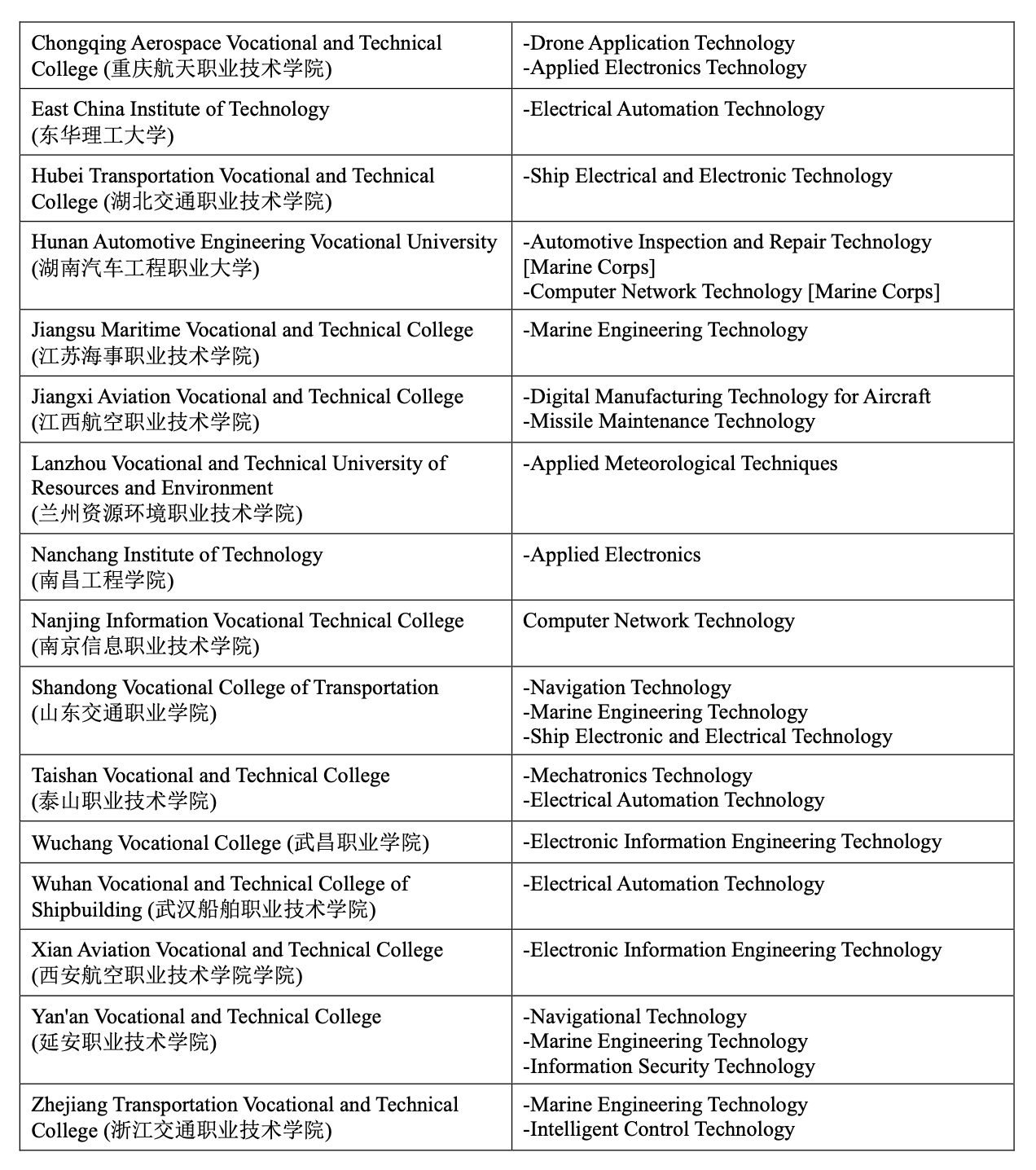
- In 2022, China instituted a new program for the targeted training of sergeants (定向培养军士). The program is designed to leverage vocational and technical colleges throughout China to train students to fill technical and professional jobs within the military after graduation.
- The PLAN has five military academies that recruit high school students, as well as university and graduate students, to train to become commissioned officers. The National University of Defense Technology directly recruits high school graduates for the Navy, whereas the Army Special Operations Academy, responsible for training PLAN Marine Corps officers, admits only candidates who have completed two years at another PLA academy and successfully competed for selection.
- Like other services, the PLAN also engages in the direct recruitment of officers from among recent college graduates. Applicants apply to fill specific positions and submit supporting materials to be reviewed by the Navy hiring organization.
- PLA recruitment mechanisms are rapidly transitioning from traditional grassroots outreach to a precision recruitment system, by which recruiting offices prescreen potential conscripts, sergeants, and officers for suitability. These recruiting activities are complemented by an aggressive national defense education program and increasingly sophisticated recruitment propaganda drives.
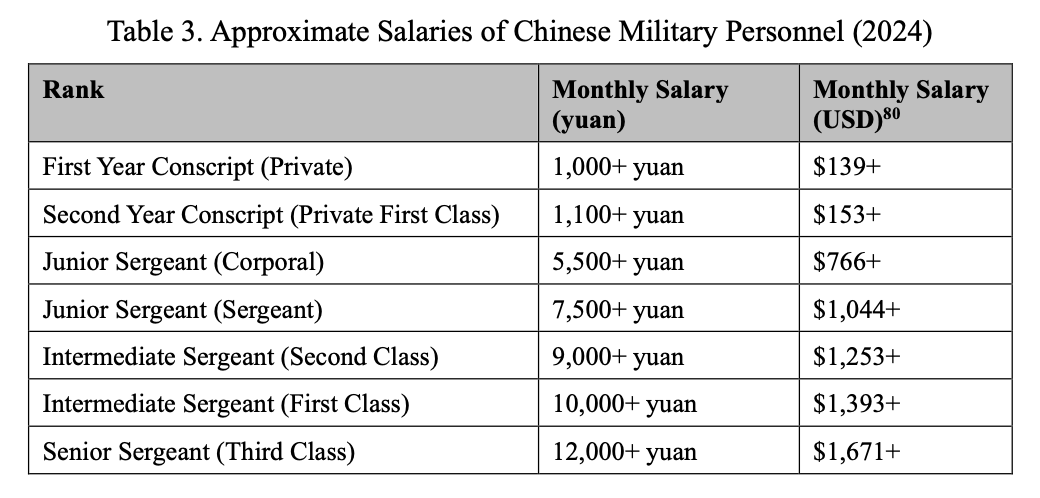
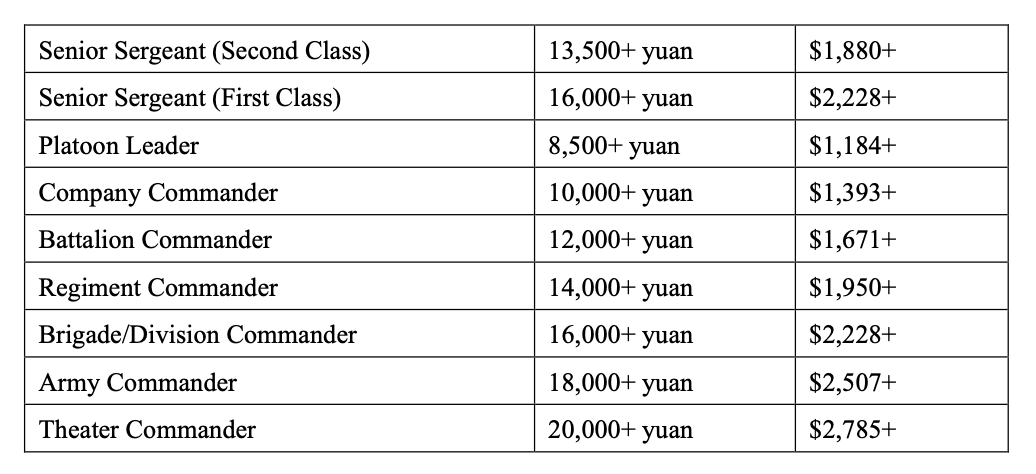
- In recent years, the PLA as a whole has greatly increased the proportion of new recruits with a college degree. The CMC, State Council, and provincial governments have rolled out a range of policy mechanisms to attract high-quality recruits and retain these individuals after their initial terms of service. These incentives include military pay and entitlements, education and job assistance, and retirement benefits.
- Despite improvements in precision recruiting, pay, and benefits, and general outreach, several challenges continue to hamper efforts by the PLAN and other services to recruit the best possible candidates. These included overburdened recruiting officials, ineffectual support for military recruitment within China’s universities, and low physical fitness among potential recruits.
Conclusion
Despite widely published challenges in recruiting, the PLAN overall does not appear to have problems meeting quantitative recruiting goals. Based on social media discussions, the navy presents a good opportunity, particularly for young people in rural areas, to advance economically and bring pride and additional income to their families. Students from lower economic classes can pursue technical training and de facto apprenticeships that yield career opportunities otherwise unavailable to them. Veterans benefits, while meager by U.S. standards, nevertheless yield education and career opportunities, financial assistance, and health care. For the highest performers, military service can be a path to alter one’s destiny through government sponsored changes to household registration and the promise of higher paying jobs and access to better educational opportunities that this brings.
The PLAN, however, continues to face qualitative challenges that affect overall force readiness and proficiency, though these likely vary across the service. Recruiting in urban areas is much harder and tends to attract recruits lower on the socio-economic ladder, with poor performance in formal educational settings. The PLAN struggles to attract students with high performance in science and technology disciplines as these students often are on a path to relatively high wage jobs upon completing their education. Military service, notorious for low pay, service far from home, physical rigor, and austere lifestyles, contrasts sharply with the material comforts and liberties to which many urban youth have become accustomed. The expansion of technical training opportunities for young students at ordinary colleges and aggressive national defense education programs focused on forming physically and politically strong youth are likely responses to these challenges.