China Maritime Report #56—“The Silent Service: Assessing PLAN Influence in the Central Military Commission”
Natalie Shen and Joel Wuthnow, The Silent Service: Assessing PLAN Influence in the Central Military Commission, China Maritime Report 56 (Newport, RI: Naval War College China Maritime Studies Institute, 15 July 2026).
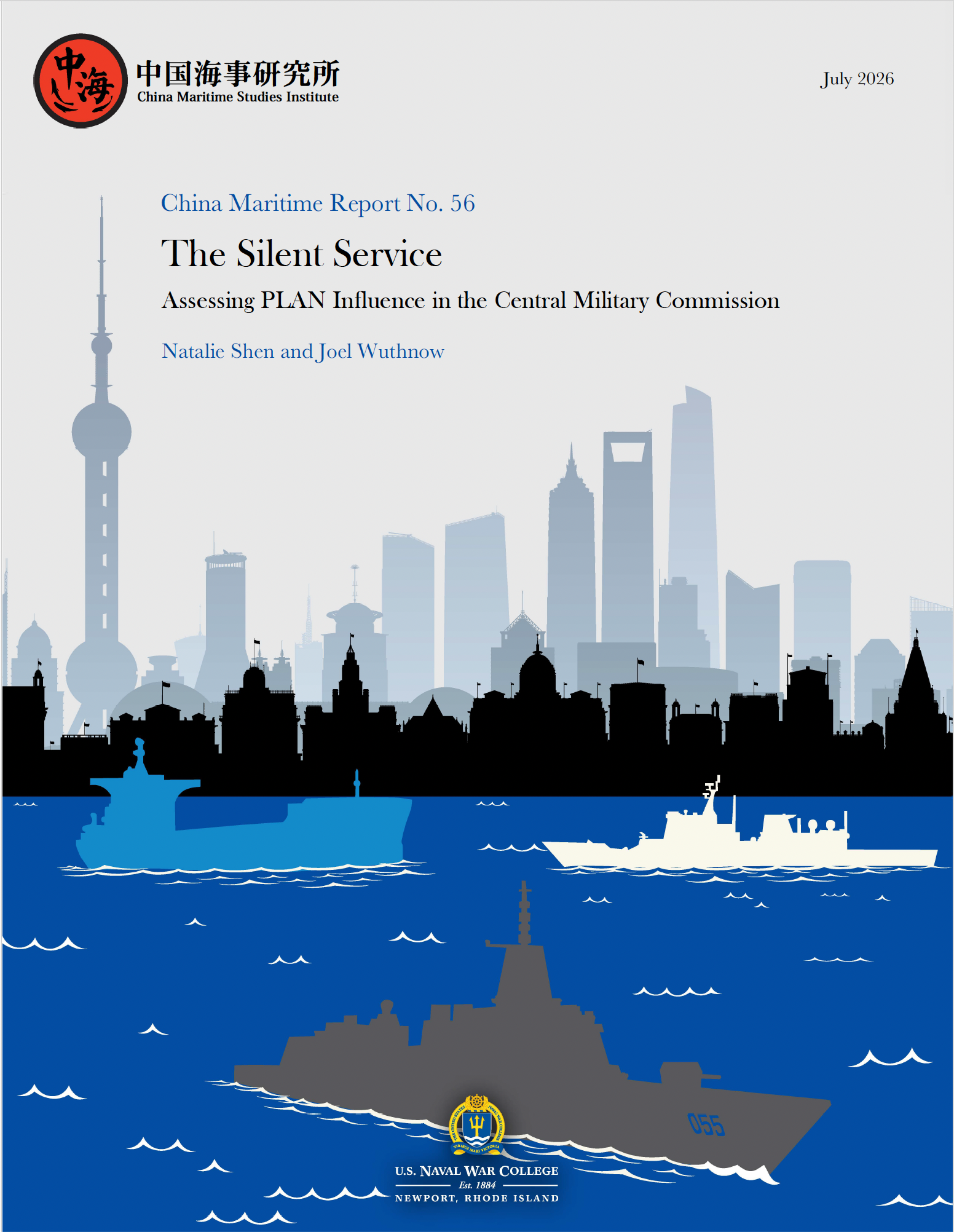
CLICK HERE TO DOWNLOAD A CACHED COPY.
From CMSI Director Christopher Sharman:
China Navy Watchers: China’s military has built the world’s largest navy—but the navy still doesn’t run China’s military.
In the perennial fight for resources among the PLA’s four services, how much influence does the People’s Liberation Army Navy (PLAN) actually wield?
The answer may surprise you.
Despite overseeing the world’s largest navy and benefiting from decades of unprecedented expansion, this China Maritime Report (CMR) argues the PLAN appears to be more of a decision-taker than a decision-maker.
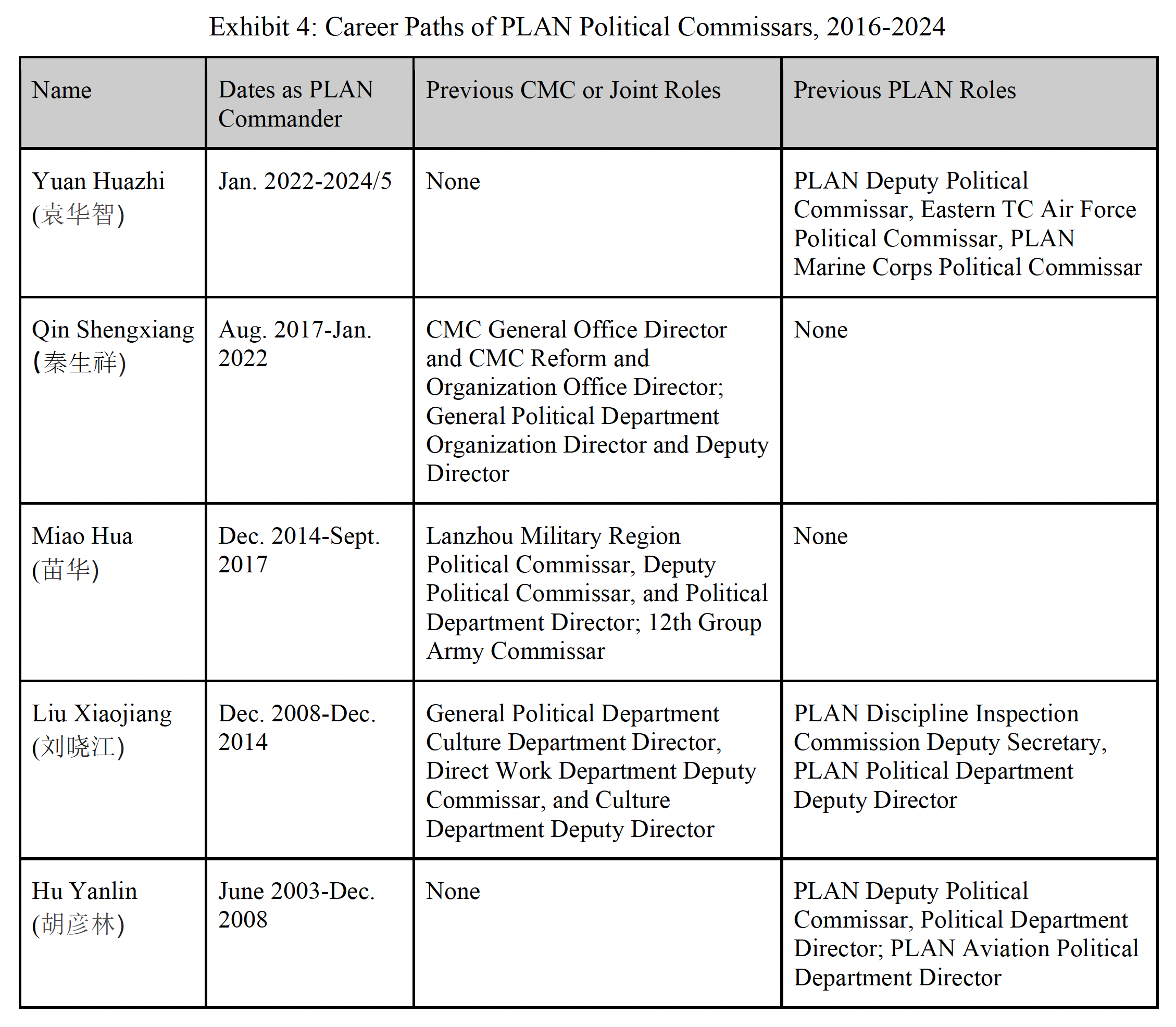
Rather than driving force structure and resource decisions from within the Central Military Commission (CMC), the navy remains underrepresented in the PLA’s highest decision-making bodies and continues to operate within a system dominated by top-down political direction.
The implications extend well beyond the PLAN itself.
This report argues that China’s military modernization is not the product of an influential “navy lobby,” but of CMC-directed priorities that can just as readily reassign traditional navy missions, capabilities, and resources across the force—from transferring maritime strike aviation assets to the PLA Air Force, moving Type 056 corvettes to the China Coast Guard, to transferring three amphibious Army brigades to the PLAN Marine Corps.
Authored by CMSI Affiliate Natalie Shen and Dr. Joel Wuthnow, “The Silent Service: Assessing PLAN Influence in the Central Military Commission,” analyzes PLA leadership trends, career incentives, and force structure decisions to explain why naval officers remain underrepresented in the CMC bureaucracy and what that reveals about how China’s military really allocates power, influence, and resources.
For anyone seeking to understand how the PLA makes major organizational decisions, this CMR offers important new insights.
About the Authors
Lieutenant Natalie Shen, U.S. Navy Reserve is an Intelligence Officer. In her civilian life, she is a Foreign Service Officer. She holds a BS from Purdue University, a MS from Johns Hopkins University, and an MA from the U.S. Naval War College.
Dr. Joel Wuthnow is a senior research fellow in the Institute for National Strategic Studies at National Defense University. His research areas include Chinese foreign and security policy, Chinese military affairs, U.S.-China relations, and strategic developments in East Asia. In addition to his duties in INSS, he also serves as an adjunct professor in the Edmund A. Walsh School of Foreign Service at Georgetown University. His recent books and monographs include China’s Quest for Military Supremacy (Polity, 2025, with Phillip C. Saunders), Taming the Hegemon: Chinese Thinking on Countering U.S. Military Intervention in Asia (2025), Sea Dragons: Special Operations and Chinese Military Strategy (2025, with John Chen), Gray Dragons: Assessing China’s Senior Military Leadership (2022), and Crossing the Strait: China’s Military Prepares for War with Taiwan (2022, lead editor).
The opinions and views expressed in this report are those of the authors alone and do not necessarily represent those of the U.S. Government, U.S. Department of War or its components, to include the Department of the Navy or the U.S. Naval War College.
Main Findings
- Despite its impressive expansion, the People’s Liberation Army Navy (PLAN) is more of a “decision-taker’’ than a “decision-maker,’’ with its growth driven by top-down political directives from leaders like Xi Jinping rather than by its own institutional influence.
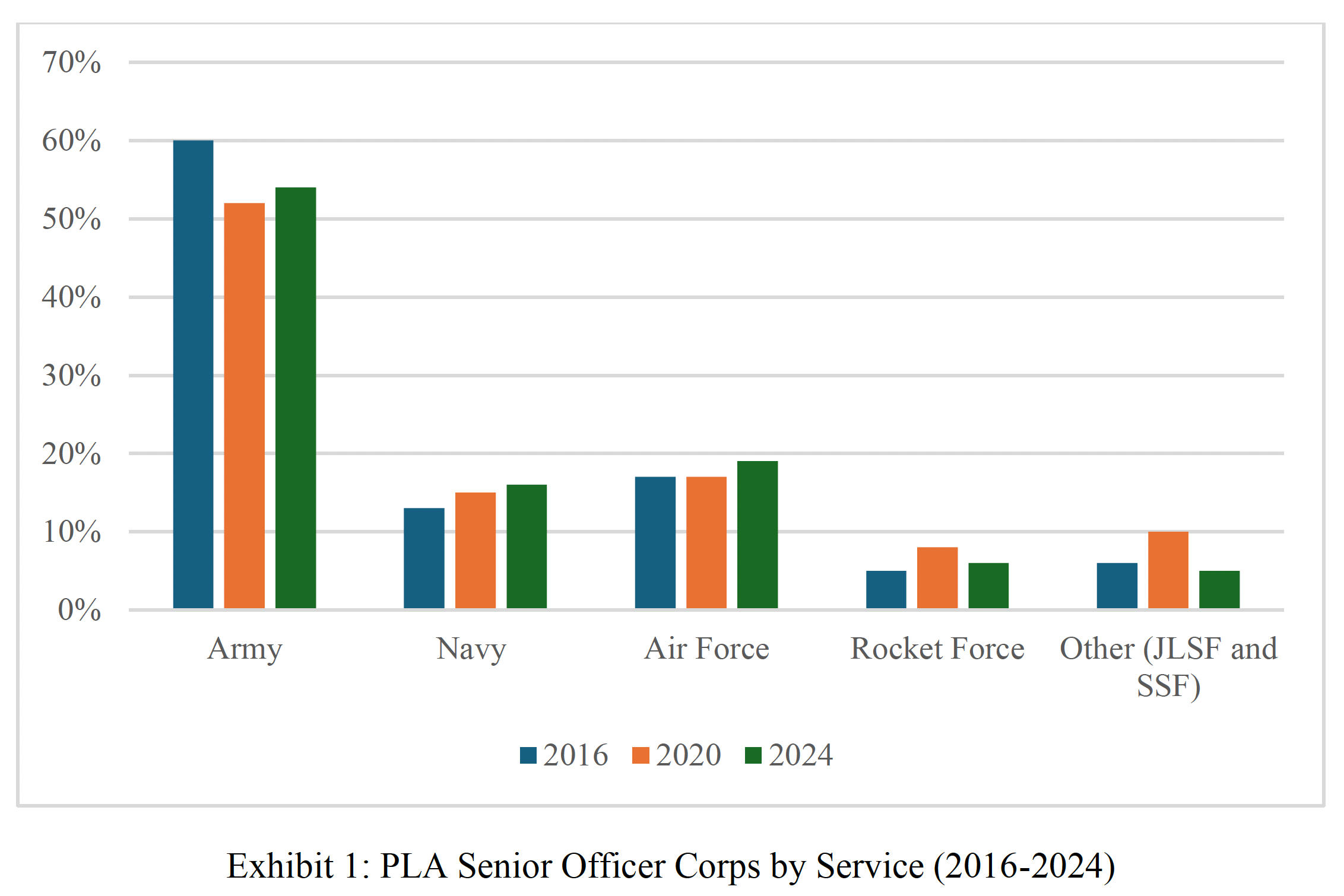
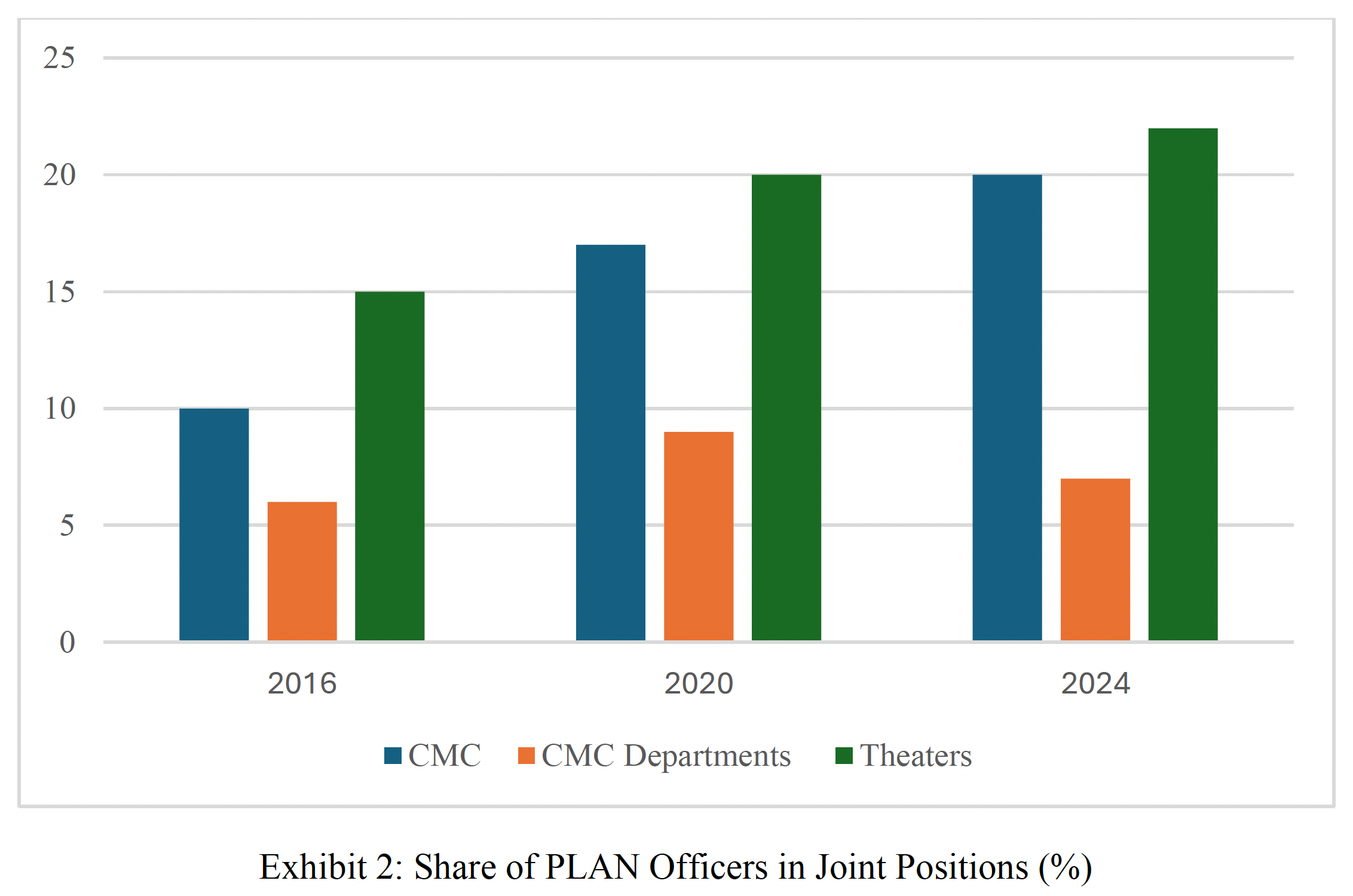
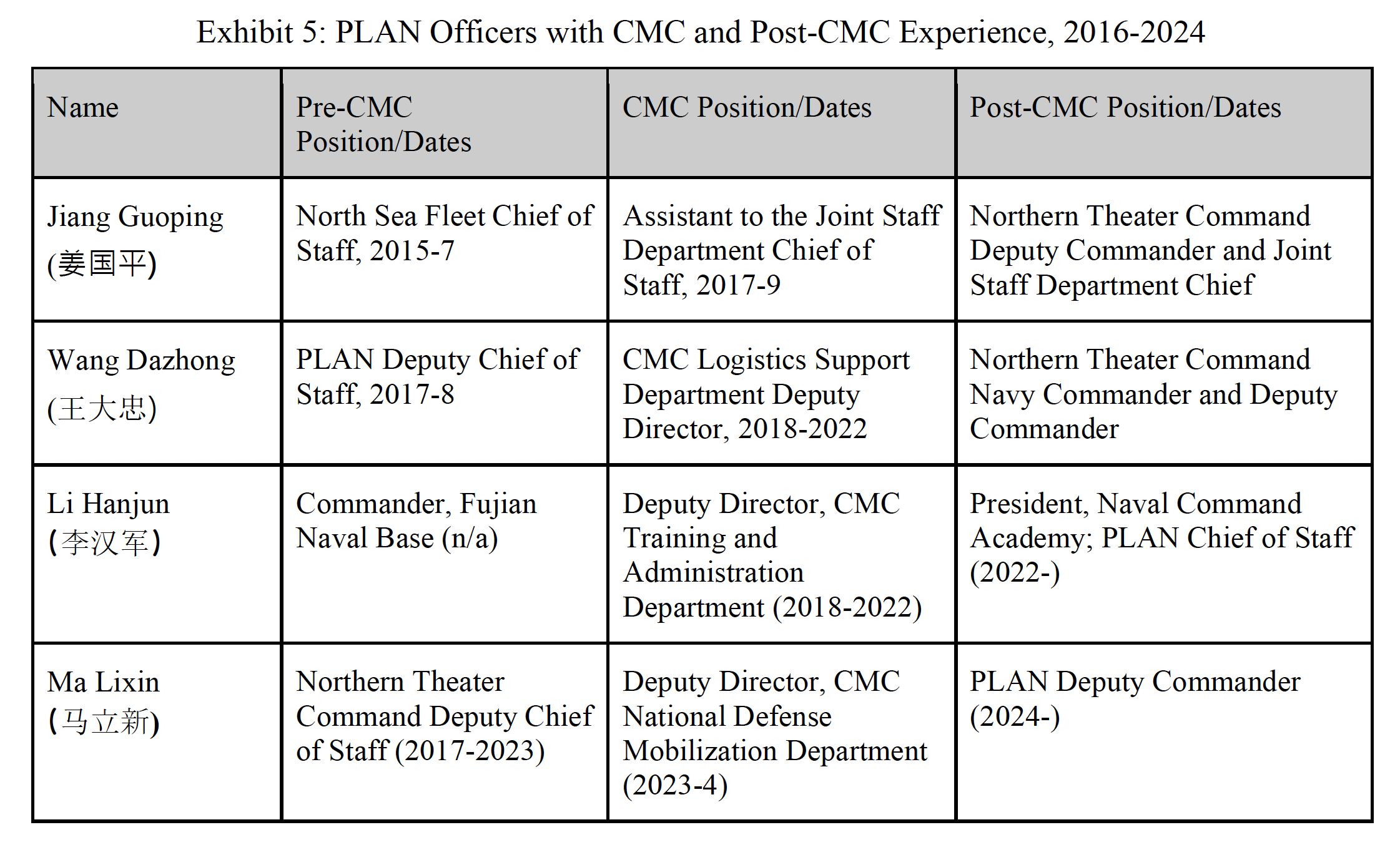
- The PLAN’s bureaucratic influence within the high command remains modest, with minimal representation on the powerful Central Military Commission (CMC) or in its subordinate departments.
- The PLA Army (PLAA) continues to dominate top leadership and management roles, limiting the navy’s ability to compete for resources and influence key decisions despite a strategic shift toward the maritime domain.
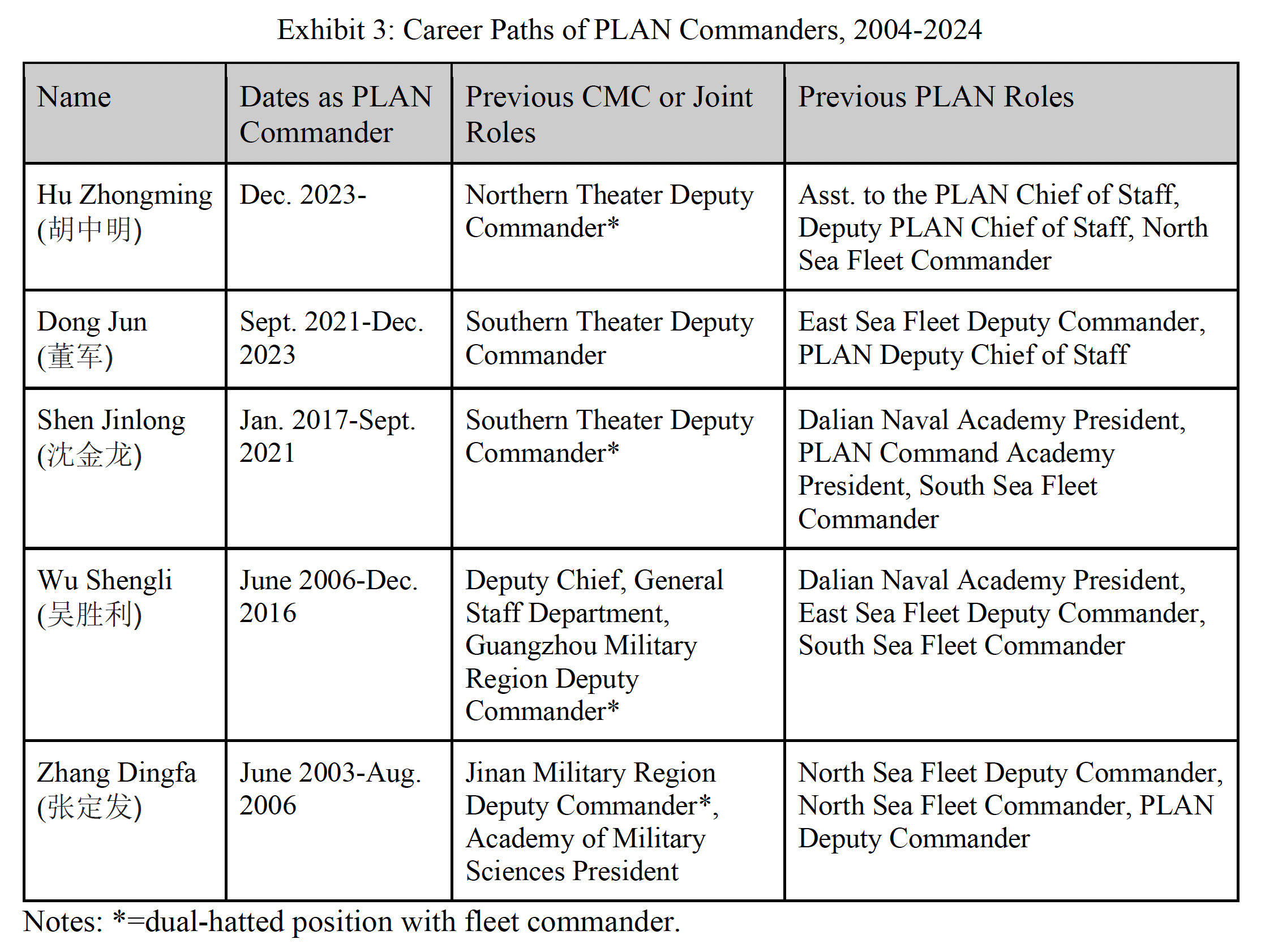
- Career progression for rising naval officers prioritizes operational experience at sea over joint duty assignments within the CMC bureaucracy, making such influential staff roles unattractive and further weakening the navy’s voice at the top.
- Due to its limited lobbying power, the navy has had to accept CMC policies that reduce its autonomy and capabilities, such as transferring land-based aircraft to the PLA Air Force (PLAAF) and patrol ships to the China Coast Guard (CCG).