China Maritime Report #59—“Be Focused, Be Humble, Be Happy: Career Progression, Organization, & Training of PLAN Submariners”
Phil Yu and Benjamin Rosen, Be Focused, Be Humble, Be Happy: Career Progression, Organization, and Training of PLAN Submariners, China Maritime Report 59 (Newport, RI: Naval War College China Maritime Studies Institute, 21 October 2026).
CLICK HERE TO DOWNLOAD A CACHED COPY.
From CMSI Director Christopher Sharman:
China Navy Watchers:
What are the career tracks aboard Chinese Navy submarines? How do submarine crews train? And what are the dynamics between a submarine’s Commanding Officer and the Political Commissar?
The China Maritime Studies Institute (CMSI)’s latest China Maritime Report (CMR), “Be Focused, Be Humble, Be Happy: Career Progression, Organization, and Training of PLAN Submariners,” tackles these questions and more.
Authored by Rear Admiral (Ret.) Phil Yu and Benjamin Rosen, this report dives deep (pun intended) into the human factors that shape China’s submarine force, an aspect of the PLAN that receives far less attention than its platforms and capabilities.
China’s diverse submarine fleet and increasingly ambitious operations demand a high degree of technical expertise and professional competence. Yet while submarine hulls, weapons, and capabilities frequently dominate analysis, far less is known about the crews who operate these platforms and the personnel systems that support them.
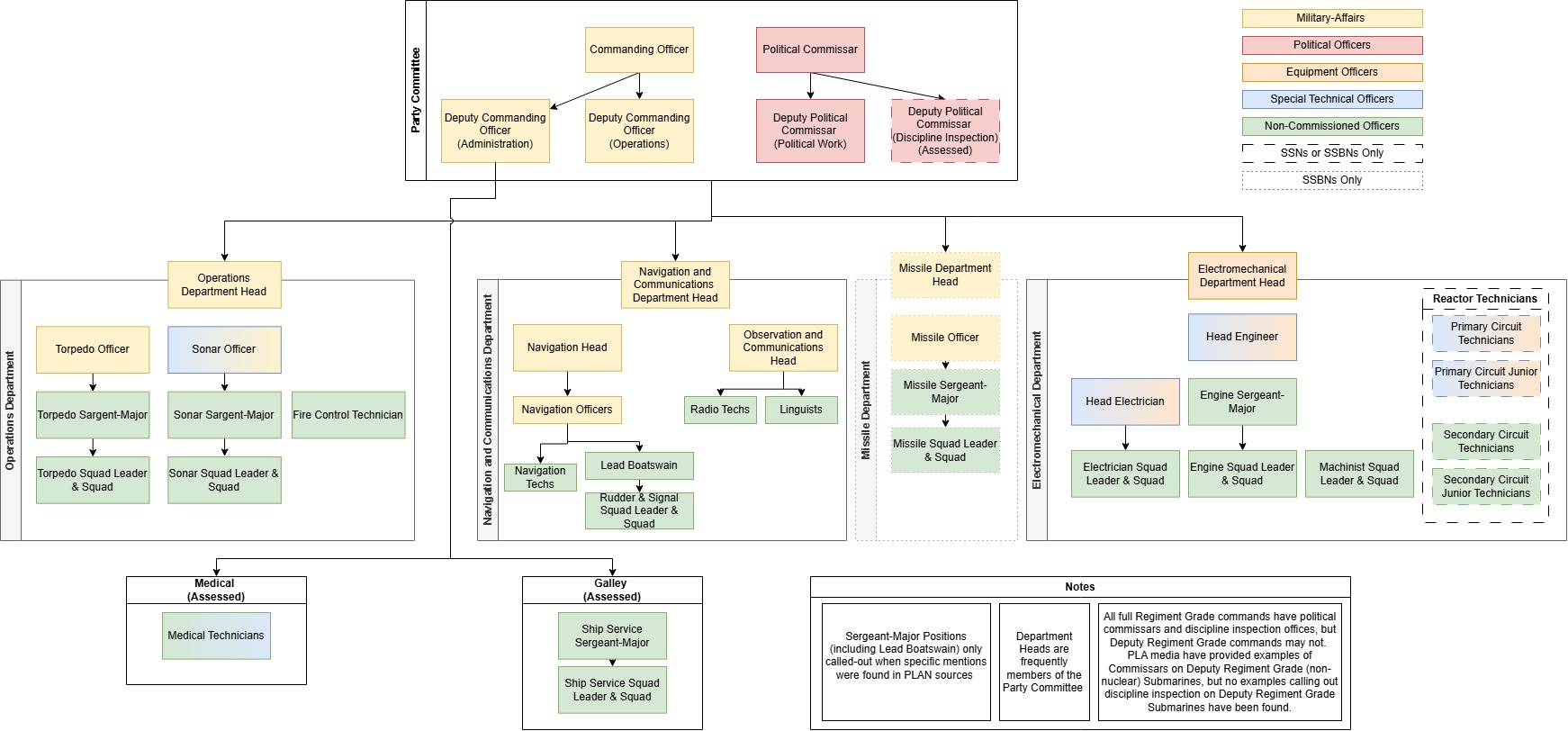
This CMR breaks new ground by examining the career progression, organizational structure, and training of PLAN submariners. It explores how the submarine force develops its officers and non-commissioned officers (NCOs), how different career tracks support increasingly complex operations, and how the PLAN is adapting its workforce to meet evolving technological and operational demands.
The report also examines the role of the Party Committee and the relationship between the Commanding Officer and Political Commissar, including efforts to improve political officers’ operational expertise. It maps career benchmarks for submarine officers, assesses promotion opportunities for equipment and special technical officers, and highlights the increasingly important role of NCOs in the submarine force.
For those seeking to understand not just what China’s submarines can do, but how the PLAN develops, organizes, and leads the people who operate them, CMR No. 59 is essential reading.
Main Findings
- Led by the political commissar with the commanding officer serving as deputy, party committees are responsible for major decision-making, maintaining party control, training, and general leadership aboard People’s Liberation Army Navy (PLAN) submarines. While Chinese sources extoll this collective leadership model, it is unclear how this command structure influences decision-making efficacy in practice.
- PLAN political officers play a critical role in the leadership and decision making on PLAN submarines, but reportedly lack understanding of submarine operations. Despite attempts to improve the operational competency of political officers, this likely remains a problem for the PLAN submarine force.
- The diverse PLAN submarine fleet and its increasingly ambitious operations require a high degree of technical competency within the submarine force. Recent reforms to the career structure of technical officers can be seen as efforts to retain increasingly needed technical expertise in the PLA, in part to meet this requirement.
- According to PLA media reporting, the PLAN has made progress in expanding educational and career opportunities for NCOs, while enhancing their professionalization and technical competence with updated policies aimed at recruiting more college educated NCOs.
- PLAN submarines’ apparent lack of a dedicated “supply department” may pose challenges to the submarine force’s ability to become a true “far seas protection” force. The PLAN is attempting to address this via technology investments at Shore Service Departments.
- The U.S. submarine force uses lessons learned from incidents and accidents not only to enhance operations but also as a training tool. In contrast, the PLA treats accidents and near misses primarily as opportunities to promote the importance of political commissars in military decision-making, while prioritizing party loyalty and propaganda value over genuine learning. While public discussions in Chinese media about submarine accidents and incidents are scarce, those that do exist reveal a clear focus on using such events for political messaging.
- The PLAN submarine force has invested in simulators and training systems to enable its crews to exercise operational skills and maintain qualifications. In recent years, this has included more advanced technologies including virtual reality systems that permit some levels of training without as much physical infrastructure.