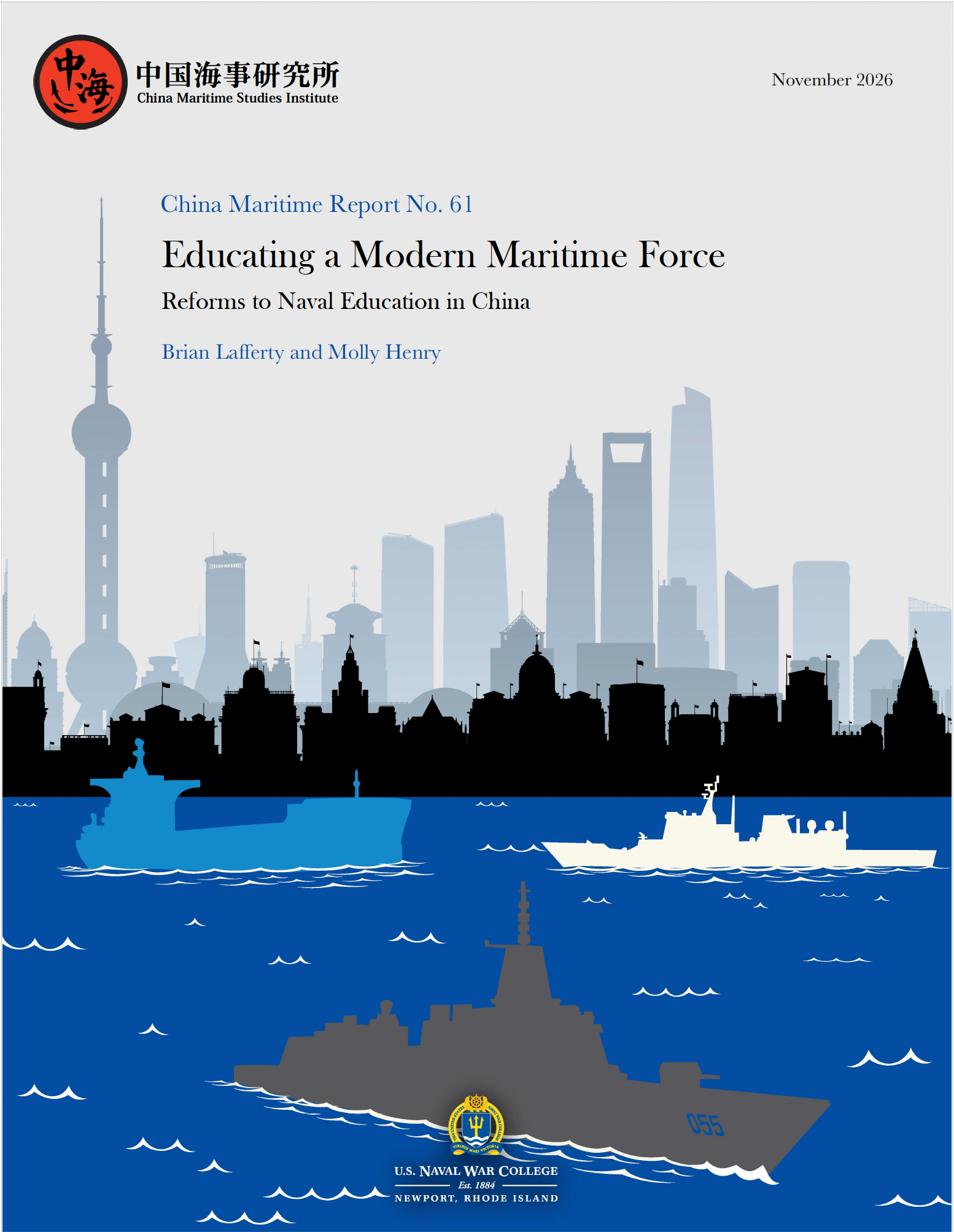
China Maritime Report #61: “Educating a Modern Maritime Force: Reforms to Naval Education in China”
Brian Laffery and Molly Henry, Educating a Modern Maritime Force: Reforms to Naval Education in China, China Maritime Report 61 (Newport, RI: Naval War College China Maritime Studies Institute, 10 November 2026).
CLICK HERE TO DOWNLOAD A CACHED PDF COPY.
From CMSI Director Christopher Sharman:
China Navy Watchers: How do you educate a Navy officer to fight and win the next war?
Yesterday’s announcement of sweeping reforms to U.S. professional military education by the U.S. Office of the Secretary of Defense raises another question worth considering:
How is the PLA preparing its own military leaders for the demands of modern warfare?
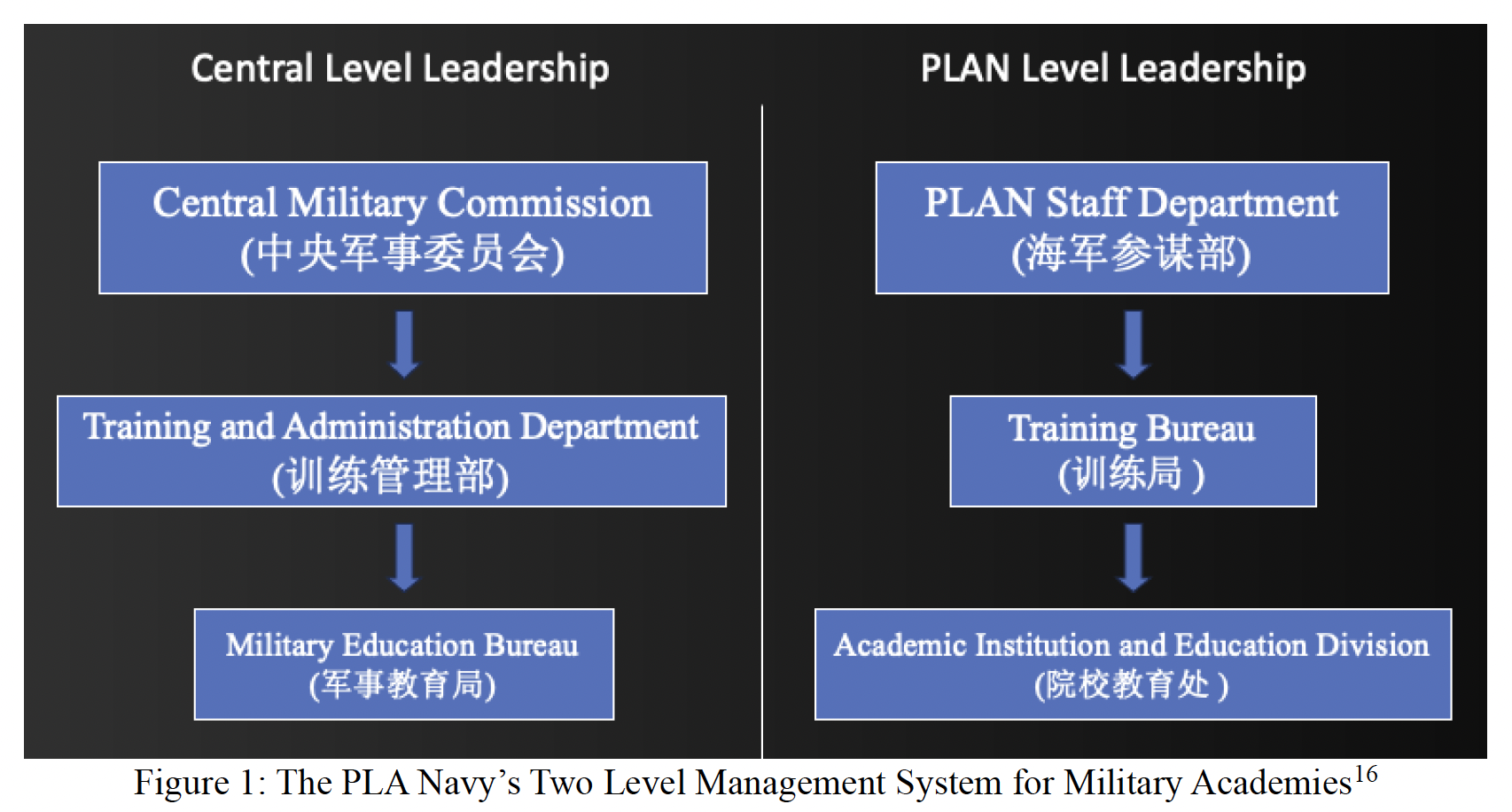
This timely China Maritime Report (CMR) from the China Maritime Studies Institute (CMSI), “Educating a Modern Maritime Force: Reforms to Naval Education in China,” authored by Brian Lafferty and Molly Henry, examines how Xi Jinping is reshaping the PLA Navy (PLAN) education system.
The authors explore reforms to naval academies, curriculum, faculty development, and the integration of academic education with operational training and career-long professional development.
They also examine the PLAN’s efforts to incorporate emerging technologies, strengthen ties between its academies and operational units, and better prepare officers for modern combat.
But are these reforms producing more capable naval officers?
Lafferty and Henry assess both the scope of China’s efforts and the persistent challenges facing its naval education system.
Their report offers a valuable look at an often-overlooked dimension of China’s naval modernization: not simply the ships and weapons it is building, but the people it is preparing to lead and employ them.
Main Findings
- In the Xi Jinping era, the Chinese military has intensified efforts to improve the training and education of military officers to remedy perceived leadership deficiencies. Shortly after taking office, Xi called on the People’s Liberation Army (PLA) to grasp the “central task” (中心任务) of training high-quality military talents.
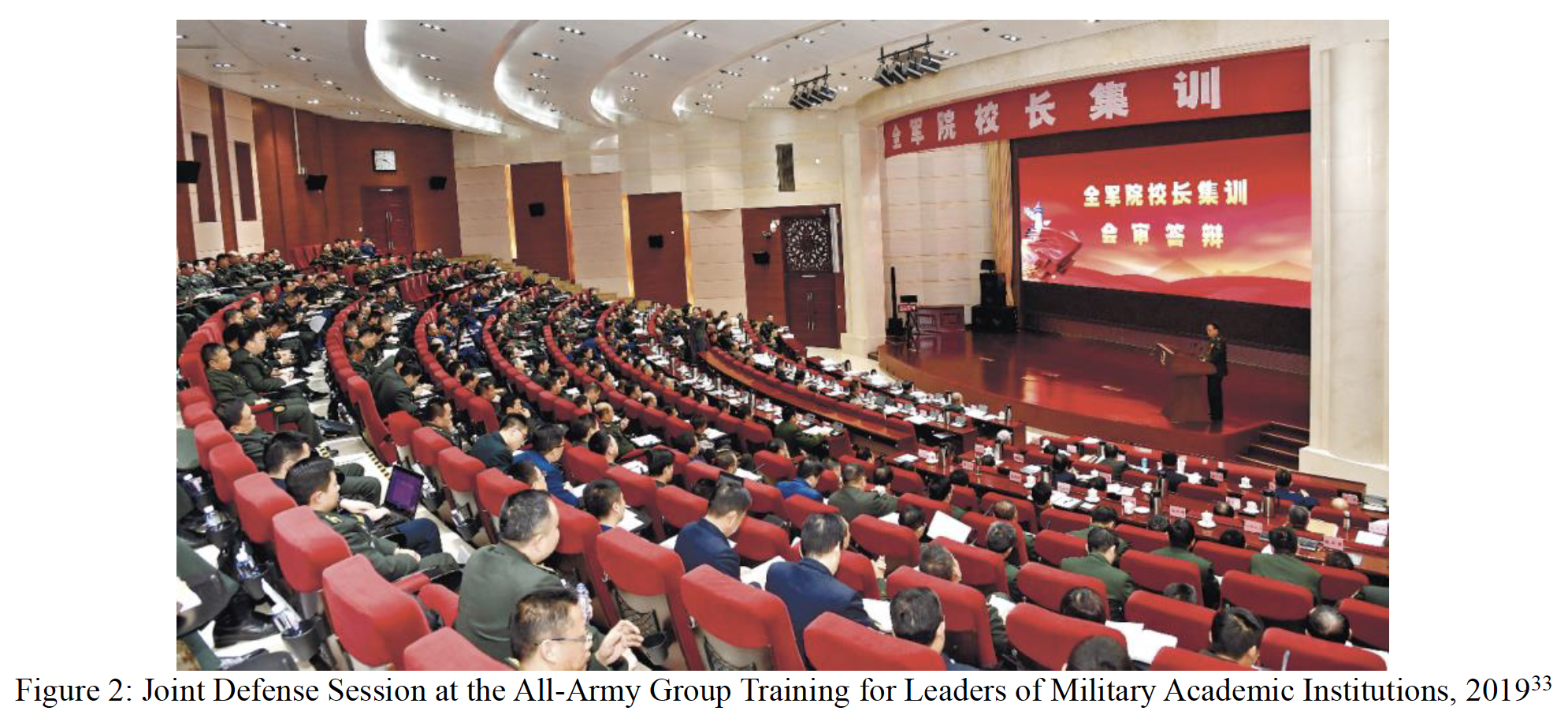
- To this end, the PLA has introduced a “three-in-one” model for talent development, comprising academic education, unit training, and vocational learning; reorganized and consolidated its academic institutions; and updated statutes and regulations to guide PLA academies in their work.
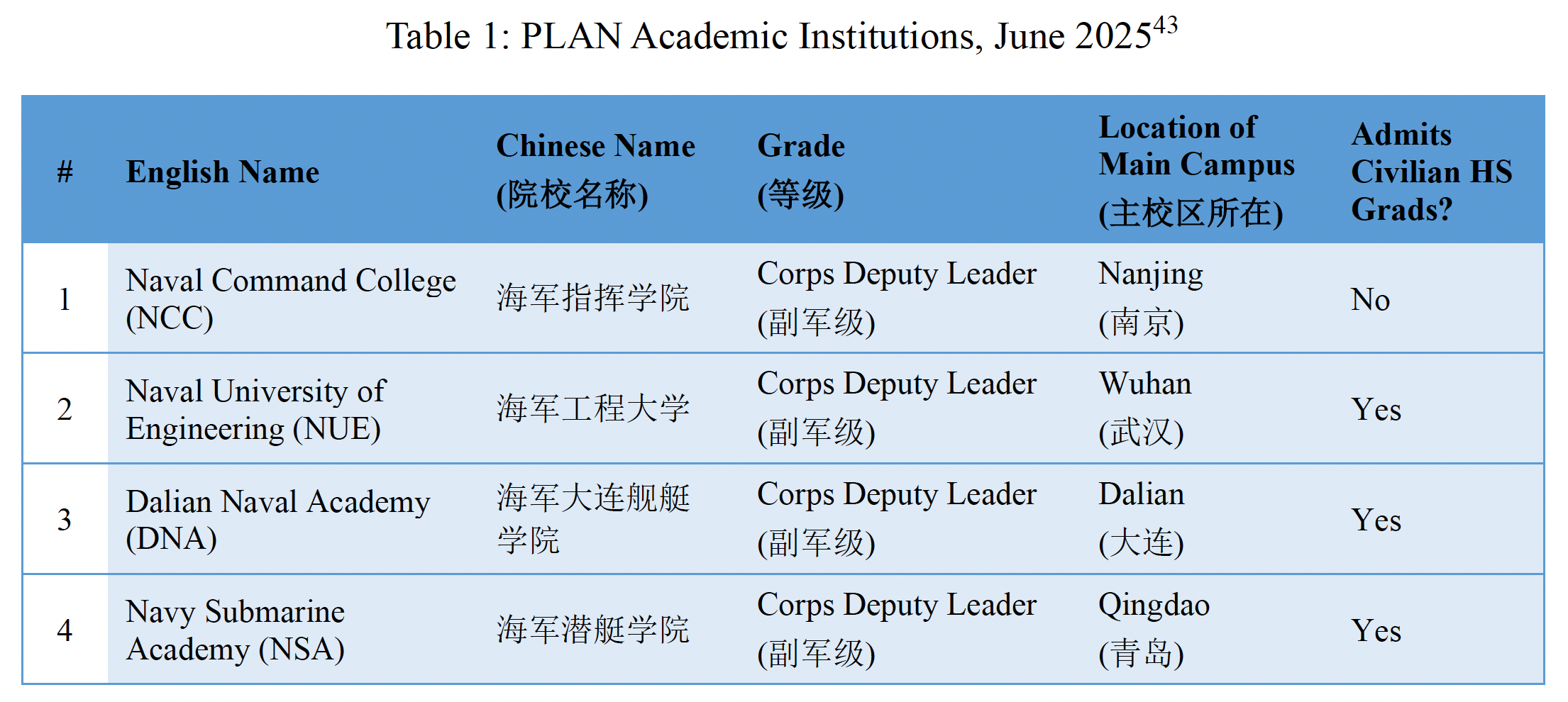
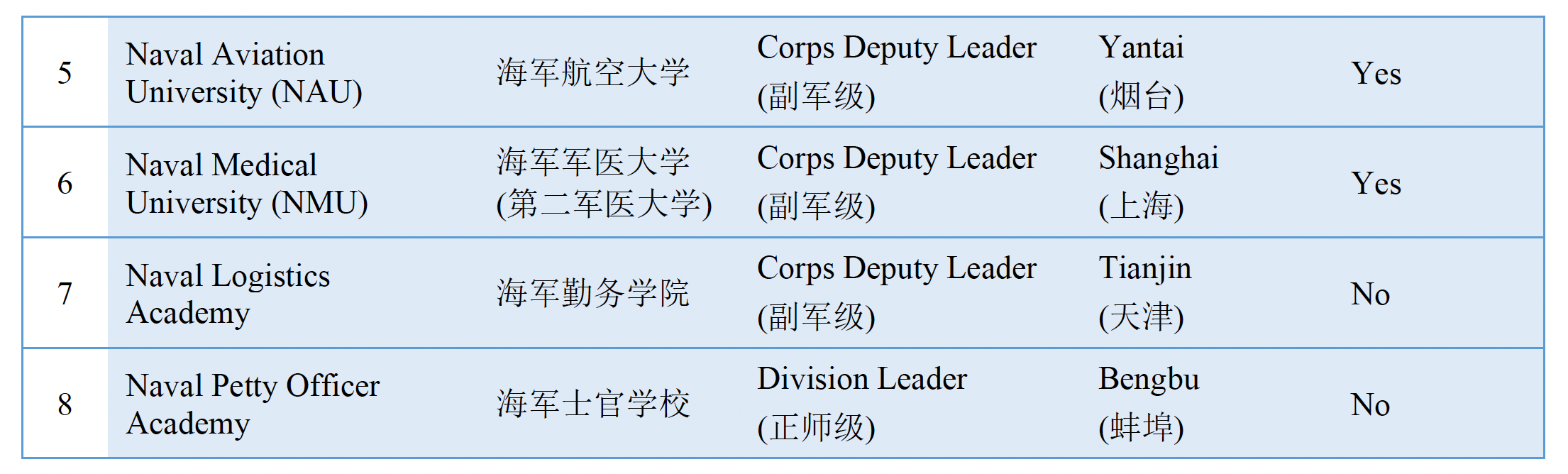
- The PLAN currently manages eight academic institutions, all subordinate to the PLAN Headquarters: the Naval Command College, Naval University of Engineering, Dalian Naval Academy, Navy Submarine Academy, Naval Aviation University, Naval Medical University, Naval Logistics Academy, and Naval Petty Officer Academy.
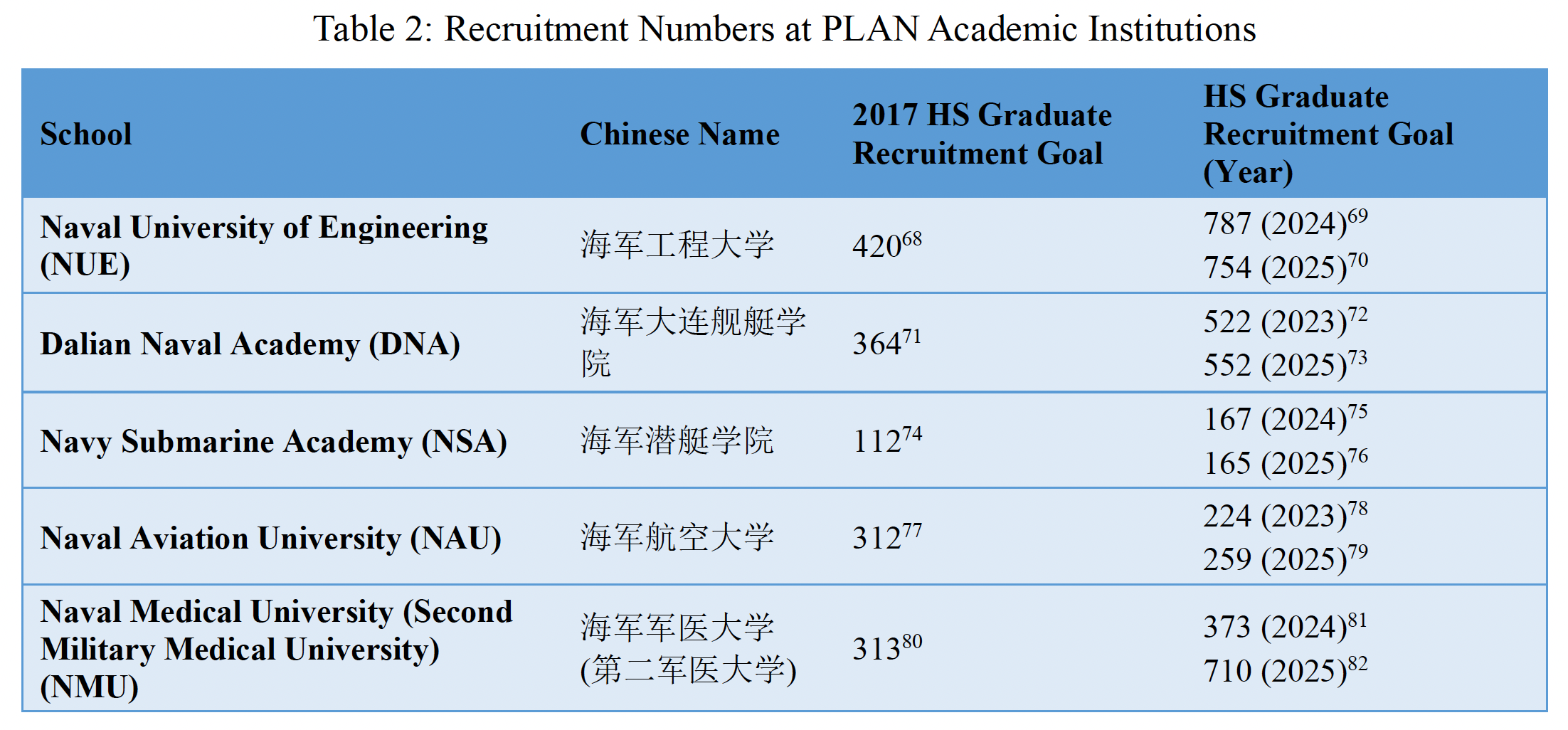
- Among the five PLAN academic institutions offering undergraduate education to recent high school graduates—i.e., the Naval University of Engineering, Dalian Naval Academy, Navy Submarine Academy, Naval Aviation University, and Naval Medical University—all except the Naval Aviation University have seen recruitment numbers rise since 2017.
- To implement guidance issued by the Central Military Commission, PLAN academic institutions have 1) offered new coursework leveraging cutting edge technologies, 2) strengthened cooperation with civilian universities, 3) strived to better satisfy the needs of the fleet, 4) prioritized “combat realism” in their educational offerings, 5) fostered more interactions with active-duty units, 6) bolstered educational exchanges with foreign navies and studied international best practices, 7) improved teaching pedagogy, and 8) expanded vocational education programs.
- It is unclear to what extent these initiatives have translated into a better educated and more competent officer corps. The PLAN’s operational record is scant, so it is difficult to judge educational effectiveness. However, Chinese sources continue to emphasize enduring weaknesses in education and training, suggesting that progress is uneven at best.