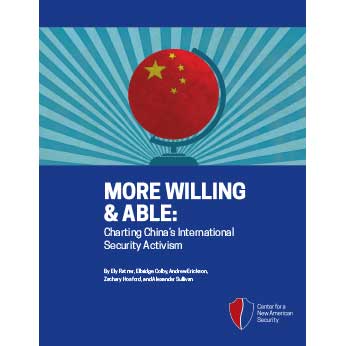
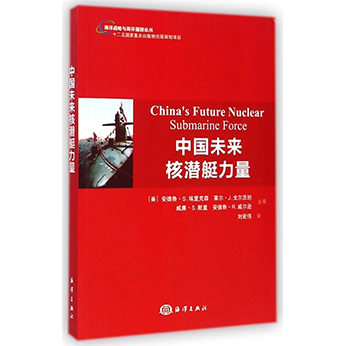
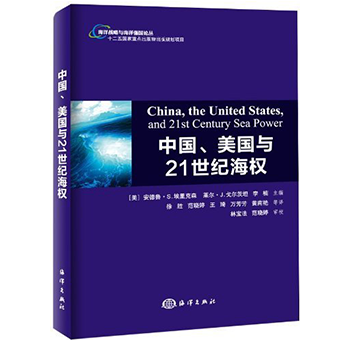
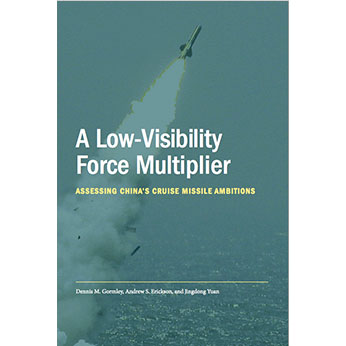
The China Maritime Studies Institute (CMSI)’s Founding & Early Years: From Official Study—“Sailors & Scholars: The History of the U.S. Naval War College, 1884–2009, Vol. 2”
John B. Hattendorf, Sailors and Scholars: The History of the U.S. Naval War College, 1884–2009, Second Edition, Vol. 2 (Newport, RI: Naval War College Press, 2025), 546–49, 553–54; 412–13, 418, 468, 530, 640, 649, 695–96, 729.
CLICK HERE TO DOWNLOAD PDF OF CMSI-RELATED CONTENT & VOLUME INFORMATION.
From CMSI Director CAPT Christopher H. Sharman, USN (Ret.):
China Military Maritime Watchers:
What do you know about the history and origins of the China Maritime Studies Institute here at the Naval War College?
The excerpt at this link is pulled from the recently published official Naval War College history, Sailors and Scholars (Volume 2). This excerpt tells the story of CMSI’s origins and its initial efforts through 2009. The complete volume can be downloaded HERE.
Below is an abbreviated summary:
In 2004, a small group of faculty members had a sense of unease about the proportion of focus that the College was putting on Central Asia and the Middle East, both in terms of research and analysis and in its curricula. They believed that the College needed to balance its efforts by devoting more intellectual capital to what they considered a first-order, strategic priority for the United States over the long term—China. They argued that it was China that posed the most enduring challenge to U.S. global economic, political, and security leadership and that a good deal of this concern rested on China’s role in the maritime domain.
With this conviction as their driving force, these professors started an informal e-mail group and called themselves the “China Maritime Studies Group.” Their purpose was to concentrate human capital, share sources and ideas, and thereby catalyze research and discussion of China’s growing turn to the sea. In fall 2004, this group approached the Provost with the idea of creating a China Maritime Studies Institute (CMSI) at the College.
After extensive meetings in the Provost’s office and over the group’s nascent library collection of Chinese-language publications in McCarty Little Hall, the Provost and these faculty members concluded that what set the Naval War College apart from any other such activity in the Navy was the College’s increasing ability to collect and translate relevant, open-source, Chinese-language literature and then analyze it in the strategic and operational context of the maritime domain.
In 2004, at the direction of the President of the Naval War College, the Provost established the China Maritime Studies Institute within the Strategic Research Department of the Center for Naval Warfare Studies. In 2006, the Chief of Naval Operations personally approved CMSI’s formal inauguration with dedicated Program Objective Memorandum (POM)08 funding. This made the Navy the first U.S. military service to have a dedicated China center. The result was that, by the end of 2008, CMSI acquired seven full-time and two part-time faculty members, including five Mandarin speakers; and had hosted four conferences, each of which yielded an impactful edited volume.
In just four years, between the China Maritime Studies Institute’s founding and the end of 2008, the Institute had quickly emerged as an active and effective contributor in terms of its breadth and depth of coverage of China’s growing power at sea. Its team’s remarkable ability in using open-source literature to identify and highlight new and critical trends in Chinese maritime activities added substantially to the College’s institutional effectiveness and relevance in the eyes of the Navy’s senior leadership.
In 2008, Secretary of Defense Robert Gates cited the China Maritime Studies Institute as a model for the Defense Department’s Minerva Research Initiative, which sought to build a deeper understanding of the social, cultural, and political dynamics that shape regions of strategic interest around the world.
CMSI marked the twentieth anniversary of its establishment within the Naval War College last year and will celebrate the twentieth anniversary of its formal founding Navy-wide during the fall of 2026.
We are grateful for your continued interest and support as we remain dedicated to elucidating China’s military maritime development in service of the Navy and the Nation.
ORIGINAL FULL TEXT FROM OFFICIAL NAVAL WAR COLLEGE HISTORY:
- CMSI’s founding and early years are documented in “Filling a Critical Gap,” pp. 546–49.
p. 546
Filling a Critical Gap
One of the early and recurring criticisms of the Cooperative Strategy was that it did not address the growing power of China at sea. However, the Naval War College had already begun to put itself into a unique position to do so with respect to research and analysis on the maritime developments of the People’s Republic of China by the time that the Cooperative Strategy was introduced. In 2004, a small group of faculty members had a sense of unease about the proportion of focus that the College was putting on Central Asia and the Middle East, both in terms of research and analysis and in its curricula. They believed that the College needed to balance its efforts by devoting more intellectual capital to what they believed to be a first-order, strategic priority for the United States over the long term—China. They argued that it was China that posed the most enduring challenge to U.S. global economic, political, and security leadership and that a good deal of this concern rested in China’s role in the maritime domain.146
With this conviction as their driving force, Associate Professor Lyle Goldstein and Assistant Professor Andrew Erickson of the Strategic Research Department, Associate Professor Bill Murray of the War Gaming Department, and Professor Andrew “Dex” Wilson of the Strategy and Policy Department started an informal e-mail group and called themselves the “China Maritime Studies Group.” Their purpose was to concentrate human capital, share sources and ideas, and thereby catalyze research and discussion of China’s growing turn to the sea.147 In October 2004, this group approached the provost with the support of the dean of Naval Warfare Studies, Dr. Ken Watman, and the chairman of the Strategic Research Department, Dr. Jonathan Pollack, with the idea of creating a China Maritime Studies Institute (CMSI) at the College. The provost found their idea to be sound, but one that required guidance concerning its focus and a detailed plan for implementing the concept in terms of manpower and financial resources. After extensive meetings in the provost’s office and over the group’s nascent library collection of publications in Chinese in McCarty Little Hall, the provost and these faculty members concluded that what set the Naval War College apart from any other such activity in the Navy was the College’s increasing ability to collect and to translate relevant, open-source, Chinese-language literature and then to analyze it in the strategic and operational context of the maritime domain.

A Shelf of Books in the Library of the China Maritime Studies Institute. Naval War College Museum Collection
Goldstein, Erickson, Murray, and Wilson recognized that there was an extraordinary volume of Chinese journals and other publications concerning Chinese maritime issues that were available on the open
p. 547
market, particularly in the bookstores of northwest Beijing, but not obtainable outside China. Goldstein and Murray had already published an exceptionally well-received article on China’s submarine force in the prestigious journal International Security, using some of this Chinese open-source material that Goldstein had acquired and translated.148 These Chinese publications covered a range of topics from very detailed engineering studies to the broader questions of China’s maritime strategy. Included in this literature were equally detailed analyses by credible Chinese authors of U.S. Navy forces and their vulnerabilities. Drawing on his experience, Giblin recognized that this was not unlike the volume of open-source literature that characterized the internal analysis and debate about the Soviet Navy during the Cold War, which had been of value to the U.S. Navy in that period.149 To exploit this opportunity, much as the U.S. Navy had done in the 1970s with Soviet naval literature, Giblin insisted that the group had to become a defined organization within the College, so that its work could be structured systematically and funded on a full-time basis to conduct the kind of work that Goldstein and his colleagues envisioned. Giblin also insisted that the group work across organizations—inside and outside government—to make the most effective use of its available capacity and capabilities.
With this focus as its point of main effort, Giblin approved the idea and took the concept of how it would be executed to Shuford, who strongly endorsed it and directed that the provost immediately establish the China Maritime Studies Institute within the Center for Naval Warfare Studies. Shuford recognized the potential of the institute in terms of enhancing the College’s institutional effectiveness and its relevance to the senior leadership of the Navy, especially the Navy’s operational-level commanders in the Pacific. Shuford established three, top-level objectives:
1. Produce analysis of open-source Chinese-language publications on the naval development of the People’s Republic of China;
2. Analyze the implications of these developments for the U.S. Navy; and
3. Integrate Chinese maritime studies into the Naval War College’s teaching and research.
Accordingly, on 1 December 2004, the provost established the China Maritime Studies Institute within the Strategic Research Department of the Center for Naval Warfare Studies, with Professor Lyle Goldstein as the institute’s first director. Giblin also committed to finding NWC mission or other funds to get the organization up and running. In this regard, the Naval War College Foundation was exceptionally helpful in providing funds to support the China Maritime Studies Institute’s early efforts. Giblin directed Goldstein to draft an issue paper for the College’s POM 08 submission that contained a budget estimate of the resources required and the rationale for the initiative. Working with the College’s comptroller, Commander Melinda Matheny, Goldstein, Erickson, Murray, and Wilson drafted an above-core issue paper for the College’s submission to the Navy’s program objective memorandum for fiscal year 2008. After substantial editing, Giblin took the issue paper into the Planning, Programming, Budgeting, and Execution process. Subsequently, the Chief of Naval Operations personally approved the establishment of the China Maritime Studies Institute and provided sufficient funding to hire four additional faculty members in fiscal year 2008, along with a modest amount of additional funding to support the institute’s research and analysis.
p. 548

Professors Lyle Goldstein, William Murray, Andrew Erickson, and Andrew “Dex” Wilson with Students from Their “Chinese Maritime Development” Class (Spring Elective 672) in 2008. Naval War College Museum Collection
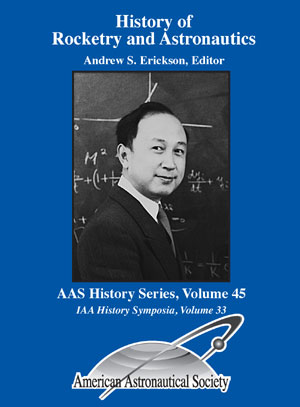
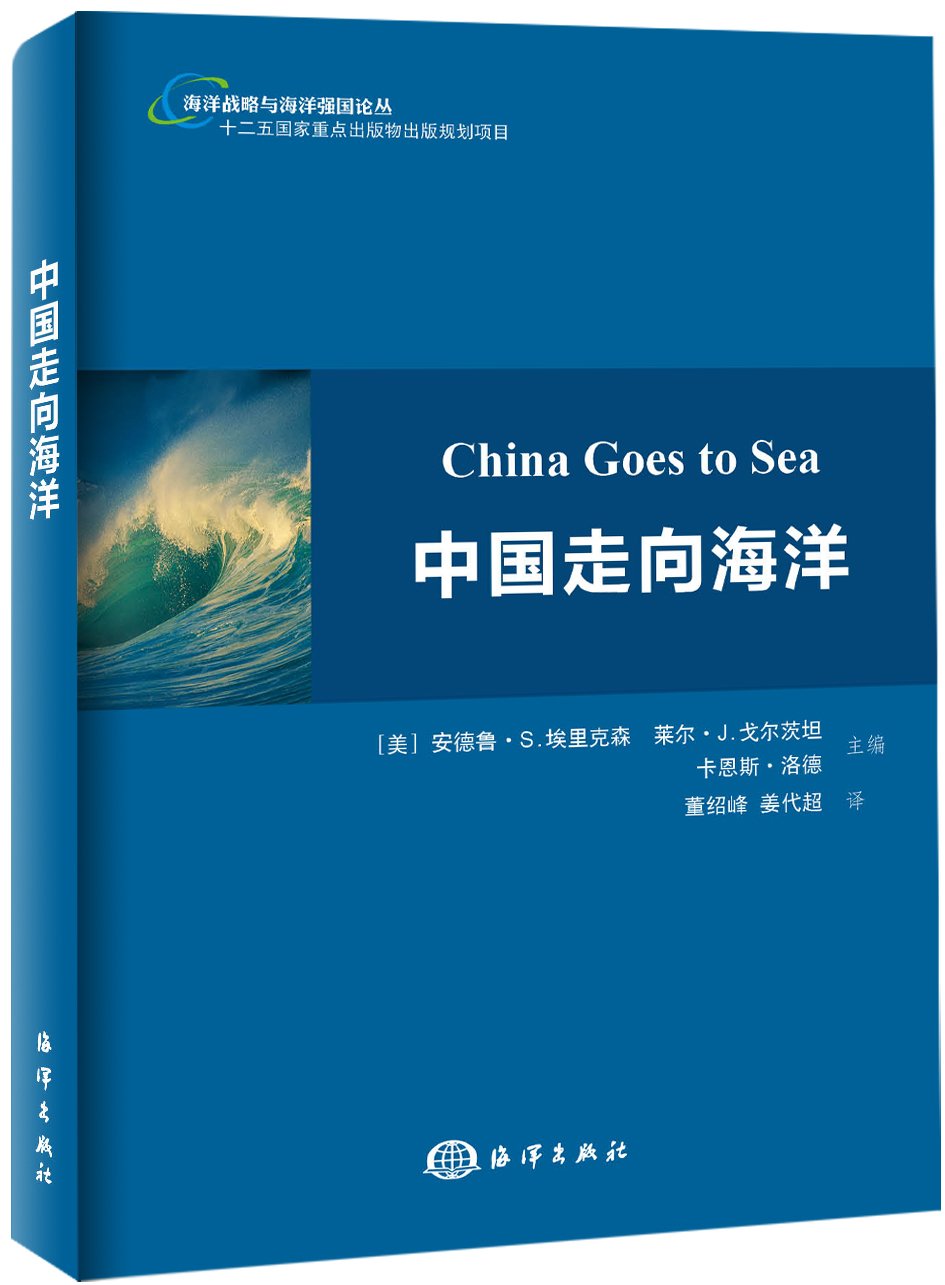
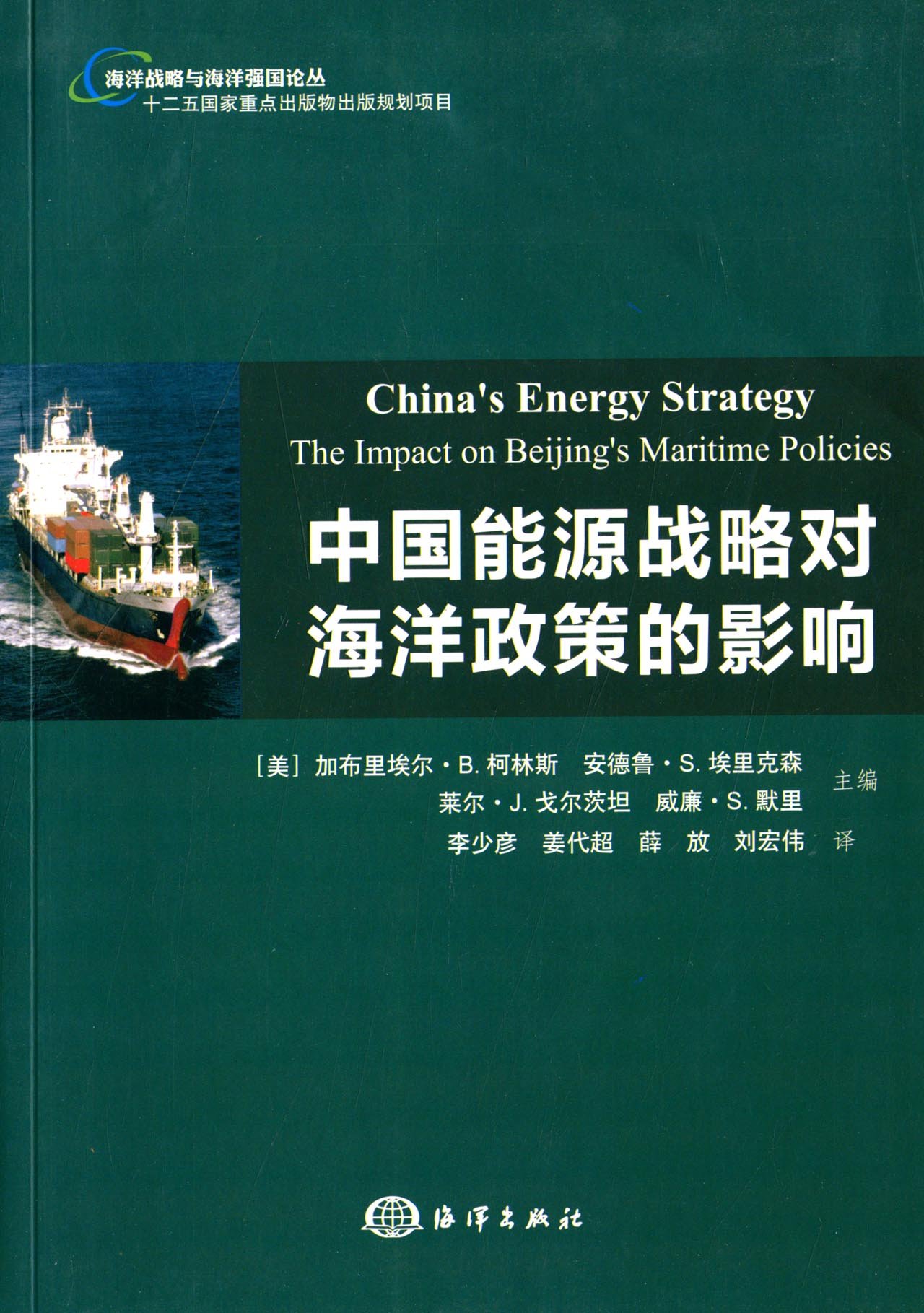
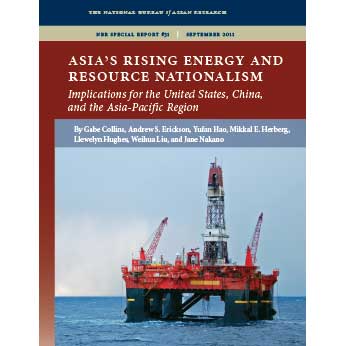
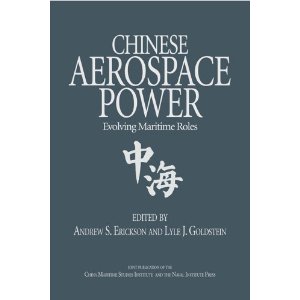
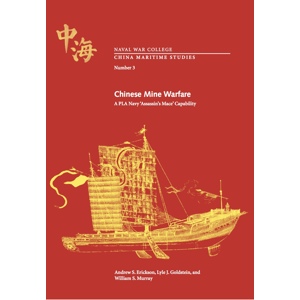
The result was that the China Maritime Studies Institute acquired seven full-time and two part-time faculty members, including five Mandarin speakers, by the end of 2008.150 During its first four years, the institute sponsored four conferences and published edited volumes of the papers from each of them.151 These included its first effort from 26 to 27 October 2005 to address China’s future nuclear submarine force. The second conference, held 6 to 7 December 2006, examined the maritime implications of China’s energy strategy. The third, held from 5 to 6 December 2007, considered the challenge of defining a maritime security partnership with China. The institute’s fourth conference took place 10 to 11 December 2008 and investigated the evolving maritime roles for Chinese aerospace power. In addition, the institute’s faculty members completed studies that addressed the Chinese tanker fleet, naval mines, the East China Sea, submarine rescue, and the Chinese shipbuilding industry.152 Of these, the study by Erickson, Goldstein, and Murray on Chinese mine warfare helped, in particular, to validate the concept of the China Maritime Studies Institute within the U.S. Navy by demonstrating the strikingly accurate and insightful findings that could be derived from open-source analysis.
In just four years, between the China Maritime Studies Institute’s founding in December 2004 and the end of 2008, the institute had quickly emerged as an active and effective contributor in terms of its breadth and depth of coverage of China’s growing power at sea. Its team’s remarkable ability in using open-source literature to identify and to highlight new and critical trends in Chinese maritime activities added substantially to the College’s institutional effectiveness as well as to its relevance in the eyes of the Navy’s senior leadership. In 2008, Secretary of Defense Robert M. Gates cited the China Maritime Studies Institute as a model for the Defense Department’s Minerva Research Initiative, which sought to build a deeper understanding of the social, cultural, and political dynamics that shape regions of strategic interest around the world.153
p. 549
“The Chinese government publishes a tremendous amount of information about military and technological developments on an open-source basis. However, it is often inconvenient, if not impossible, for American researchers to get access to this material since it is often available only in China. A real—or virtual—archive of documents acquired by researchers and others abroad would help us track Chinese military and technological developments. . . . Faculty members at the Naval War College have already instituted a smaller version of this idea focusing on the Chinese Navy. . . .154”
Indeed, the actions of this small group of CMSI’s founding members personified Luce’s 1903 guiding principle that the College is a “place of original research on all questions relating to war and to statesmanship connected with war, or the prevention of war.”155 Just as important, they embodied Vice Admiral Stansfield Turner’s charge to the College in 1972: “Always keep in mind that the product which the country desperately needs is military men with the capability of solving complex problems and of executing their decisions. Scholarship for scholarship’s sake is of no importance to us. You must keep your sights on decisionmaking or problem solving as your objective.”156 Although the College’s executive leadership deserves some of the credit for the foresight in establishing the China Maritime Studies Institute, the real credit for filling this critical gap belongs to this group of young faculty members who had the courage of their convictions to think and to act strategically with their unusual skills, the very essence of what the Naval War College is about.
Notes, pp. 553–54
p. 553
146. This motivation was confirmed in Professor Peter Dutton, Director, China Maritime Studies Institute, to Dr. James F. Giblin, Jr., “Update to John Hattendorf ’s Book-Sailors and Scholars,” e-mail, 23 February 2016; and Professor Andrew S. Erickson to Dr. James F. Giblin, Jr., “CMSI–Update to John Hattendorf ’s book—Sailors and Scholars,” e-mail, 29 February 2016.
147. Goldstein had previously approached Murray, then a nuclear submariner on active duty at NWC, in mid-2002 with a stack of Chinese naval journals that had a good deal of what appeared to Murray to be worthwhile information regarding People’s Liberation Army Navy submarines. Goldstein suggested he could translate them into English and that Murray could then assess the relevance of the contents. As a result of their work, Dr. Jonathan Pollack invited them to present their analysis at the Naval War College’s Asia-Pacific Forum, held in Newport on 6–7 February 2003. The work was well received and was subsequently published as Lyle J. Goldstein and William S. Murray, “The Submarine Force in China’s Future Maritime Strategy,” in Strategic Surprise? U.S.-China Relations in the Early Twenty-First Century (Newport, R.I.: Naval War College Press, 2003), pp. 185–98. Associate Professor William S. Murray to Dr. James F. Giblin, Jr., “CMSI-Update to John Hattendorf ’s Sailors and Scholars,” e-mails, 28 February 2016 and 7 March 2016.
148. See Lyle Goldstein and William Murray, “Undersea Dragons: China’s Maturing Submarine Force,” International Security 28, no. 4 (Spring 2004), pp. 161–96.
149. See, for example, the work of Robert G. Weinland, Michael K. MccGwire, and James M. McConnell, Admiral Gorshkov on “Navies in War and Peace,” CRC 257 (Arlington, Va.: Center for Naval Analyses, September 1974). Weinland, MccGwire, and McConnell examined eleven articles authored by Admiral of the Fleet Sergey Gorshkov, then commander in chief of the Soviet Navy, that were published in the journal Morskoi Sbornik (Naval Digest) in 1972 and 1973. Their analysis addressed such topics as the possibility of an internal debate over Soviet naval missions and budgets, their implications for the future course of Soviet naval force structure and levels, and their meaning for the use of Soviet naval forces in wartime and peacetime.
150. Initial faculty affiliates were Associate Professors Bruce Elleman and Christopher Yeaw, then of the Strategic Research Department; Professor Michael Chase, then of the Warfare Analysis and Research Department; Professor S. C. M. “Sally” Paine of the Strategy and Policy Department; Professor Paul Smith of the National Security Decision Making Department; Professor Kathleen Walsh of the National Security Decision Making Department; and Professor Toshi Yoshihara of the Strategy and Policy Department. Because of the requirements of their respective departmental chairs, Wilson and Murray did not migrate to a full-time status with CMSI. However, they remained affiliated with the new organization. “The China Maritime Studies Institute” (concept briefing slides, September 2008).
p. 554
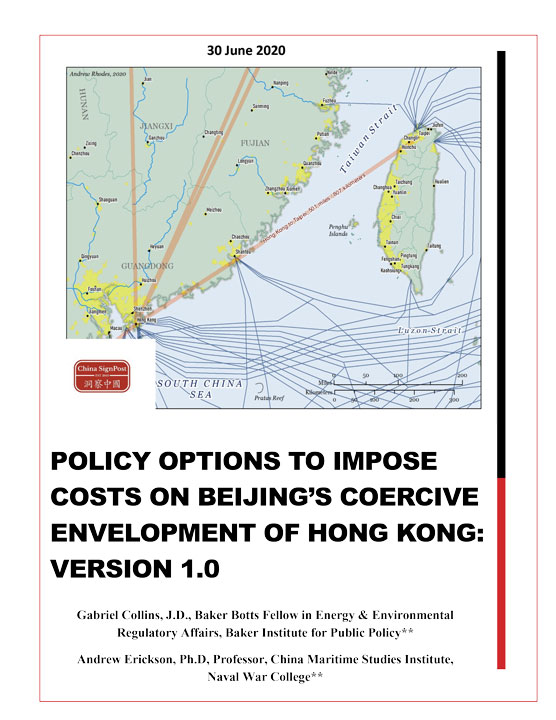
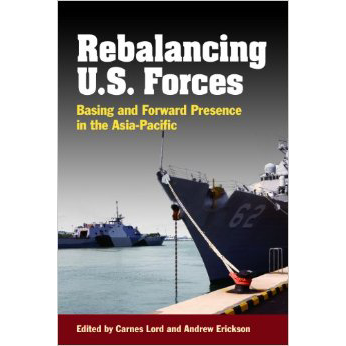
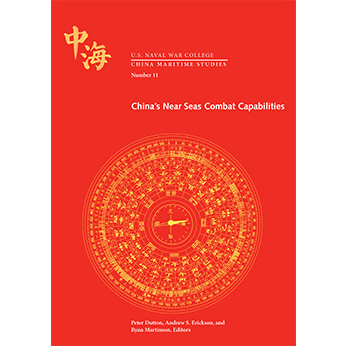
151. Ryan Martinson, Research Administrator, China Maritime Studies Institute, to Dr. James F. Giblin, Jr., “Update of John Hattendorf ’s Book — Sailors and Scholars,” e-mail, 25 February 2016. These volumes included Andrew S. Erickson et al., eds., China’s Future Nuclear Submarine Force (Annapolis, Md.: Naval Institute Press, 2007); Gabriel B. Collins et al., eds., China’s Energy Strategy: The Impact on China’s Maritime Policies (Annapolis, Md.: Naval Institute Press, 2008); Andrew S. Erickson, Lyle J. Goldstein, and Nan Li, eds., China, the United States, and 21st Century Sea Power: Defining a Maritime Security Partnership (Annapolis, Md.: Naval Institute Press, 2010); and Andrew S. Erickson and Lyle J. Goldstein, eds., Chinese Aerospace Power: Evolving Maritime Roles (Annapolis, Md.: Naval Institute Press, 2011).
152. See, for example, Peter Dutton, “International Law and the November 2004 Han Incident,” Asian Security 2, no. 2 (2006), pp. 87–101; Andrew S. Erickson and Gabriel B. Collins, “Beijing’s Energy Security Strategy: The Significance of a Chinese State-Owned Tanker Fleet,” Orbis 51, no. 4 (Fall 2007), pp. 665–84; Lyle J. Goldstein and William S. Murray, “International Submarine Rescue: A Constructive Role for China?,” Asia Policy, no. 5 (January 2008); Gabriel Collins and Lieutenant Commander Michael C. Grubb, USN, A Comprehensive Survey of China’s Dynamic Shipbuilding Industry: Commercial Development and Strategic Implications, China Maritime Studies, no. 1 (Newport, R.I.: Naval War College Press, August 2008), available at https://www.usnwc.edu/Research—Gaming/China-Maritime-Studies-Institute/Publications/documents/CMS1_Collins-Grubb.aspx; and Andrew S. Erickson, Lyle J. Goldstein, and William S. Murray, Chinese Mine Warfare: A PLA Navy “Assassin’s Mace” Capability, China Maritime Studies, no. 3 (Newport, R.I.: Naval War College Press, June 2009), available at https://www.usnwc.edu/Research—Gaming/China-Maritime-Studies-Institute/Publications/documents/CMS3_Mine-Warfare.aspx.
153. “Launched by the Secretary of Defense in 2008,” the Minerva Research Initiative focuses on “areas of strategic importance to U.S. national security policy.” The initiative’s objective is “to improve [the Defense Department’s] basic understanding of the social, cultural, behavioral, and political forces that shape the regions of the world of strategic importance to the U.S. The research program will:
“Leverage and focus the resources of the Nation’s top universities.
“Seek to define and develop foundational knowledge about sources of present and future conflict with an eye toward better understanding of the political trajectories of key regions of the world.
“Improve the ability of [the Defense Department] to develop cutting-edge social science research, foreign area and interdisciplinary studies that is developed and vetted by the best scholars in these fields.
“The Minerva Initiative brings together universities, research institutions, and individual scholars and supports interdisciplinary and cross-institutional projects addressing specific topic areas determined by the Secretary of Defense.” See “Program History,” The Minerva Research Initiative, accessed 27 September 2017, http://minerva.defense.gov/Minerva/Program-History/; “Objectives,” The Minerva Research Initiative, accessed 27 September 2017, http://minerva.defense.gov/Minerva/Objectives/.
154. Department of Defense, Office of the Secretary, Secretary of Defense Robert M. Gates, speech to Association of American Universities (Washington, D.C., 14 April 2008).
155. Stephen B. Luce, speech at the Naval War College (Newport, R.I., 2 June 1903), reprinted as “An Address Delivered at the United States Naval War College, Narragansett Bay, R.I., June 2, 1903,” in The Writings of Stephen B. Luce, ed. John D. Hayes and John B. Hattendorf, Historical Monograph Series, no. 1 (Newport, R.I.: Naval War College Press, 1975), pp. 39–40.
156. Vice Admiral Stansfield Turner, “Challenge! A New Approach to a Professional Education at the Naval War College,” and “Convocation Address,” Naval War College Review 25, no. 2 (November–December 1972), pp. 1–10, quotation at p. 7; “Convocation Address” reprinted in Naval War College Review 51, no. 1 (Winter 1998), pp. 72–80, quotation at p. 79.
ADDITIONAL CMSI-RELATED CONTENT FROM THIS OFFICIAL NAVAL WAR COLLEGE HISTORY:
p. 412
Naval War College Press
In the fall of 1999, the new dean of the Center for Naval Warfare Studies, Dr. Alberto Coll, directed the Naval War College Review staff to begin working on a new image for the Review, not only to start the new millennium, but also to raise its sights to try to become one of the nation’s finest scholarly journals in the policy arena. After a wide search for designers, the press chose David Chapman
p. 413
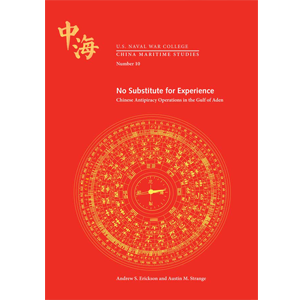
of Chapman and Partners, then of Providence and later based in Warren, Rhode Island. After a period of studies and trials, the new design was launched with the Autumn 2000 issue and a small ceremony attended by Vice Admiral Cebrowski. Over the following years, Chapman produced related designs, still used in 2024, for other Naval War College Press publications. The first Newport Paper with the new design was number 16, The Third Battle by Owen Cote, in 2003. The first Historical Monograph was number 15, Dr. Evelyn Cherpak’s edition of The Memoirs of Admiral H. Kent Hewitt, and the first Policy Studies book was Dr. Jonathan Pollack’s Strategic Surprise? U.S.-China Relations in the Early Twenty-First Century, both of which came out in March 2004. Chapman also produced a related design for the China Maritime Studies series. Its first volume, Gabriel Collins and Lieutenant Commander Michael C. Grubb’s Comprehensive Survey of China’s Dynamic Shipbuilding Industry: Commercial Development and Strategic Implications, appeared in 2008.73
p. 418
73. Alberto R. Coll, Dean, Center for Naval Warfare Studies, to subscribers, “Letter to Readers of the Naval War College Review,” sent with Naval War College Review 52, no. 4 (Autumn 2000); Hattendorf Papers: Correspondence: Pelham Boyer to Hattendorf, e-mail, 5 February 2015.
p. 468
Rear Admiral Jacob Shuford. As the fifty-first President of the Naval War College, Admiral Shuford served from 12 August 2004 until 6 November 2008. Shuford’s tenure of four years, two months, and twenty-five days was the second longest in the history of the College, superseding by one month and twenty-four days the previous record held by Vice Admiral Bernard Austin in 1960–1964. Shuford’s presidency was marked by a number of innovative changes, including the establishment of the China Maritime Studies Institute, the College of Operational and Strategic Leadership, and the Maritime Staff Operators Course; the development of courses for flag and general officers serving as maritime and joint component commanders; and a significant increase in the College’s international reach. Naval War College Museum Collection
p. 530

Strategy Development Process, 2006. This slide from a PowerPoint presentation illustrates the broad process involved. “Maritime Strategy Update” (PowerPoint presentation, 17 August 2006), slide 36. Naval Historical Collection, Ms. Coll. 23, Box 458 [NOTE “CHINA ENERGY CONFERENCE,” CMSI’S SECOND CONFERENCE]
p. 640
Rear Admiral James P. Wisecup
President, 6 November 2008–30 March 2011
A surface warfare officer, Rear Admiral Wisecup was Commander, Carrier Strike Group Seven (USS Ronald Reagan Strike Group) immediately before becoming the fifty-second President of the Naval War College. The second College president from Clark County, Ohio, he followed in the wake of Clarence Williams, the seventeenth President. A 1977 Naval Academy graduate, Wisecup earned a master’s degree from the University of Southern California, was an Olmsted Scholar in France, at the University of Strasbourg, and graduated from the Naval War College in 1998. At sea, he was executive officer of USS Valley Forge (CG 50) and commanded USS Callaghan (DDG 994) and Destroyer Squadron Twenty-One during Operation Enduring Freedom. He received the Vice Admiral James Stockdale Award for Inspirational Leadership. Ashore, Wisecup was assigned to NATO Headquarters, in Brussels, served as force planner and ship scheduler for Commander, U.S. Naval Surface Forces, Pacific, and was an action officer for Navy Headquarters Plans and Policy Staff. He was a Chief of Naval Operations Strategic Studies Group fellow, Director of the White House Situation Room, and Commander, U.S. Naval Forces, Korea.
As fifty-second President of the Naval War College, Admiral Wisecup oversaw the continuing growth of the College, inaugurated the Chinese-language library for the College’s China Maritime Studies Institute, and hosted two highly successful Current Strategy Fora as well as the Nineteenth International Seapower Symposium. His administration saw increased cooperation and support from the Naval War College Foundation with substantial growth in its membership.
Gerald York’s portrait of Admiral Wisecup was designed to echo the portrait of Stephen B. Luce by Frederic Vinton, which is the frontispiece to this history of the Naval War College.
Oil Portrait on Linen by Gerald P. York, Image Courtesy of the Artist
p. 649

Rear Admiral Wisecup Cuts the Ribbon, Formally Opening the China Maritime Studies Institute’s Research Library in McCarty Little Hall on 14 January 2010.
Naval War College Museum Collection
***
APPENDIX A
Chronology of Courses and Significant Events at the United States Naval War College,
1884–2019
p. 695
2006
1 Oct. China Maritime Studies Institute (CMSI) founded as part of the Strategic Research Department within the Center for Naval Warfare Studies.
p. 696
2010
14 Jan. Ribbon cutting for China Maritime Studies Institute research library
INDEX
p. 729
China Maritime Studies Institute (CMSI), 468, 546, 546–49, 548, 553n150, 640, 649
FOR FURTHER CMSI HISTORY, SEE:
Andrew S. Erickson, “CMSI’s 20th Anniversary! China Maritime Studies Institute Established Two Decades Ago within Naval War College,” China Analysis from Original Sources 以第一手资料研究中国, 2 October 2024.